"Shogo was a great guide! Very knowledgeable and engaging. I feel much more comfortable selecting a sake after this experience."
Kyoto · Fushimi · 400 Years of Sake
Kyoto Sake Tasting — Inside Fushimi's 400-Year-Old Breweries
Walk Fushimi's brewery district — Japan's second-biggest sake-producing region — with an English-speaking guide. Six tastings, food pairings, and centuries of craft in one three-hour walk.
From
$86
per person
Free cancellation
- 4.9 / 5 845+ Reviews
- 3 hours Duration
- 15 Categories All Kyoto Experiences
- English Guides Local Experts
- Free Cancellation
The Experience
What Makes This Fushimi Sake Tour Special
Seven tastings, brewery walk, food pairing, and insight into how Kyoto's soft water makes a different sake to Niigata's.
Highlights
- Choose sake with confidence through an expert-guided tasting
- Discover how sake is made and what shapes its flavor
- Taste different sake styles side by side and discover your favorite
- Learn to read sake bottles and menus so you can order with confidence in Japan
- Learn how to enjoy sake in Japan — from hot or cold to food pairings and more
What's Included
- Certified sake expert as your guide
- Sake tasting (10+ types selected by a certified sake sommelier)
- Otsumami (traditional Japanese appetizers) for food pairing
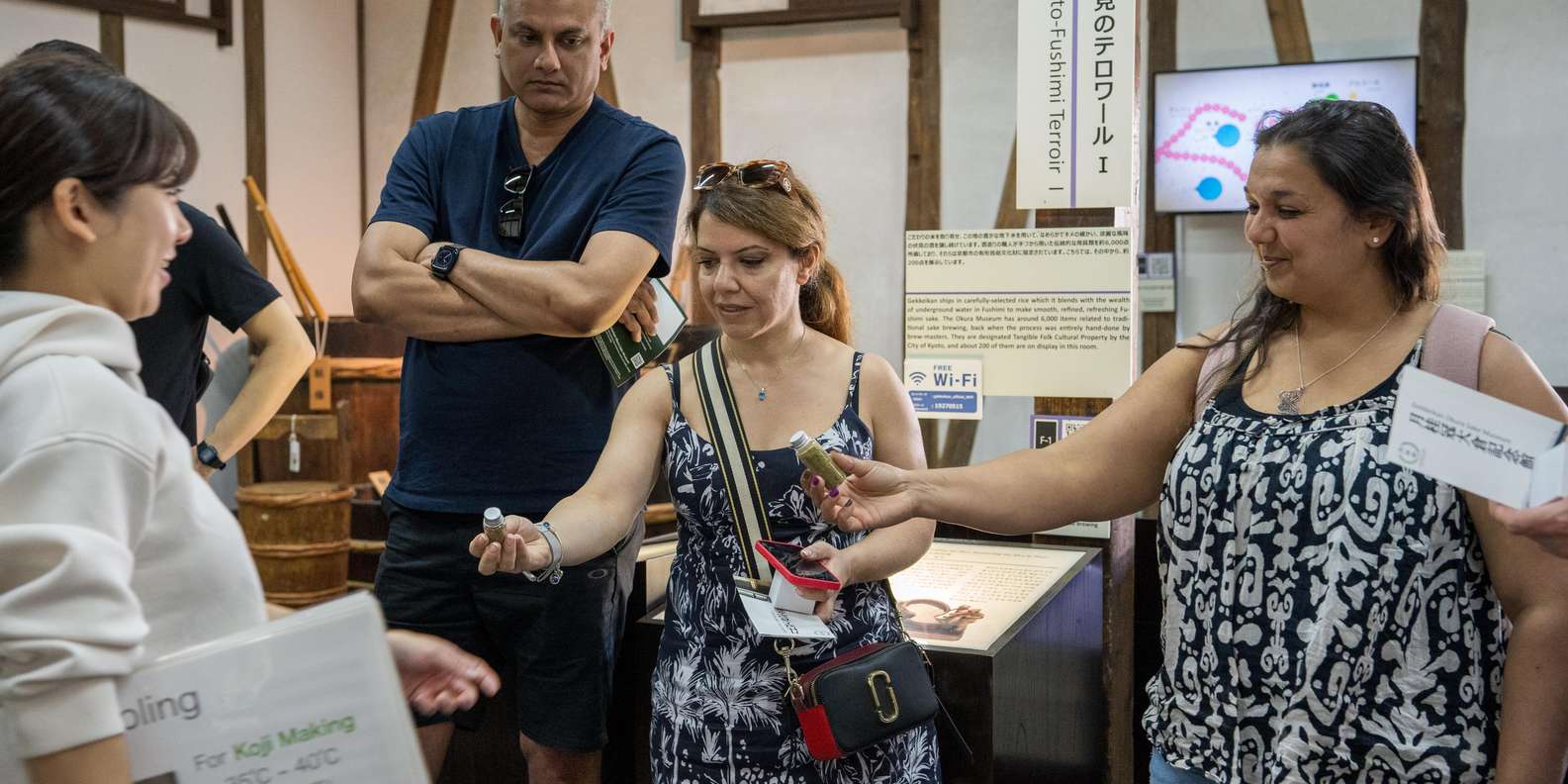
- Gekkeikan Okura Sake Museum entry fee and guided tour
- Sake cheat sheet and tasting note to help you choose your preferred sake
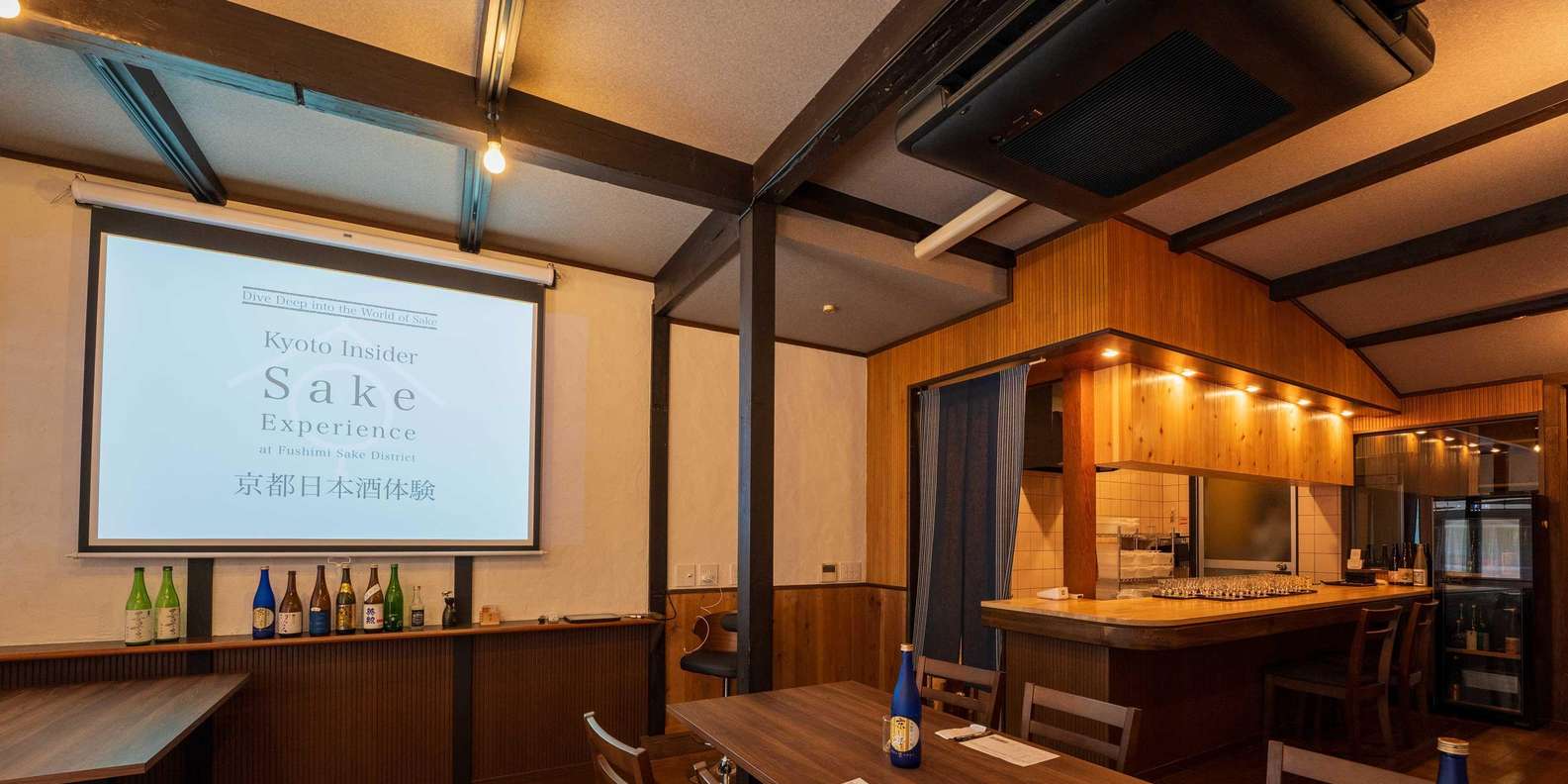
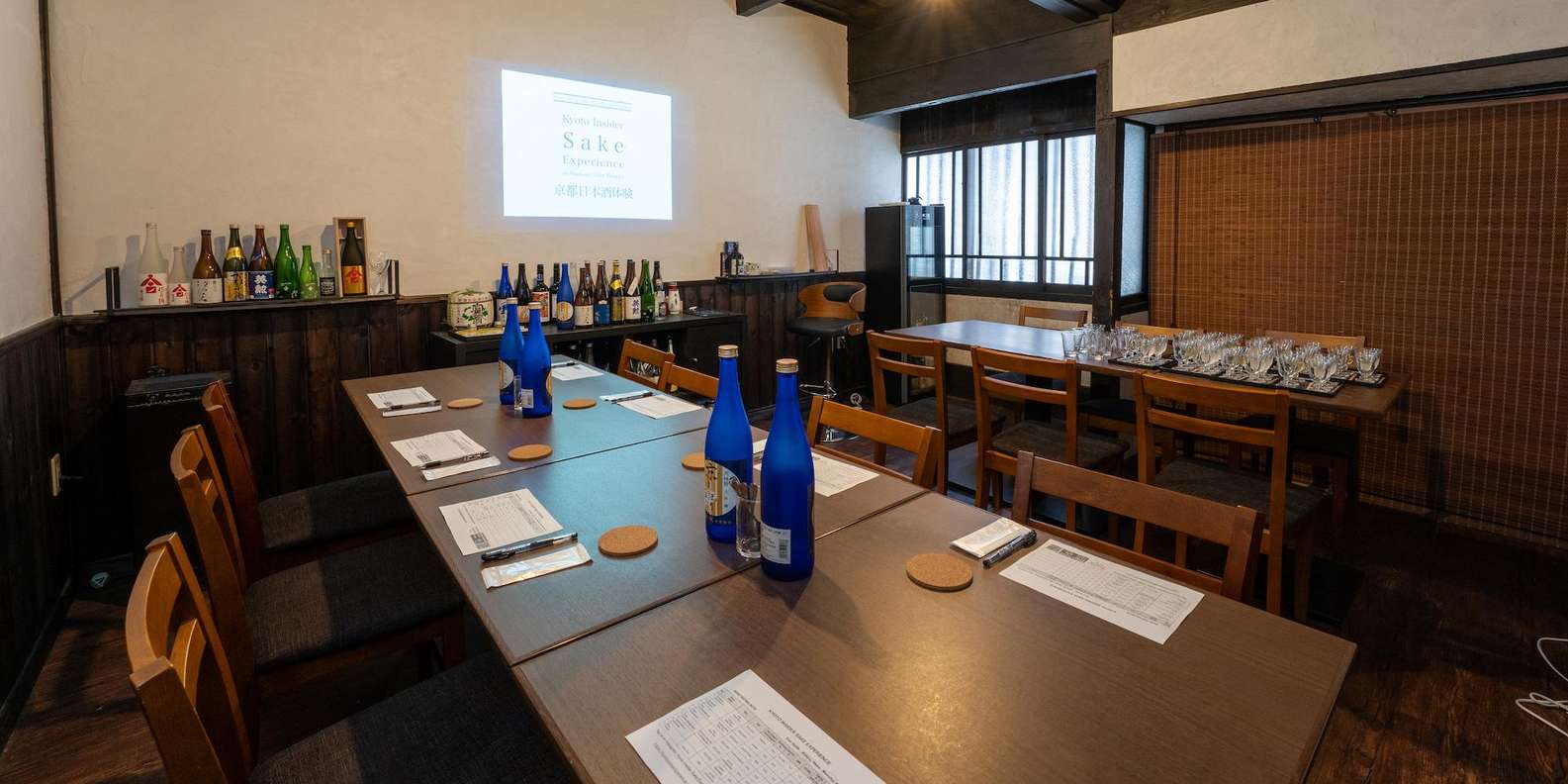
- Guided sake tasting held in our own dedicated tasting room
How the Kyoto Sake Tasting Works
Four steps from Fushimi Momoyama Station to your seventh tasting.
Meet in Fushimi
Meet your guide at Fushimi-Momoyama Station or Chushojima Station (15 minutes from central Kyoto via Keihan line). Your guide explains why Fushimi became a sake capital — soft spring water, easy river transport to Osaka.
Visit Your First Brewery
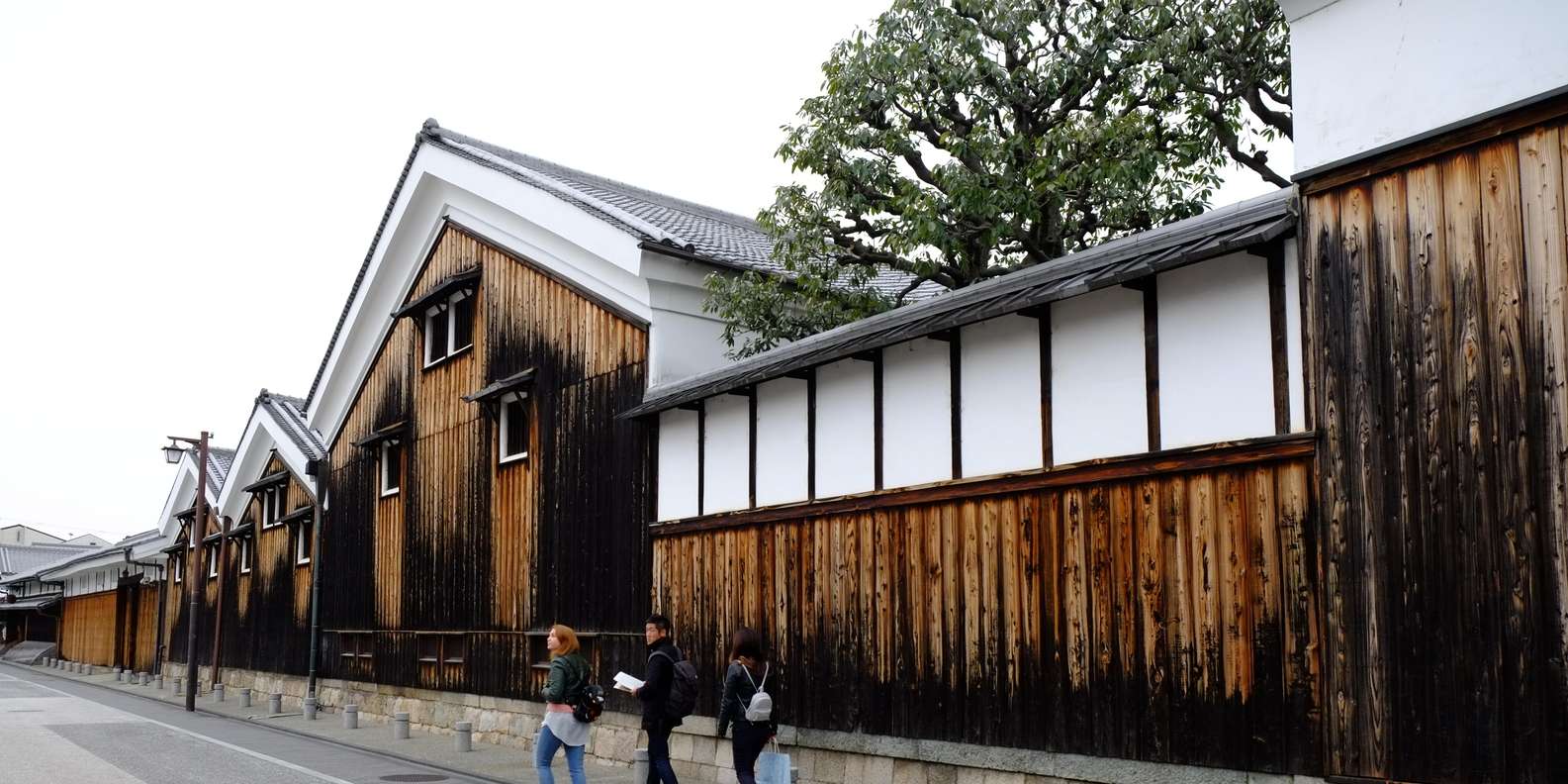
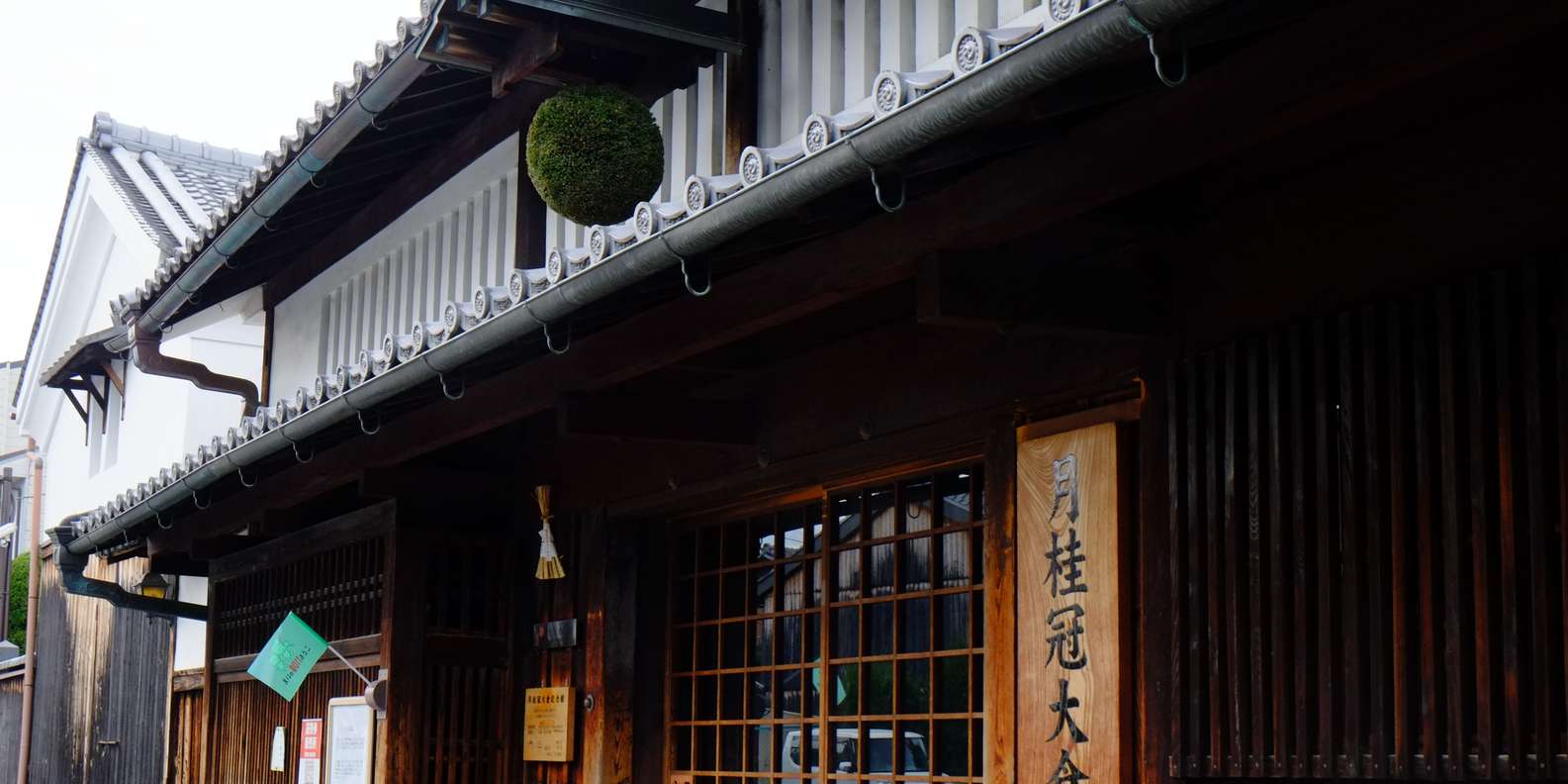
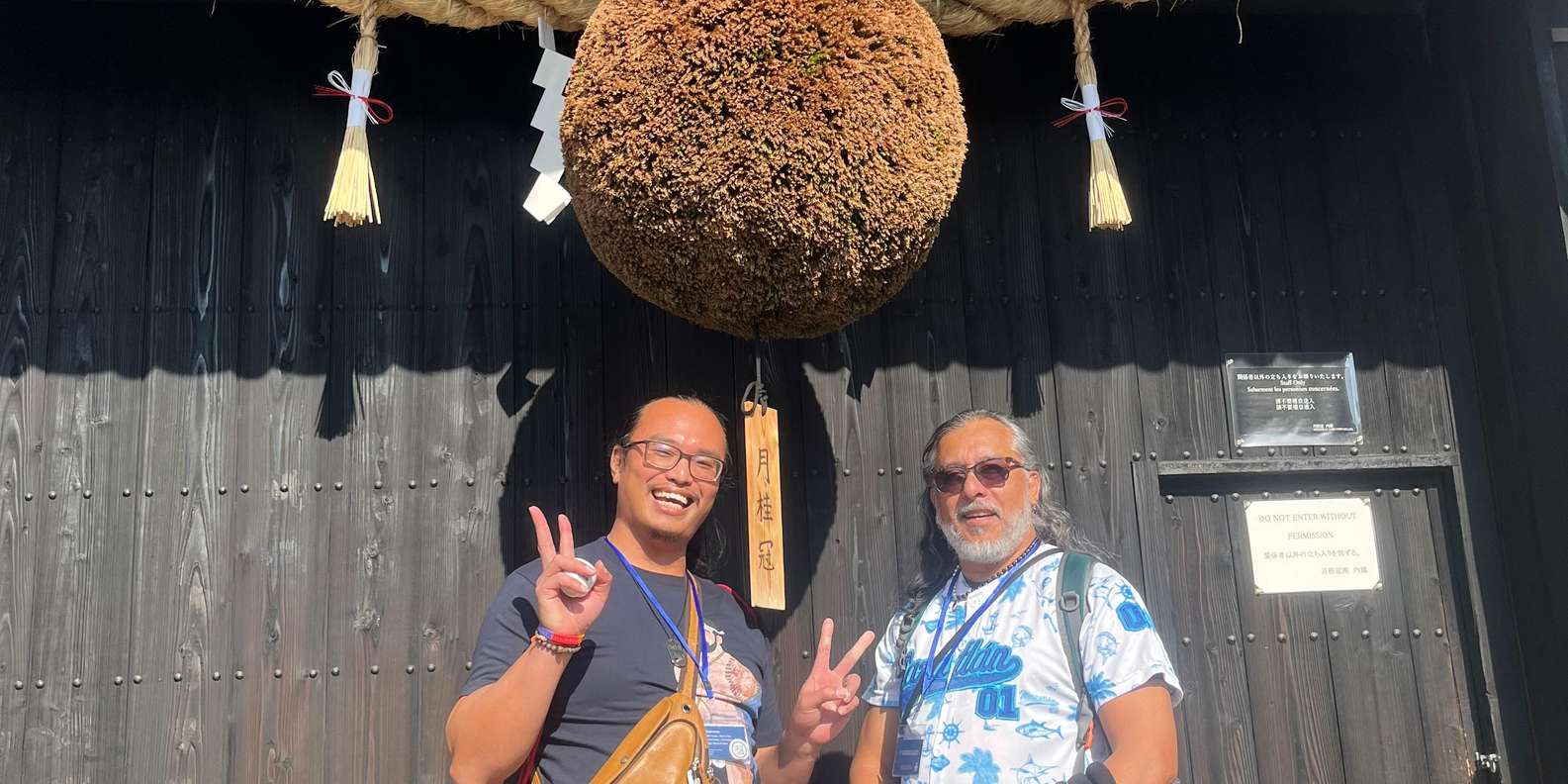
Walk into one of Fushimi's historic brewery streets. Visit an active brewery — see the wooden fermentation vats, rice-polishing machine, and the sugidama cedar balls that hang outside breweries to signal new-batch readiness.
Taste Seven Sakes
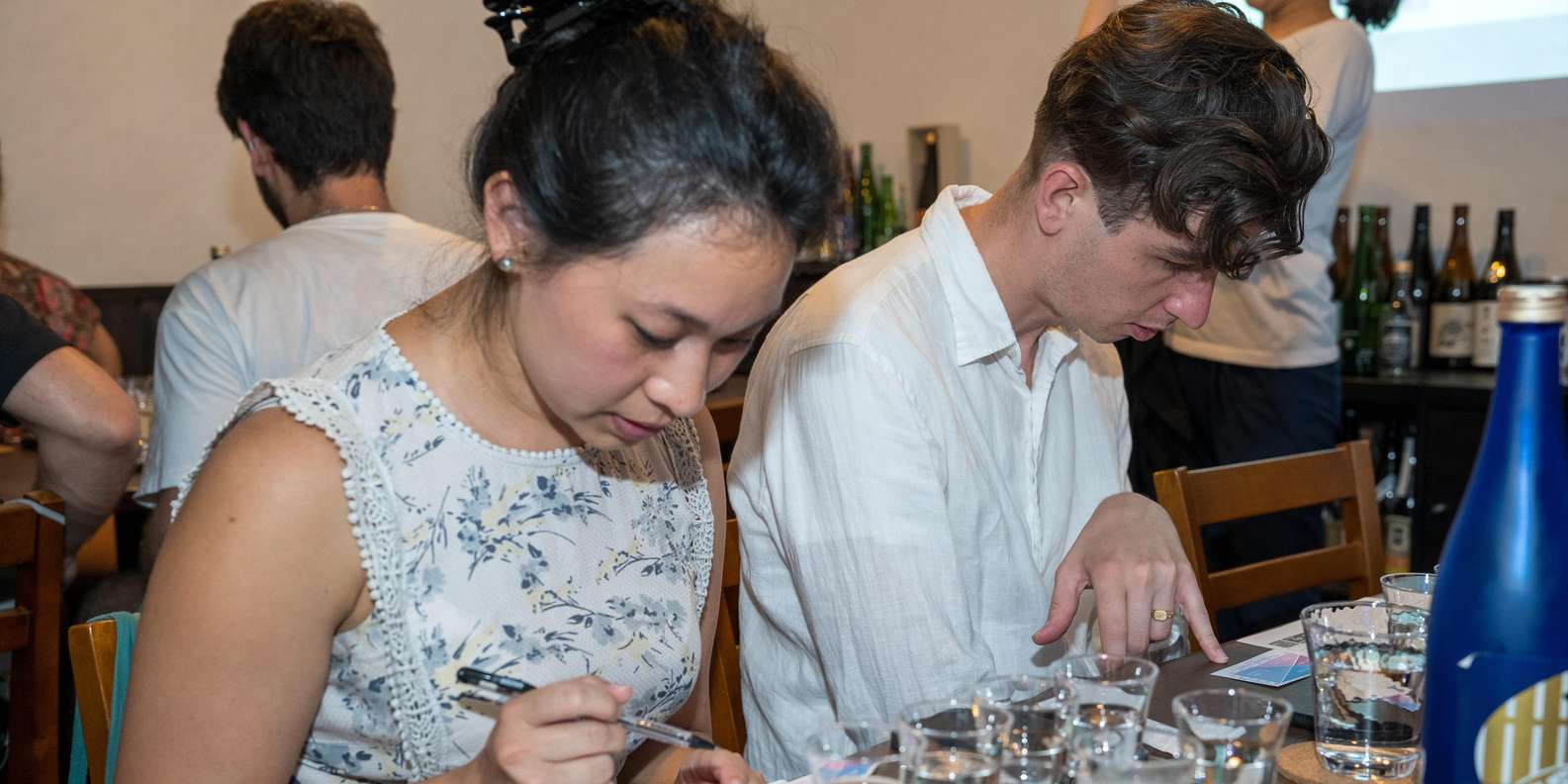
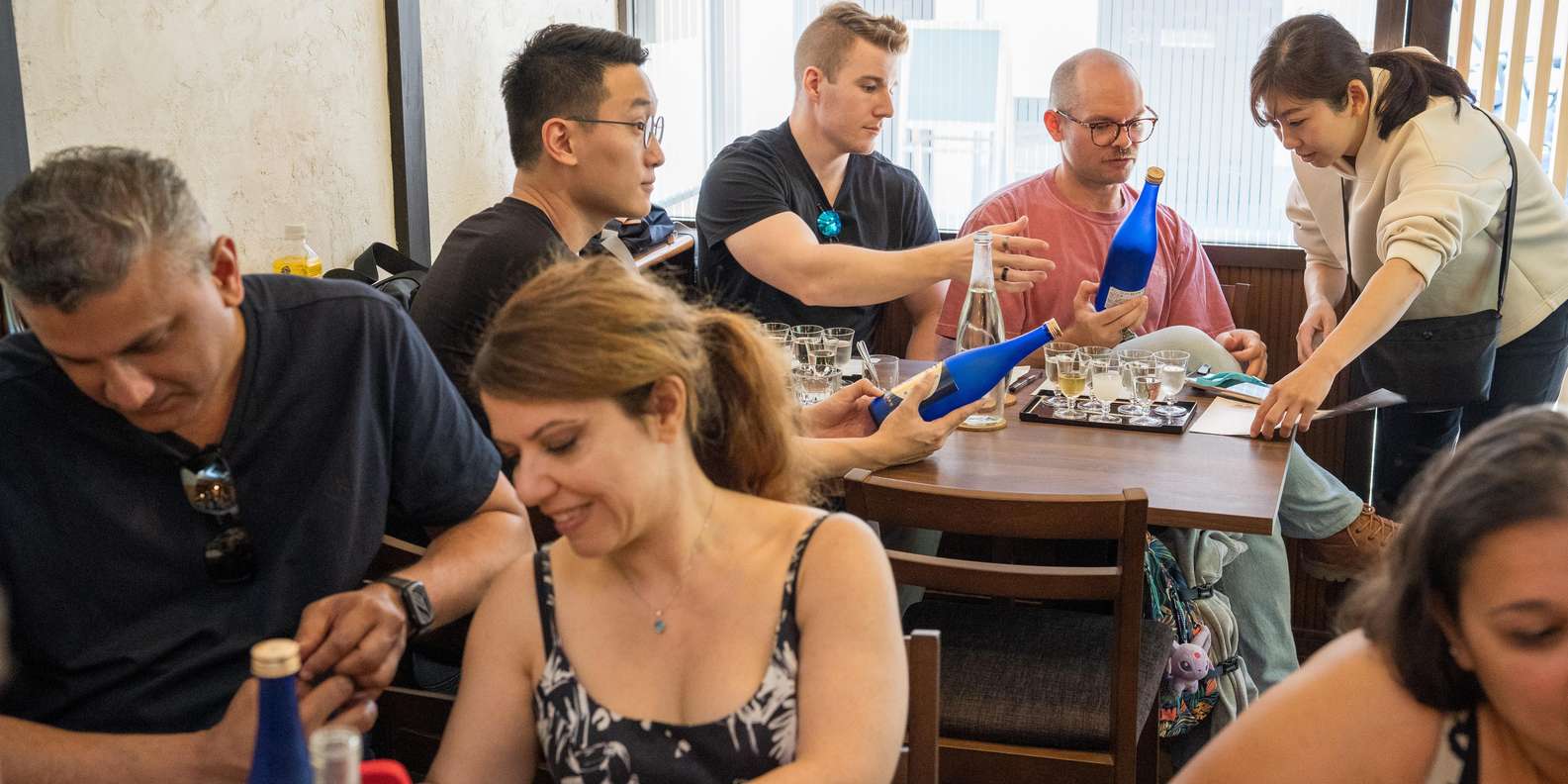
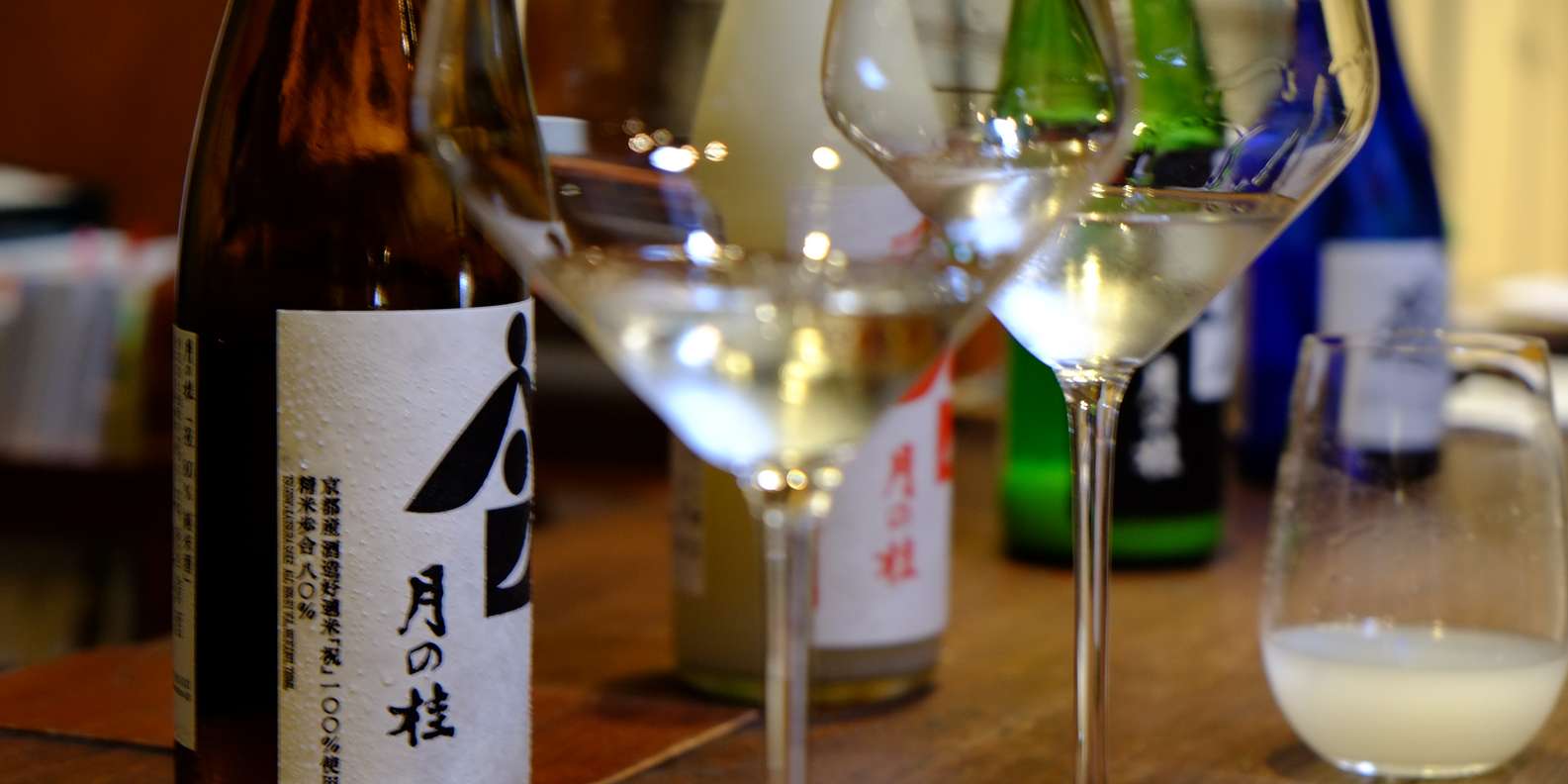
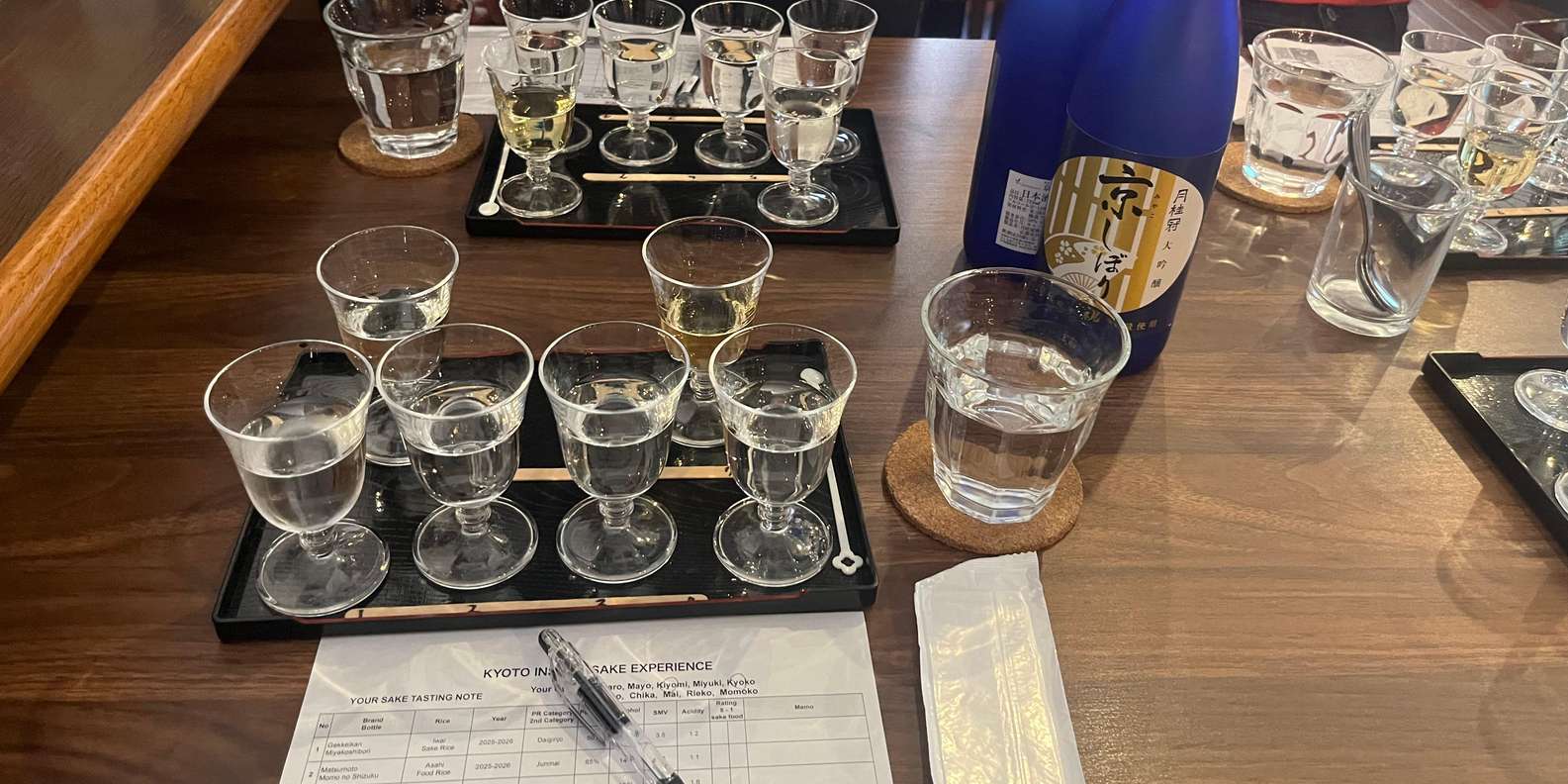
Taste across the full spectrum — junmai, honjozo, ginjo, and daiginjo grades — plus aged koshu and sparkling sake. Your guide explains polish ratios, the yeast strain differences, and why Fushimi's sake is sweeter than Niigata's.
Food Pairing
Finish with Kyoto-style food pairings — yuba (tofu skin), pickled vegetables, grilled fish, and local nukazuke rice-bran pickles. Three-hour tour ends with a list of sake to buy and pack home.
Photo Gallery
Fushimi Sake Country — Through the Lens
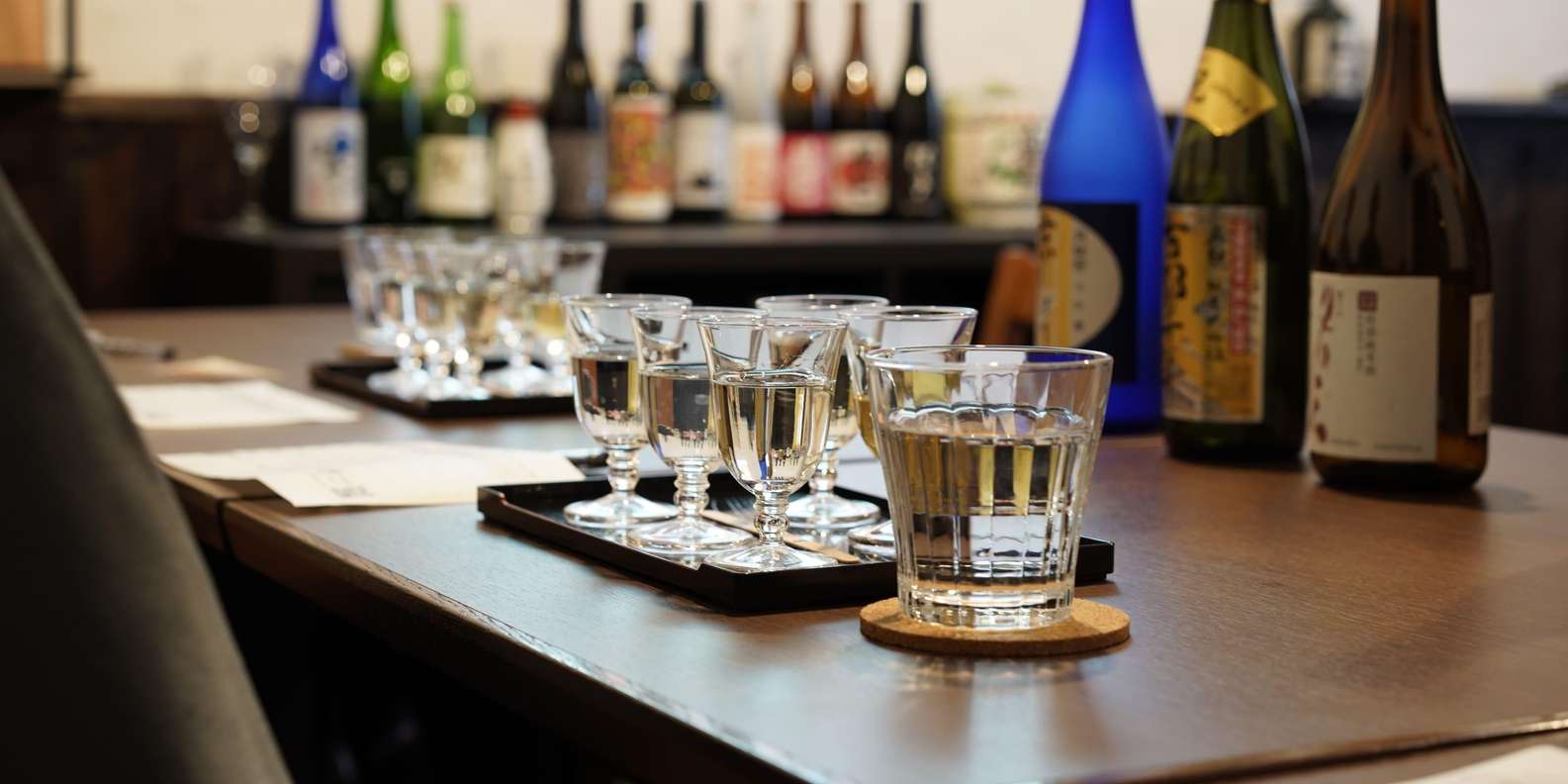
Cedar sugidama brewery balls, wooden fermentation vats, tokkuri pouring jugs, and Fushimi's willow-lined canal — captured by our guests.
Book Your Experience
Check Availability & Prices
Select your preferred date and time. Instant confirmation — free cancellation up to 24 hours before departure.
Kyoto Sake Experiences Compared — Brewery Tour vs. Gion Night vs. Advanced Tasting
Three very different ways to drink Kyoto's sake. Here's which one fits you.
| Feature | MOST POPULAR Fushimi Brewery Tour + Pairing | Gion Sake Night Walk | Advanced Insider Tasting |
|---|---|---|---|
| Starting Price | From $86/per person | From $26 | From $71 |
| Duration | 3 hours | 1.5 hours | 2 hours |
| Rating | 4.94/5 (762 reviews) | 4.85/5 (64 reviews) | 4.98/5 (31 reviews) |
| Where | Fushimi brewery district | Gion (geisha district) | Central Kyoto |
| What You Do | Visit a working Fushimi brewery and taste across sake grades, with a full food pairing | Evening stroll through Gion, sake in hand, with geisha-district stories along the way | A guided deep-dive tasting built for people who already enjoy sake |
| Food | Full food pairing included | Light bites along the way | Focus is on the sake |
| Best Time | Daytime / afternoon | Evening / night | Daytime |
| Best For | First-timers who want the complete Fushimi experience | Night owls and couples who want atmosphere over depth | Enthusiasts who want to taste seriously |
| English-Friendly? | Yes | Yes | Yes |
| Check Availability | View Gion Night Walk | View Advanced Tasting |
More Kyoto Sake Tastings & Tours
Four more ways to drink Kyoto's sake — an evening Gion stroll with sake in hand, a 7-tasting insider session with snacks, a deeper tasting for enthusiasts, and an 18-tasting Fushimi brewery marathon.
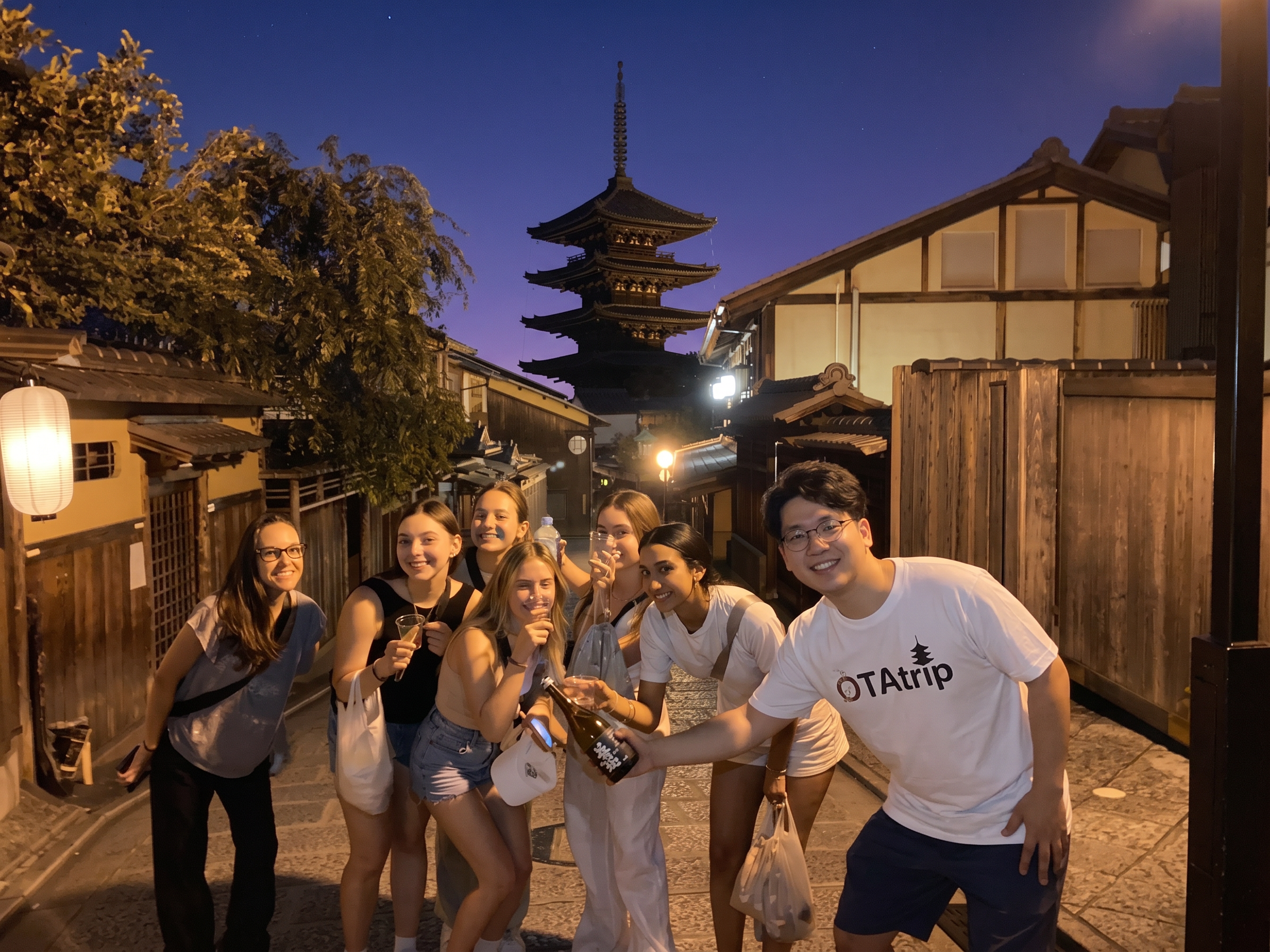 GION · NIGHT
Kyoto: Gion Sake Night Walk & Geisha District Stories
Walk through Kyoto's Gion Geisha district at night with a local guide and sake in hand. See Yasaka Pagoda, Ninenzaka, and lantern-lit streets without the crowds. Small group, relaxed, and personal.
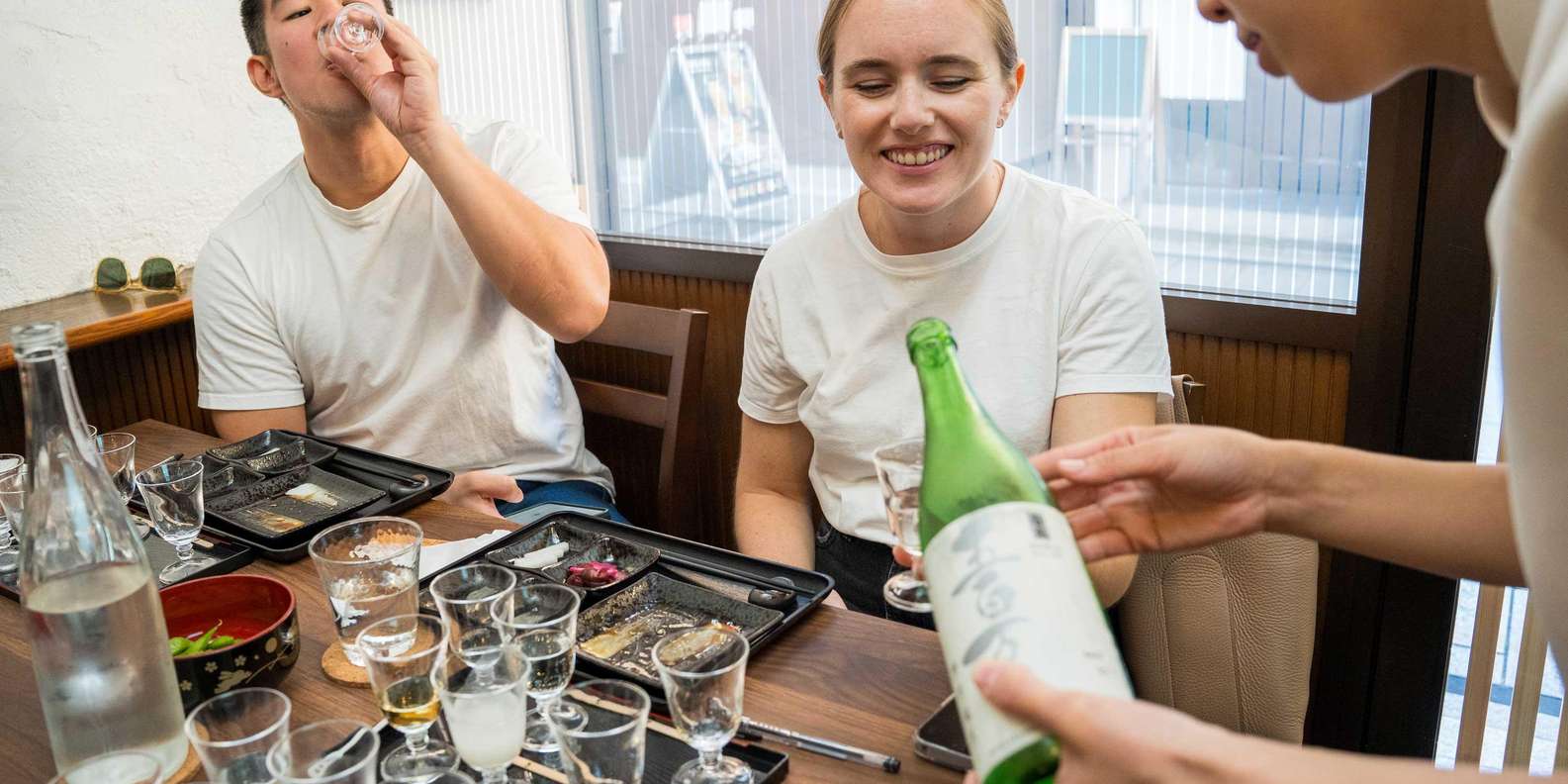 7 TASTINGS
Kyoto: Insider Sake Experience with 7 Tastings and Snacks
Join an expert-guided sake tasting in Kyoto and discover 7 distinct styles. Your Japan trip gets better once you truly enjoy sake.
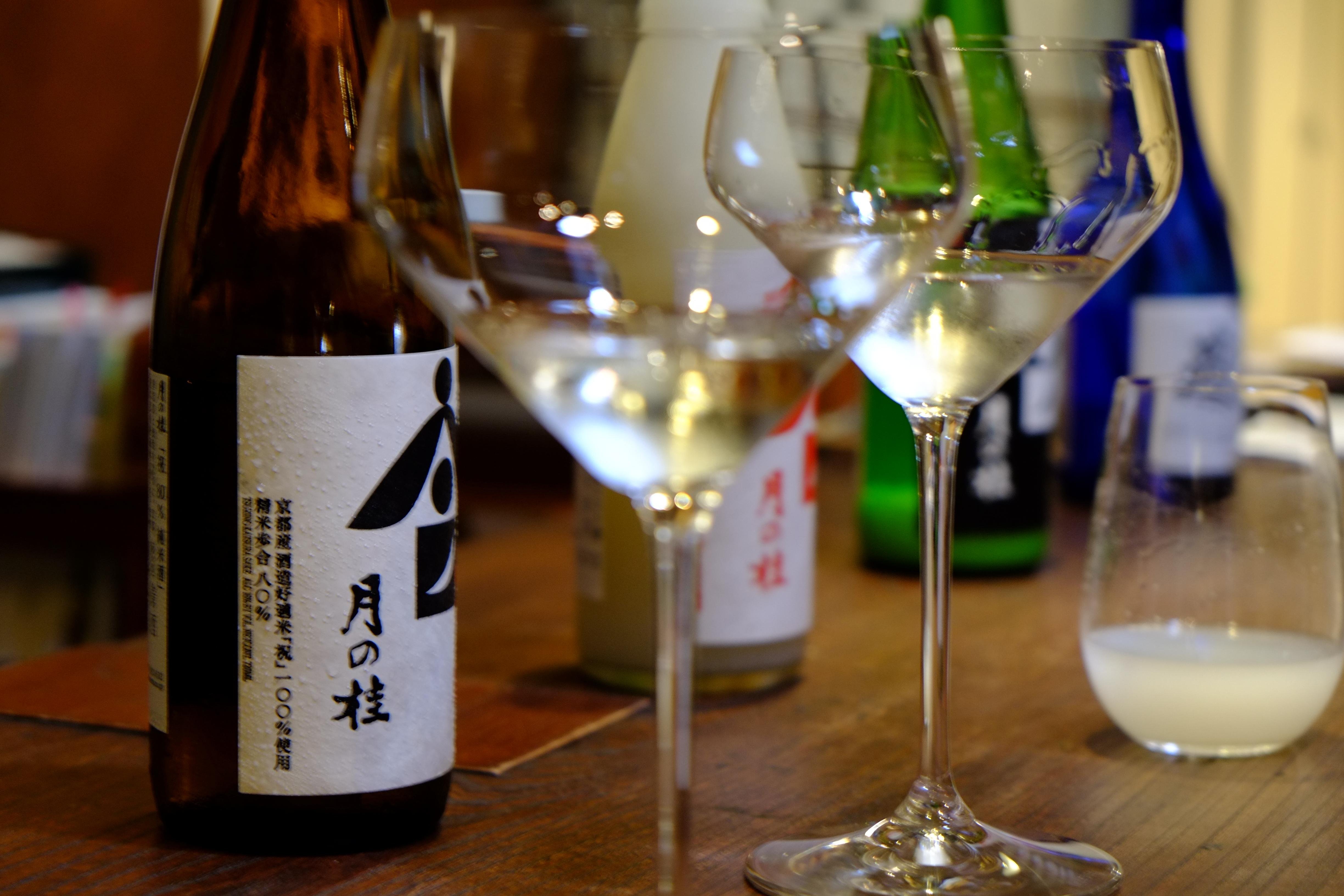 ENTHUSIAST PICK
Kyoto: Advanced Insider Sake Tasting Experience
This is not a typical sake tasting. In this advanced, expert-led experience, you’ll explore how different brewing philosophies create dramatically different expressions of sake.
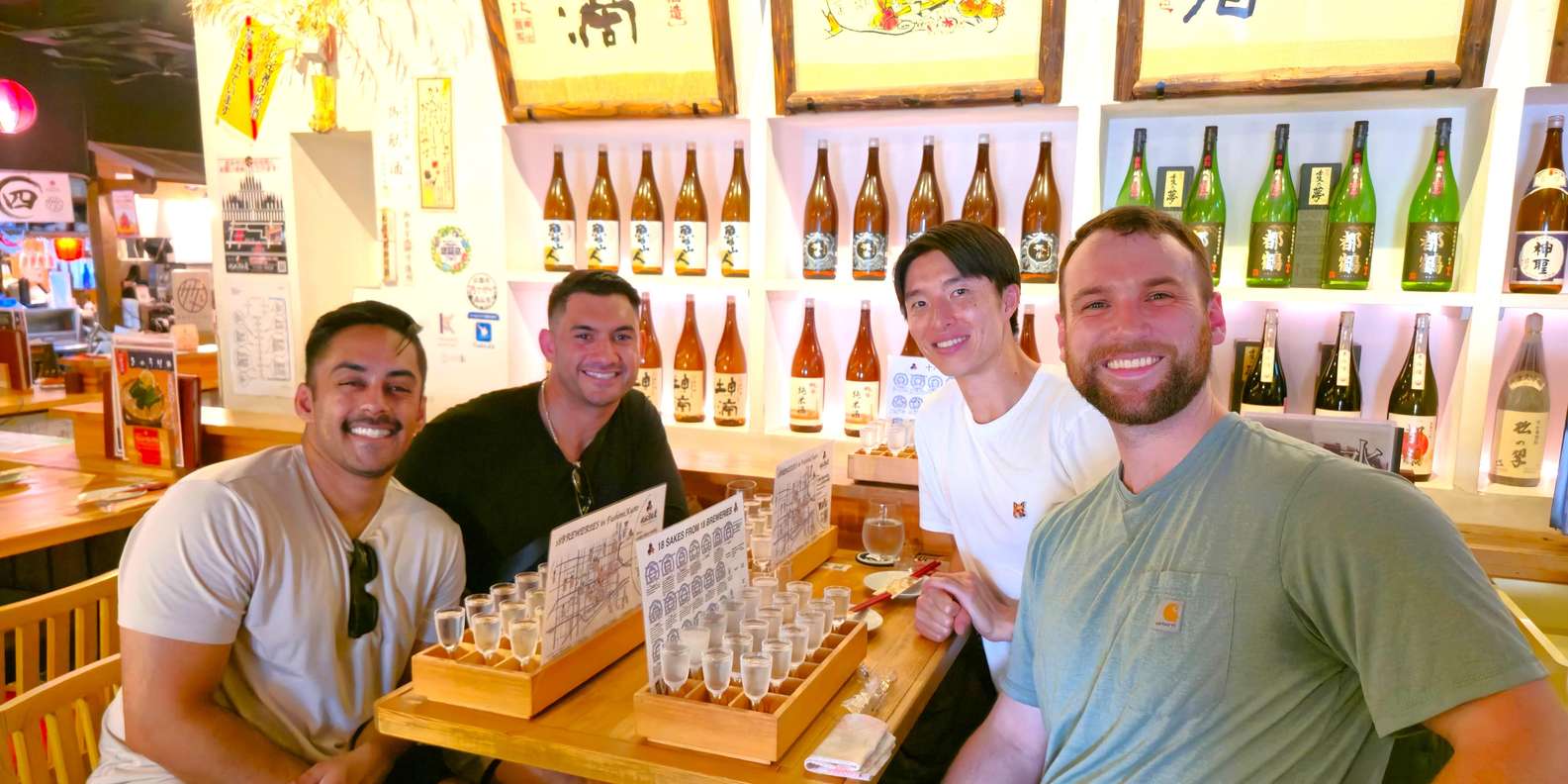 18 TASTINGS
Kyoto: Fushimi Sake Brewery Tour - 18 Tastings in 2.5 Hours
Get ready for an exhilarating sake adventure in Kyoto’s Fushimi district! This high-energy tour features two iconic breweries and a legendary tasting spot.
The Story in the Glass
Sake Tasting in Kyoto: Why Fushimi, and What to Drink
Kyoto is one of Japan's two great sake capitals — and the reason is in the water. Here's what to know before you taste, and where to do it.
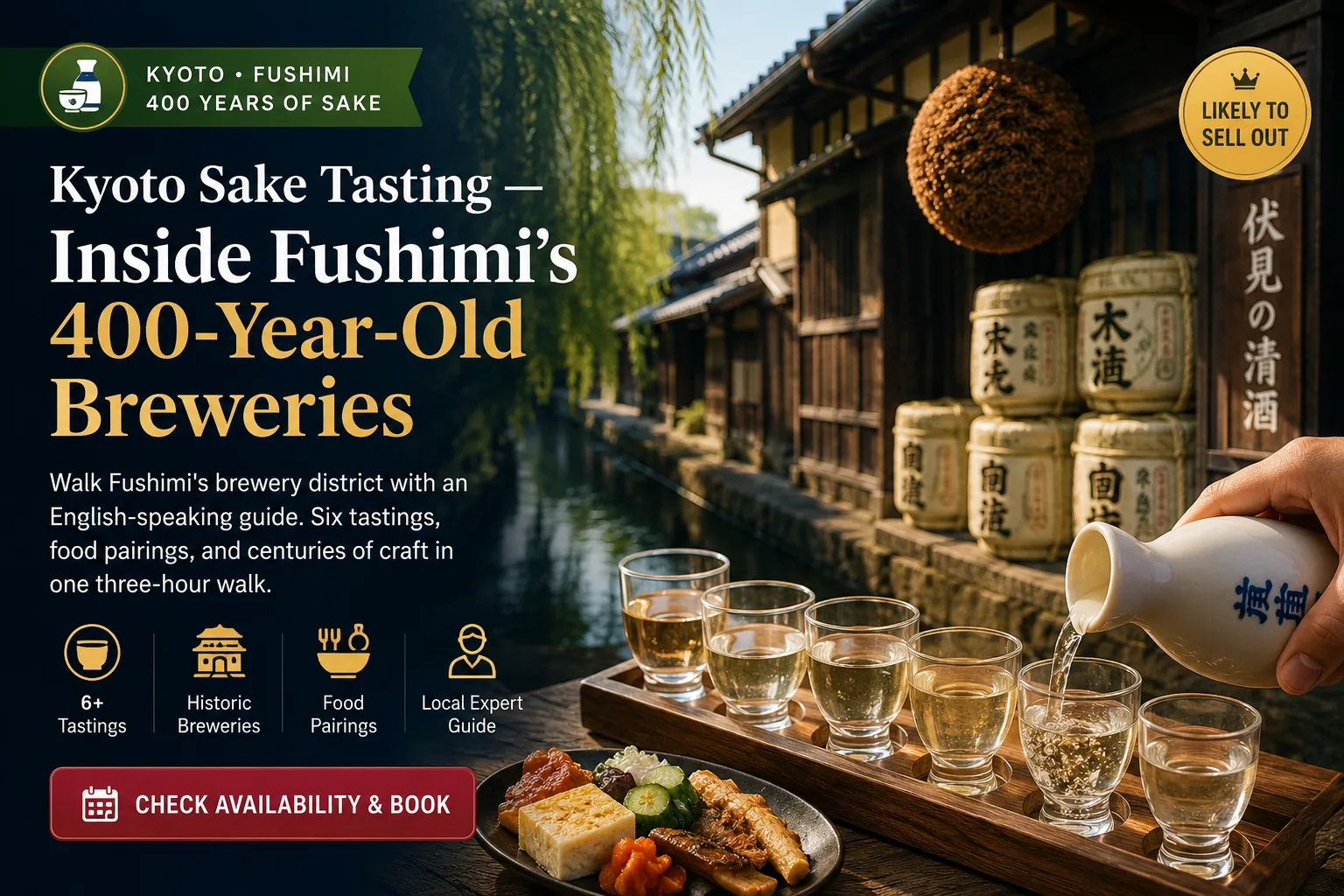
Most visitors think of Kyoto for temples, not breweries. But the city’s southern district of Fushimi is Japan’s second-largest sake-producing district, after Nada in Kobe — and it has been a serious brewing centre for roughly 400 years. Around twenty working breweries still operate here, several of them open to visitors. Knowing a little of why is the difference between a nice afternoon and actually understanding what’s in your cup.
It comes down to the water
Sake is mostly water, so the water decides the style. Fushimi sits on a bed of medium-soft groundwater known as Fushimizu, and that softness produces a rounder, mellower, slightly sweeter sake — historically nicknamed “onna-zake” (women’s sake). It’s the deliberate opposite of Nada, whose hard, mineral-rich Miyamizu water makes a drier, sharper sake long called “otoko-zake” (men’s sake). Same drink, two philosophies, decided almost entirely by the ground it’s brewed on. Fushimi’s location at the river junction also made it a natural shipping hub — brewers floated their sake down the Uji and Yodo rivers to Osaka on flat-bottomed jikkokubune boats, and you can still ride a replica along the willow-lined canal.
Fushimi or Gion — where to actually taste
Two very different settings, and it’s worth choosing on purpose:
- Fushimi is the brewery experience — daytime tours that walk you into a working brewery, past the cedar sugidama balls and fermentation vats, with structured tastings and often a food pairing. This is where names like Gekkeikan (founded in Fushimi in 1637) and Kizakura are based, and where the Gekkeikan Ōkura Sake Museum sits.
- Gion, on the other side of the city, is the atmosphere experience — an evening stroll through the geisha district with sake in hand and stories along the way, lighter on brewing detail but heavy on mood.
The tours above cover both: a full Fushimi brewery tour with pairing, a Gion night walk, and a deeper tasting for people who already know they like the stuff.
How to read a sake menu in 30 seconds
The grades sound intimidating and aren’t. They’re set chiefly by the rice-polishing ratio (seimaibuai) — how much of each grain is milled away before brewing, which removes fat and protein for a cleaner taste:
- Honjōzō / Ginjō / Daiginjō — increasingly polished. Ginjō leaves ≤60% of the grain (and uses a special low-temperature method); Daiginjō leaves ≤50% and is the most delicate and aromatic.
- Junmai is a separate label, not a higher grade — it simply means no distilled alcohol was added. You’ll see it combined, as in junmai daiginjō.
For a first tasting, work from honjōzō up to daiginjō and you’ll taste the progression clearly. Any good guide will walk you through it — that’s most of what you’re paying for.
Kyoto, Osaka, or Tokyo for sake?
A common question, and Kyoto wins cleanly for one reason: you can taste at the source. Fushimi is an actual brewing district with breweries you can walk into — Osaka (a short train ride away) and Tokyo have plenty of excellent sake bars, but no comparable cluster of working breweries to tour. If tasting sake where it’s made is the point of the trip, Kyoto is the answer.
The natural pairing
Fushimi’s rounder, food-friendly sake is made for the table — which is why a tasting and a sushi making class make such a natural pair. Shape your own nigiri and maki with a chef, then taste how a junmai versus a daiginjō changes the same piece of fish; several sushi classes even include a sake pairing of their own. Check availability on any of the tastings above to start.
Guest Reviews
What Visitors Say
4.9/5
from 845 verified visitors
"This was so great. You learn so much about the history of the brewery, how they make sake and taste so many to learn your preferences. Mayo was the best guide. She was really nice and funny and made everyone feel welcome. You should do this even if you don’t think you like sake."
"Kataro was a fantastic guide. This is a great tour and we all learned so much about sake. The food pairings were eye opening. Take this tour if you love sake."
"Amazing experience!!! Kyoko was our guide and she was absolutely brilliant - so engaging, fun, and she was just a great teacher. It’s also very worth it in terms of the amount of drinks/food you get - and she was also able to arrange a vegan friendly option for me last minute. Would highly recommend this experience to anyone coming to Kyoto!!"
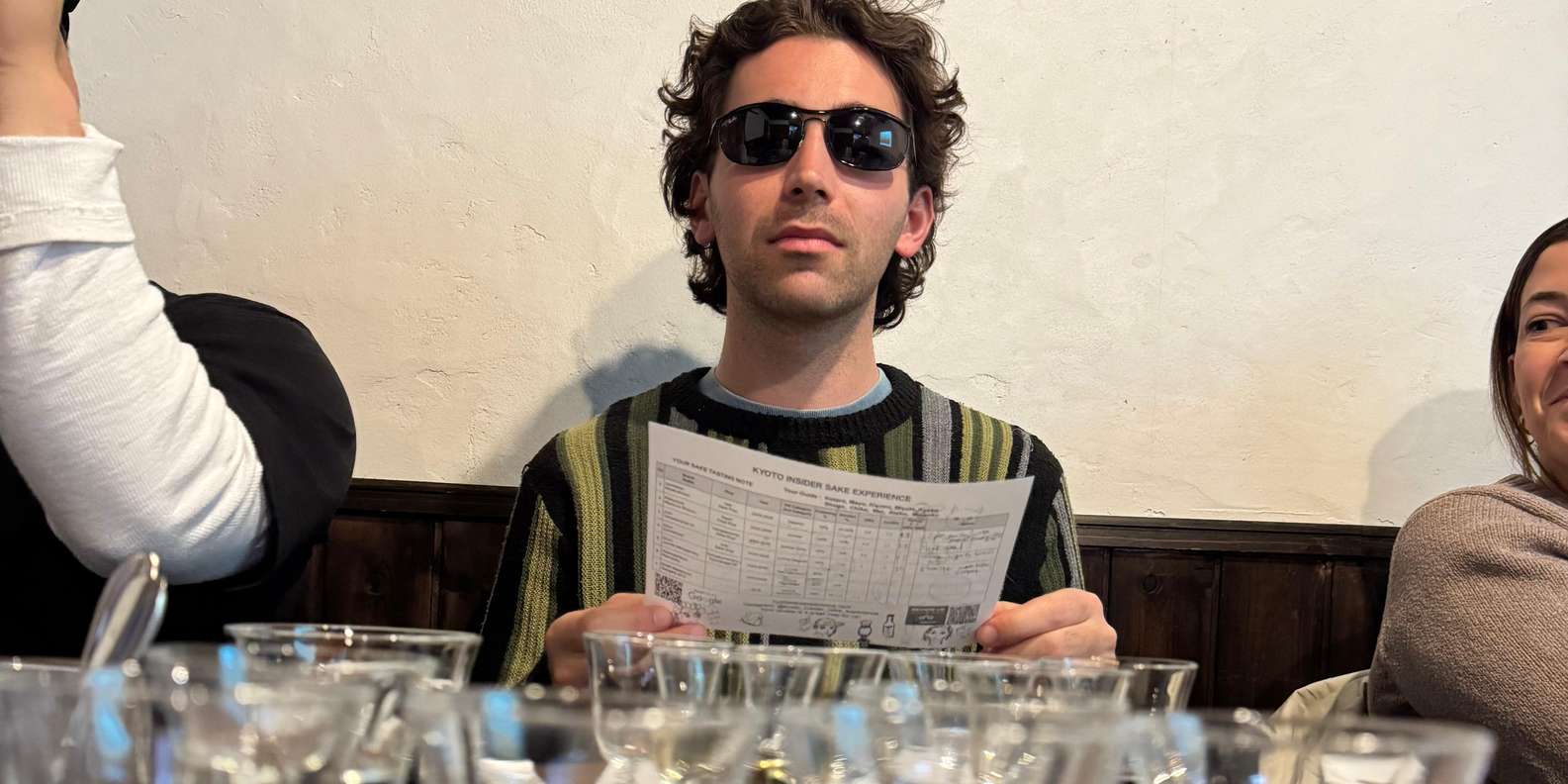
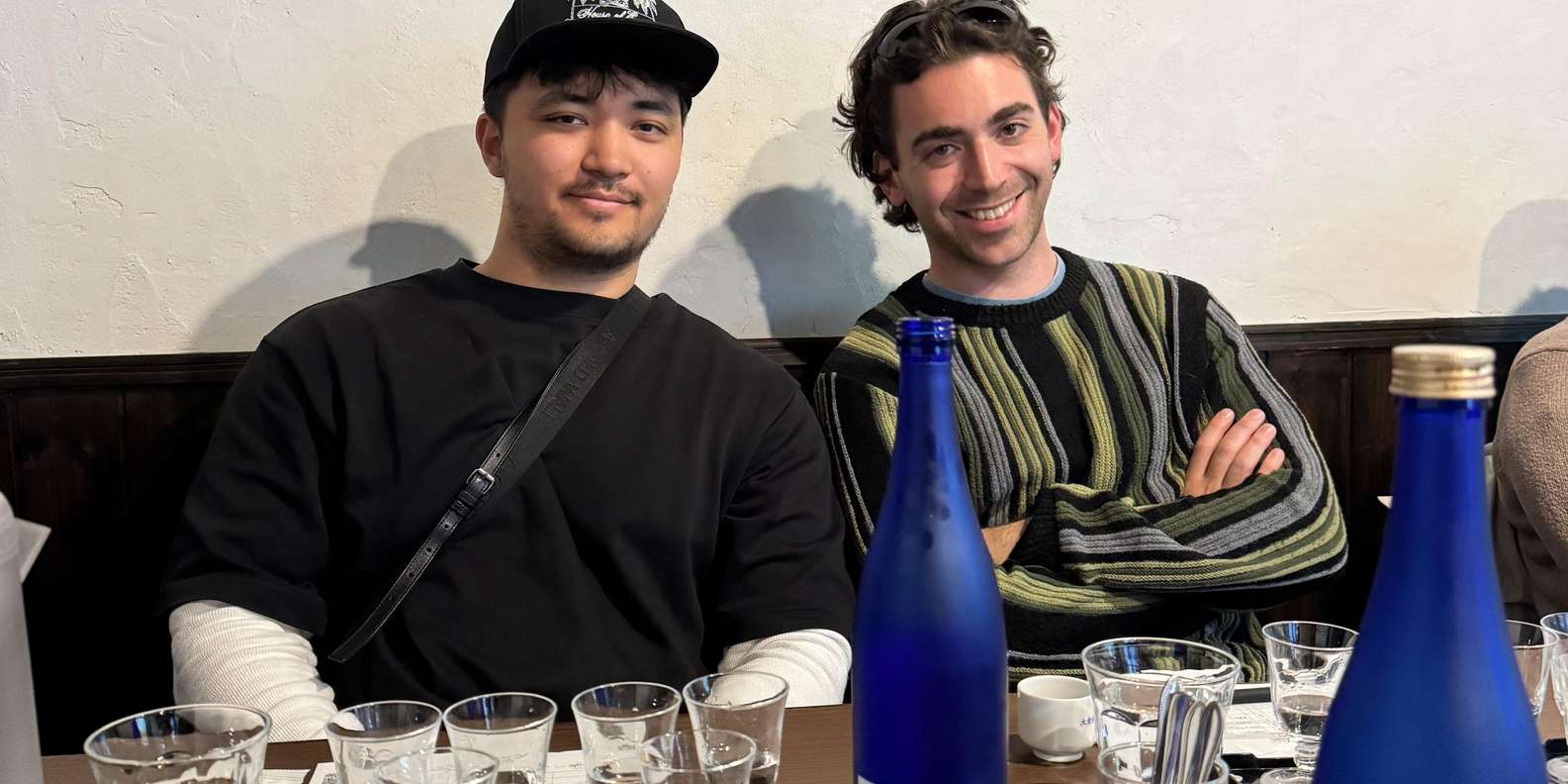
"Ask for Kyoko!!! Kyoko was a phenomenal sake guide and sake sommelier! Knowledgeable, friendly and impeccable English! 10/10 experience! we'll be back for the advanced sake your."
"Informative and great guide! Spent a lovely day learning about sake, tasting different types and paring those with food. With this knowledge we really look forward to the restaurant tonight."
"I did this tour last year when I was in Kyoto and I loved it so much when I came back with my friends I made sure we all did it again. kyoko was a great guide very knowledgeable about the sake history and the making process. She also helped us understand the difference between sakes and how to read labels so we can pick the one we like. The food pairing was also a great way to look at sake in a different light. I would highly recommend this tour to anyone asking what to do in Kyoto."
"Shogo our guide was great. He really knows about the process of making Sake as well as what to look for in a good Sake. The tasting part of the tour was well done as well as we were able to learn about food pairings etc. if you are interested in Sake and how to enjoy it, this tour is a must!"
"Kyoko is actually my favorite tour guide I’ve ever had. She’s so bubbly and lively! She has a great sense of humor and if anyone is from the US, you’ll appreciate her because she lived there and she speaks like she’s from there! She’s a wealth of knowledge and shred so much insightful history with us, we learned a great lots and I only hope that you are lucky enough to have her as you guide!"
"Kyoko was an amazing host - bubbly and very knowledgeable about sake. Highly recommended!"
"Perfect experience!!!!! A must do in Kyoto and Chika is totally awesome!!! Muito obrigado! 🇧🇷"
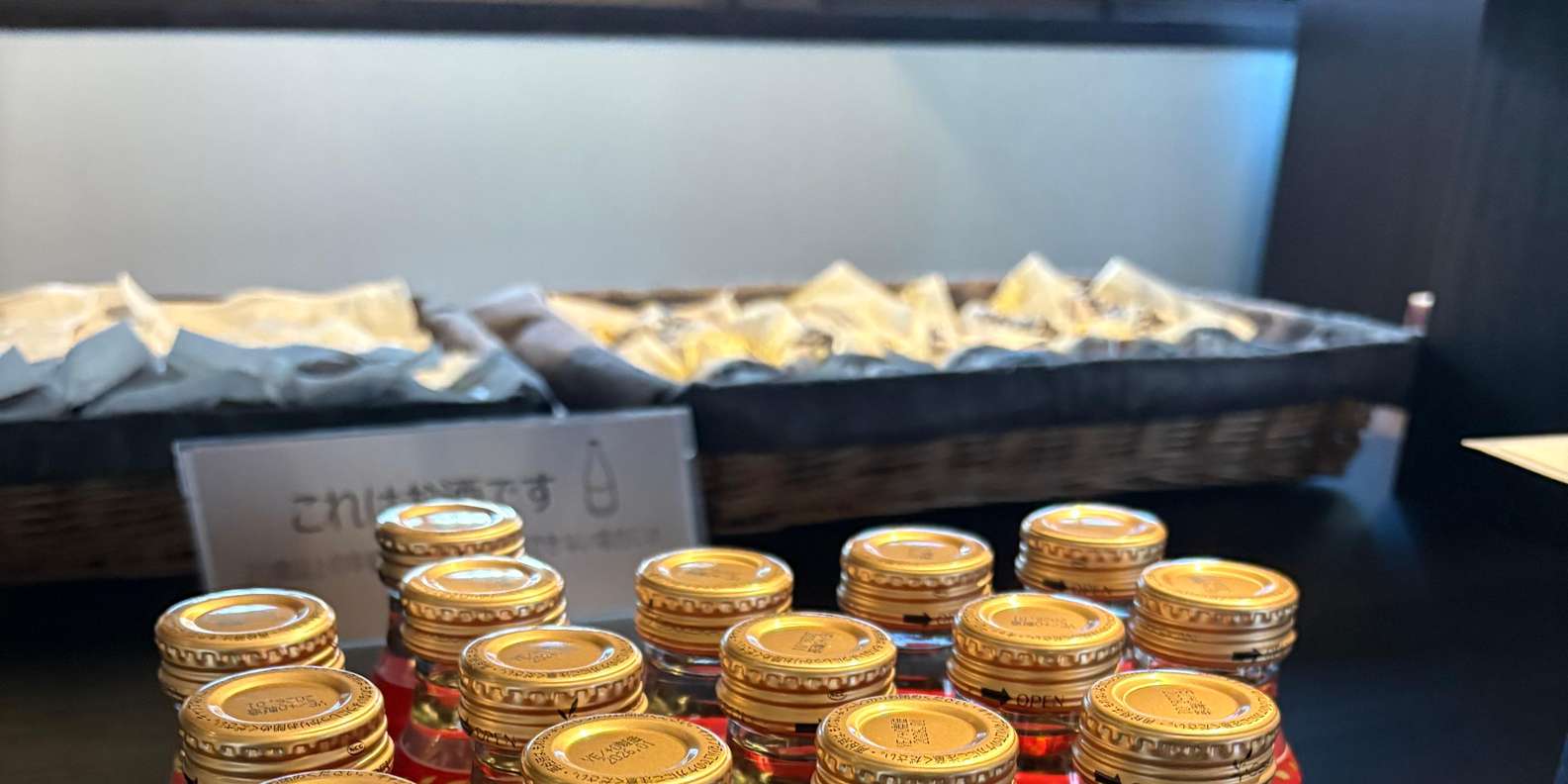
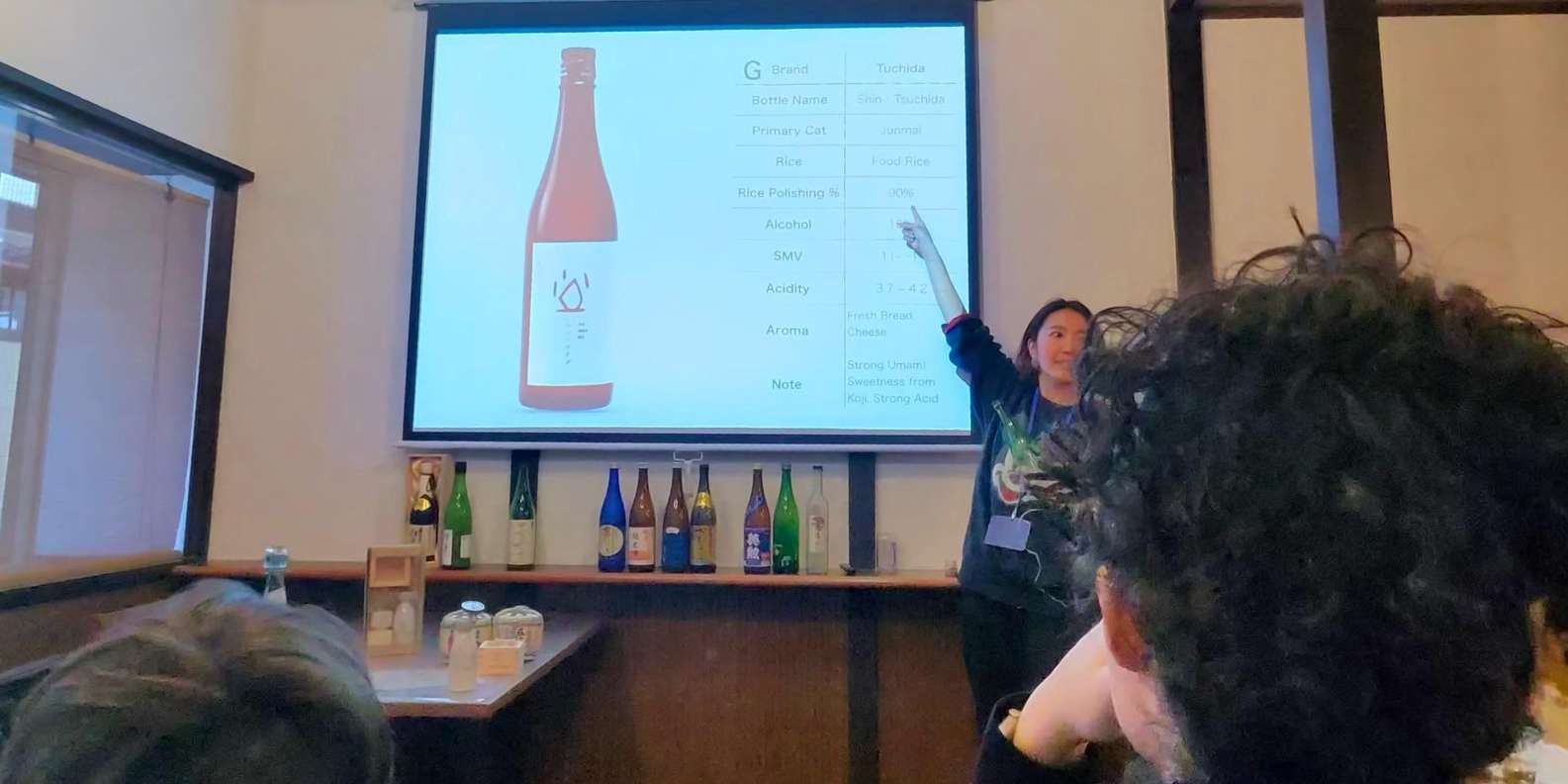
"Mayo was amazing! Very knowledgeable and funny, overall great experience. Will recommend to others traveling to Kyoto."
"Mai was brilliant and it was a nice way to be introduced to sake, understand its historic role and how its brewed. It was also a great way to connect with other travellers."
"Kyoko did an amazing job! She has great knowledge about sake and a great sense of humour as well as taste! Thanks again!"
"Kyoko was an amazing guide. So knowledgeable and made the history and information interesting and easy to learn. Fabulous experience and highly recommend to anyone who wants to learn more about sake and learn to tell the difference between the different kinds!"
"Miyuki was an enthusiastic and knowledgeable guide for this fantastic tour. As someone who doesn't drink a lot of sake (or make that Nihonshou!) it was really interesting to learn about the history of the drink and the Gekkeikan family, as well as understand the effect different levels of polishing had on the overall taste. One of the best tours we've had during our time in Japan!"
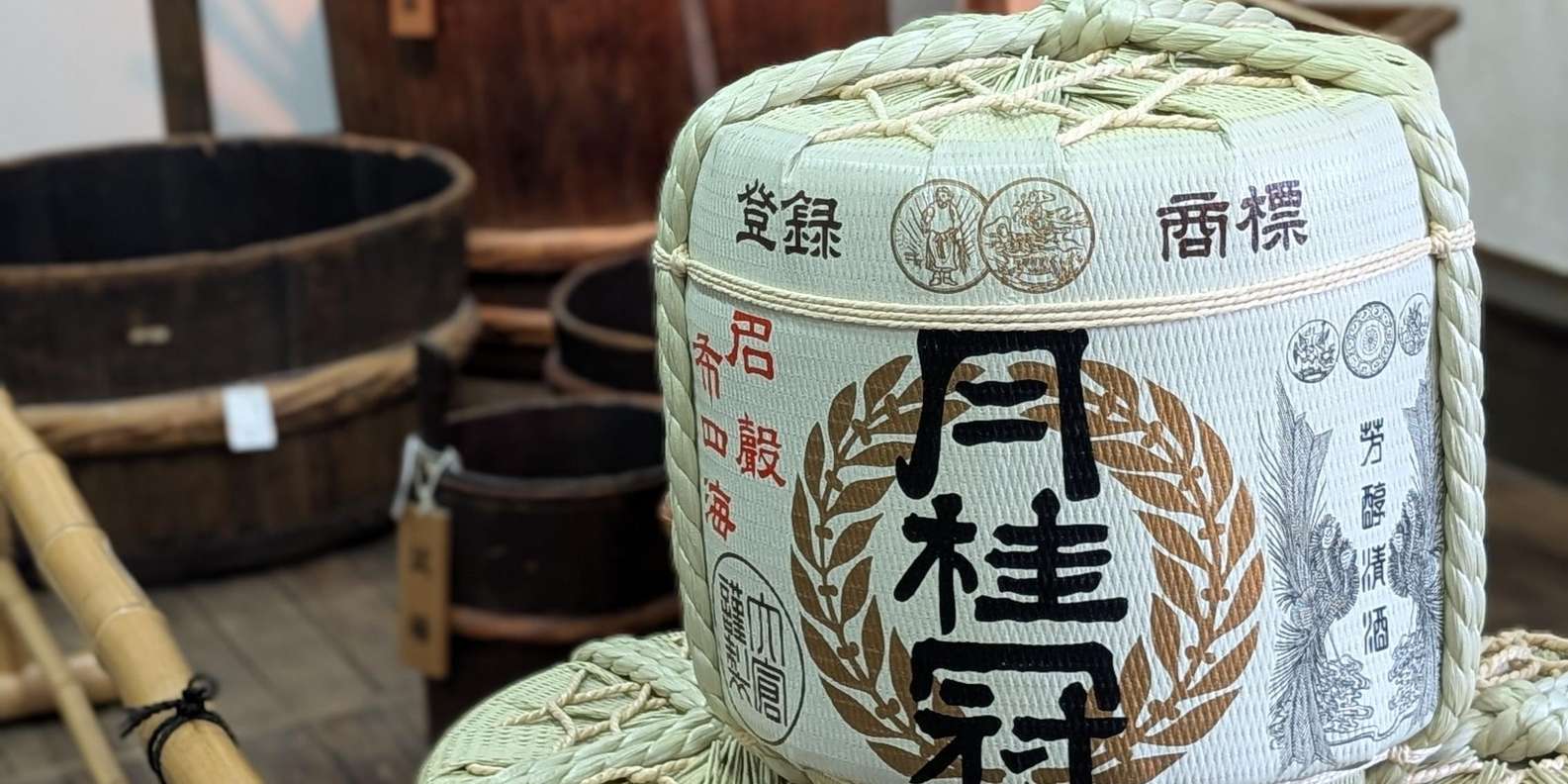

"Our guide Masa is genuinely enthusiastic in introducing the wine and dine scene of Kyoto to us. Love the whole experience. Kyoto is such a romantic city that a guided walking tour at night seems most suitable."
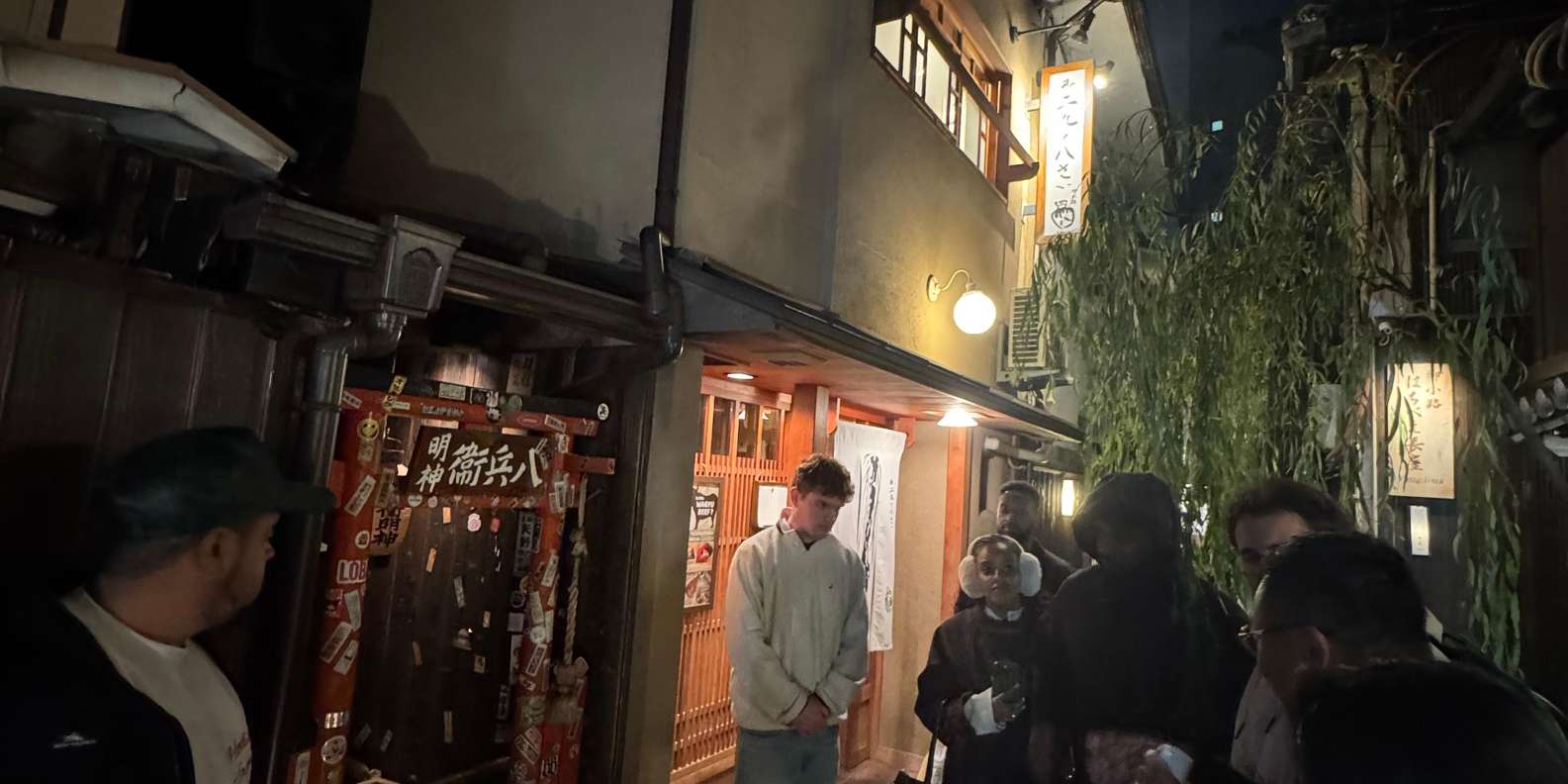
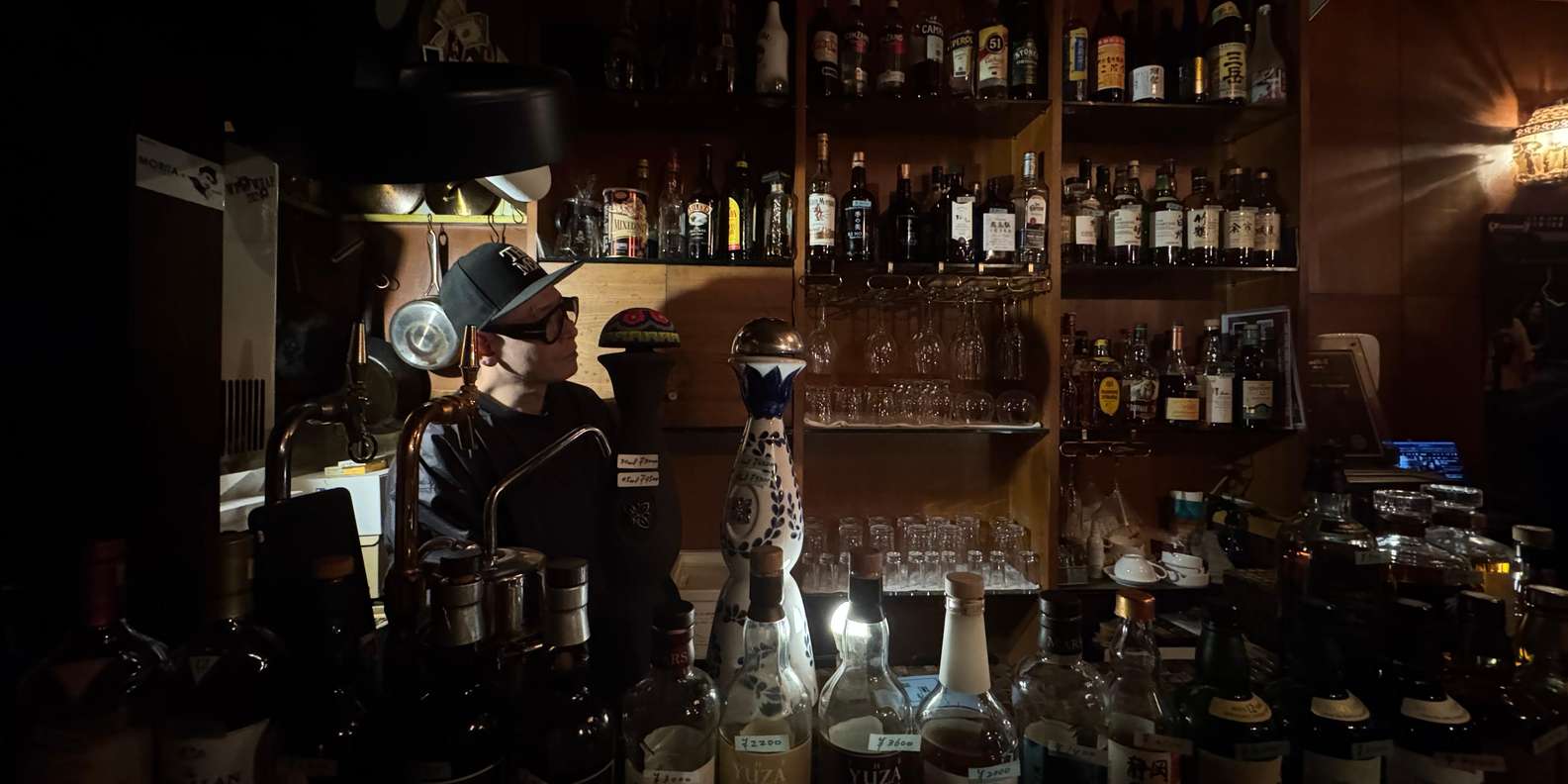
"The tour was a mix of informative and fun. The exploration was unexpectedly fun. And especially we got very lucky with a fantastic group of folks."
Read all 845 verified reviews
See All ReviewsReady to Book Your Kyoto Experience?
Pick the right category for your trip — tea ceremony, geisha experience, sumo show, Fushimi Inari, day trip, or private tour. 119 tours compared with free cancellation. Starting from $86 per person.
Browse All Kyoto ToursFAQ — Kyoto Sake Tasting Tours
Everything you need to know about Kyoto sake brewery tours.
Fushimi has four things other regions lack: soft spring water (the Momoyama aquifer), cool winter temperatures for fermentation, river transport for historical shipping to Osaka, and around 400 years as a brewing centre. Fushimi is Japan's second-largest sake-producing district, after Nada in Kobe — its medium-soft water gives a rounder, slightly sweeter style historically called 'onna-zake'.
Typical tours visit 2–3 active breweries out of the roughly 20 sake houses still operating in Fushimi. Brand names you may recognize: Gekkeikan (one of the world's largest, founded in Fushimi in 1637), Matsumoto, Kizakura, and Tamanohikari. Each brewery has distinct water profiles and house styles.
Most sake tours include 5–7 distinct tastings, covering the grades: junmai (pure rice, more umami), honjozo (rice + small alcohol addition), ginjo (polished rice, fruity), daiginjo (highly polished, delicate), aged koshu, and often a sparkling sake.
No. Tours include a beginner-level introduction — rice polishing ratios, yeast selection, koji mold, and fermentation temperature. By the end you'll understand the difference between futsu-shu everyday sake and premium daiginjo, and why prices vary from $5 to $100 a bottle.
Most include Kyoto-style food pairings — yuba (tofu skin), pickled vegetables, grilled fish, wagyu beef skewers, or Kyoto tsukemono pickles. Izakaya crawl tours include more substantial bites across multiple pubs. Check the tour description for specifics.
A sake tour is educational — brewery walks, production explanations, careful tasting notes. An izakaya crawl is social — hopping between Gion or Pontocho's traditional pubs with the local crowd, ordering food and drink, less teaching. Sake tours average 3 hours; izakaya crawls 2–2.5 hours.
Partially. Most brewery tours welcome non-drinkers at a reduced rate — you still learn production, smell the brewing, and eat the food. For non-drinkers, the Fushimi Sake District walking tour (no tastings) is a better match.
Yes. Breweries sell bottles at the tour end — expect 20% cheaper than Tokyo retail. Japanese customs allows 3 litres of alcohol for outbound travelers. Packaging: most breweries offer free gift-wrapping. Shipping internationally requires a formal exporter — ask at the brewery shop.
Shinshu (new sake) season runs December to March — you'll see breweries with fresh cedar sugidama balls hanging, signaling the new batch. Summer tours focus on aged koshu and sparkling summer sake. Tours run year-round with minor seasonal variation.
Pour for your tablemates, not for yourself — it's polite. Receive sake with both hands on the cup. Smell before sipping. Rinse with water between different grades. Don't add ice to premium sake. Your tour guide walks you through all this at the first tasting.
Both, if you can — they're different experiences. Fushimi (southern Kyoto) is the brewery district: daytime tours that walk you into a working sake house with structured tastings and usually a food pairing — the choice if you want to understand how sake is made. Gion (the geisha district) is about atmosphere: an evening stroll with sake in hand and local stories, lighter on brewing detail. Pick Fushimi for depth, Gion for mood.
Kyoto, if your goal is tasting at the source. Fushimi is a genuine brewing district with historic breweries you can actually tour, whereas Osaka — a short train ride away — has excellent sake bars but no comparable cluster of working breweries. Tokyo is the same: great bars, no brewery district. For tasting sake where it's made, Kyoto wins.
It ranges with format. An evening Gion sake walk starts around $26; a standard insider tasting with snacks runs about $60–70; a full Fushimi brewery tour with a food pairing is roughly $85; and multi-tasting brewery marathons or private sommelier sessions go higher. All include the sake, a guide, and usually some food — and most offer free cancellation up to 24 hours before.
Yes — all the tours here are run in English for international travellers, including the brewing explanations, tasting notes, and etiquette. Sake terminology (junmai, ginjo, seimaibuai) is explained as you go, so no prior knowledge or Japanese is needed.
You can — the Gekkeikan Ōkura Sake Museum in Fushimi offers a small tasting with admission, and many breweries have a tasting counter or nearby sake bar. But a guided tour is what gets you inside a working brewery, explains what you're drinking, and lets you taste across grades side by side with someone who can answer questions — which is the part most people find worth the price.
Still have questions? Email us at info@thingstobookinkyoto.com