"Awesome! A 90mn workshop that feels like home with amazing hosts, highly recommend!"
Kyoto · Central Location · 1.5-Hour Small-Group Workshop · English-Friendly
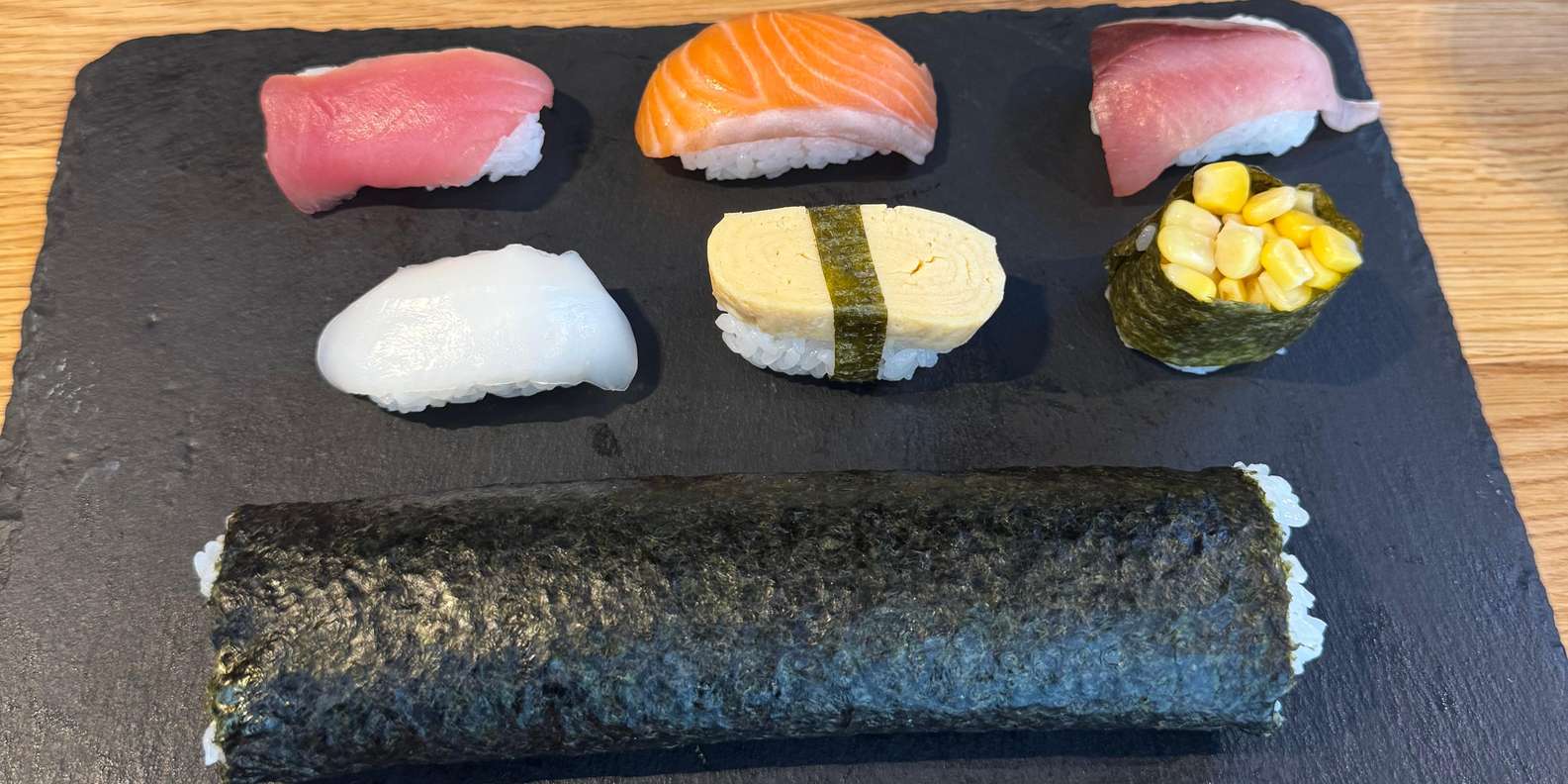
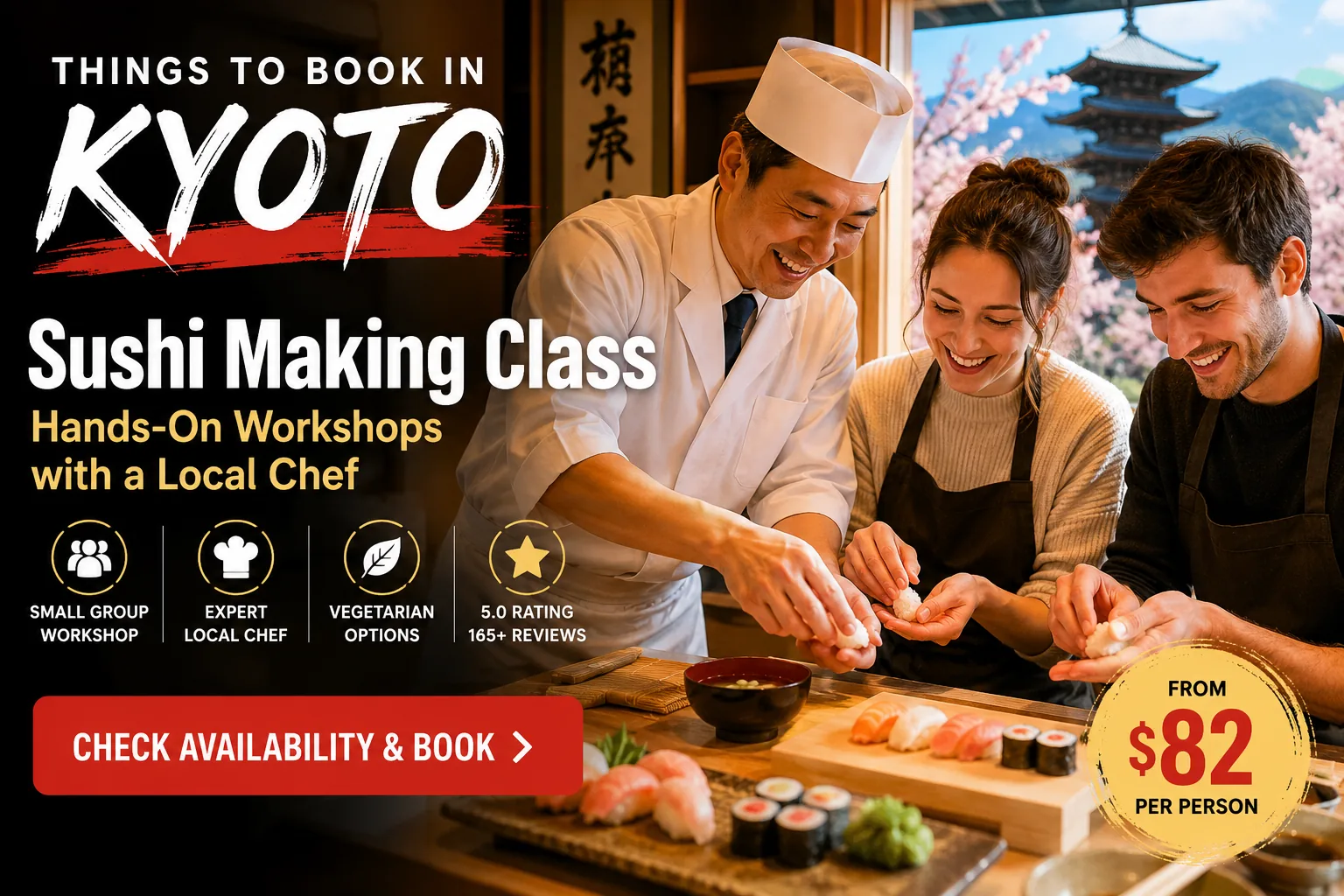
Most visitors eat sushi in Kyoto — far fewer learn to make it. This small-group sushi making class hands you the knife: a local chef walks you through seasoning the rice, handling the fish, and shaping your own nigiri and rolled maki, and then you sit down and eat exactly what you made. No experience needed, vegetarian options available, and the whole thing runs in clear, beginner-friendly English.
The Experience
Not a watch-the-chef demo — a genuinely hands-on, small-group workshop built around real technique, fresh ingredients, and eating your own sushi at the end.
Four parts: the welcome, the technique, the hands-on shaping, and the part where you eat everything you made.
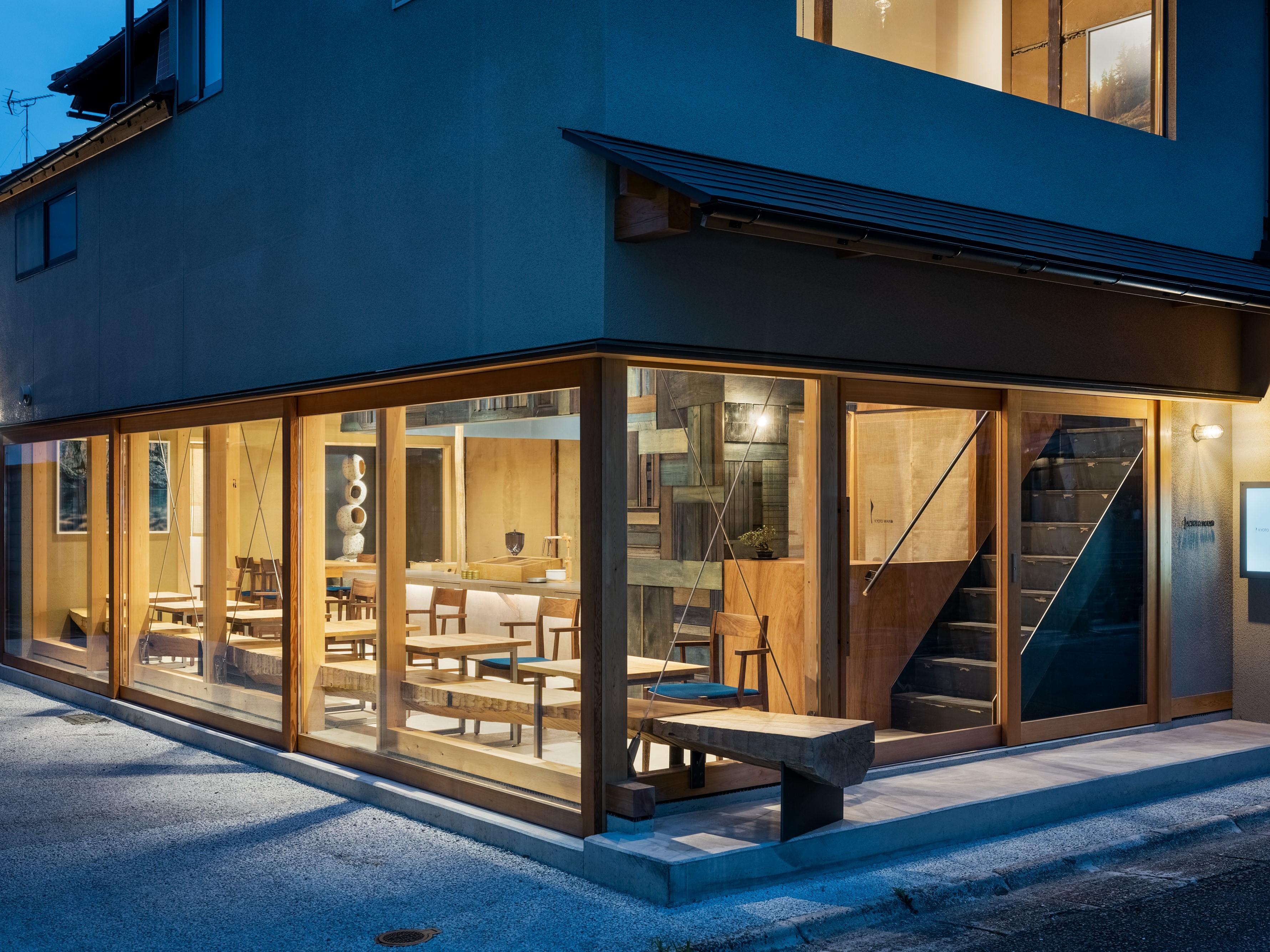
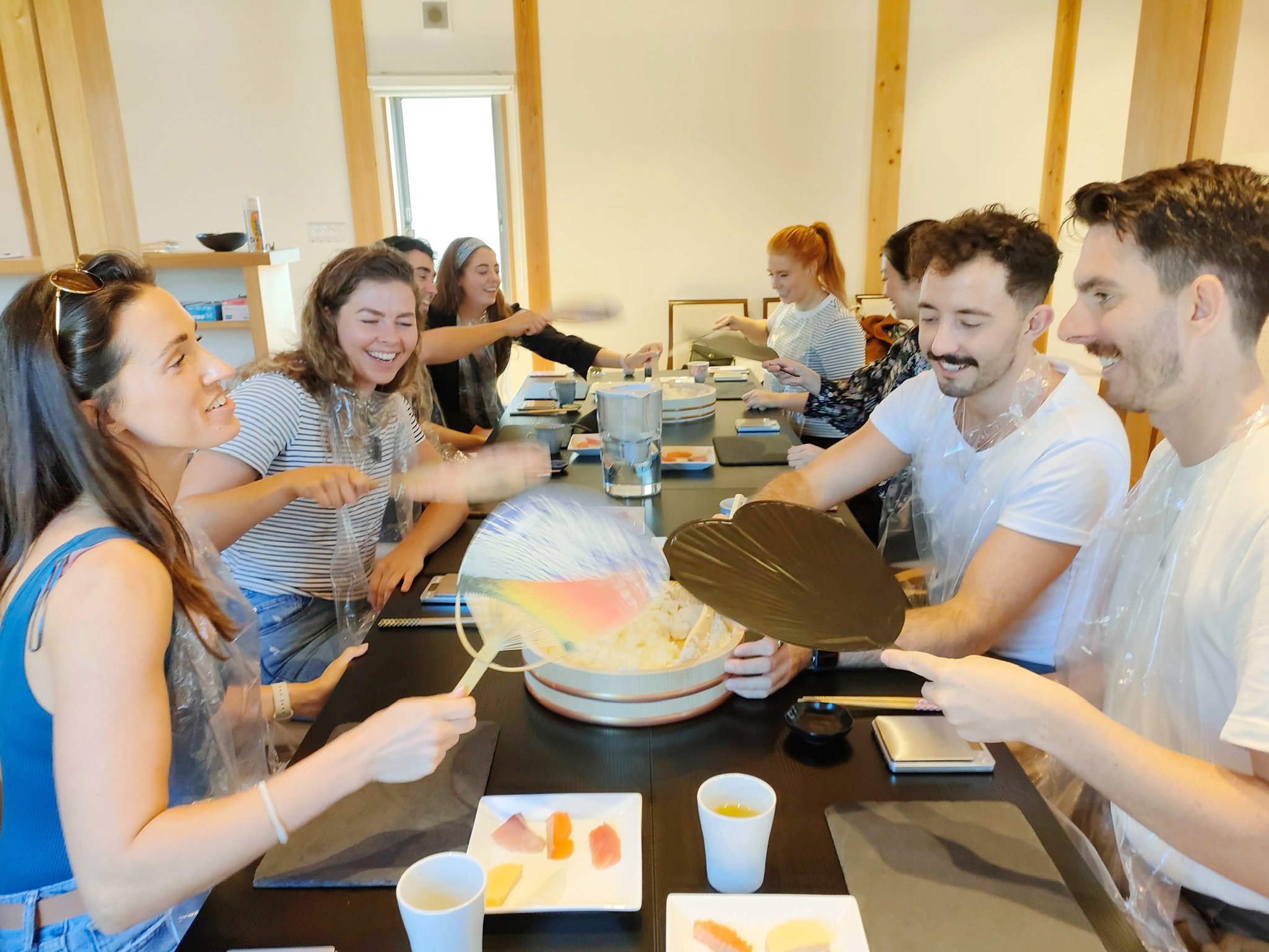
Arrive at the studio in central Kyoto and meet your instructor and the small group. You'll get an apron, a quick introduction to the day's ingredients, and the short version of what makes good sushi — before any rice is touched. Booking details and the exact address are confirmed by email after you reserve.
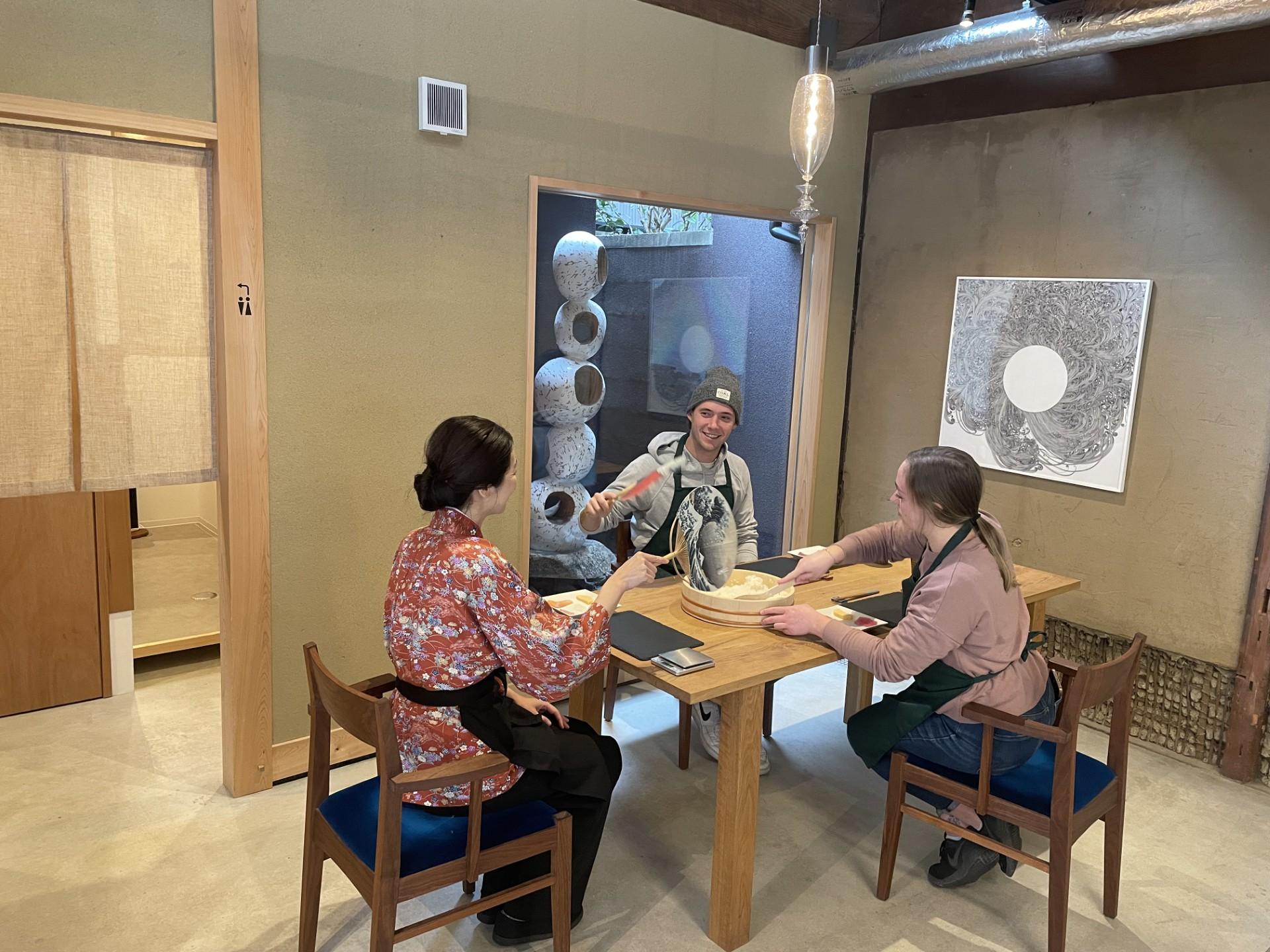
Sushi lives and dies on the rice. Your chef shows you how it's seasoned and handled, how to read and slice the fish, and the hand movements behind a clean piece of nigiri. This is the part a video can't teach you — the feel of the rice, the pressure, the timing.
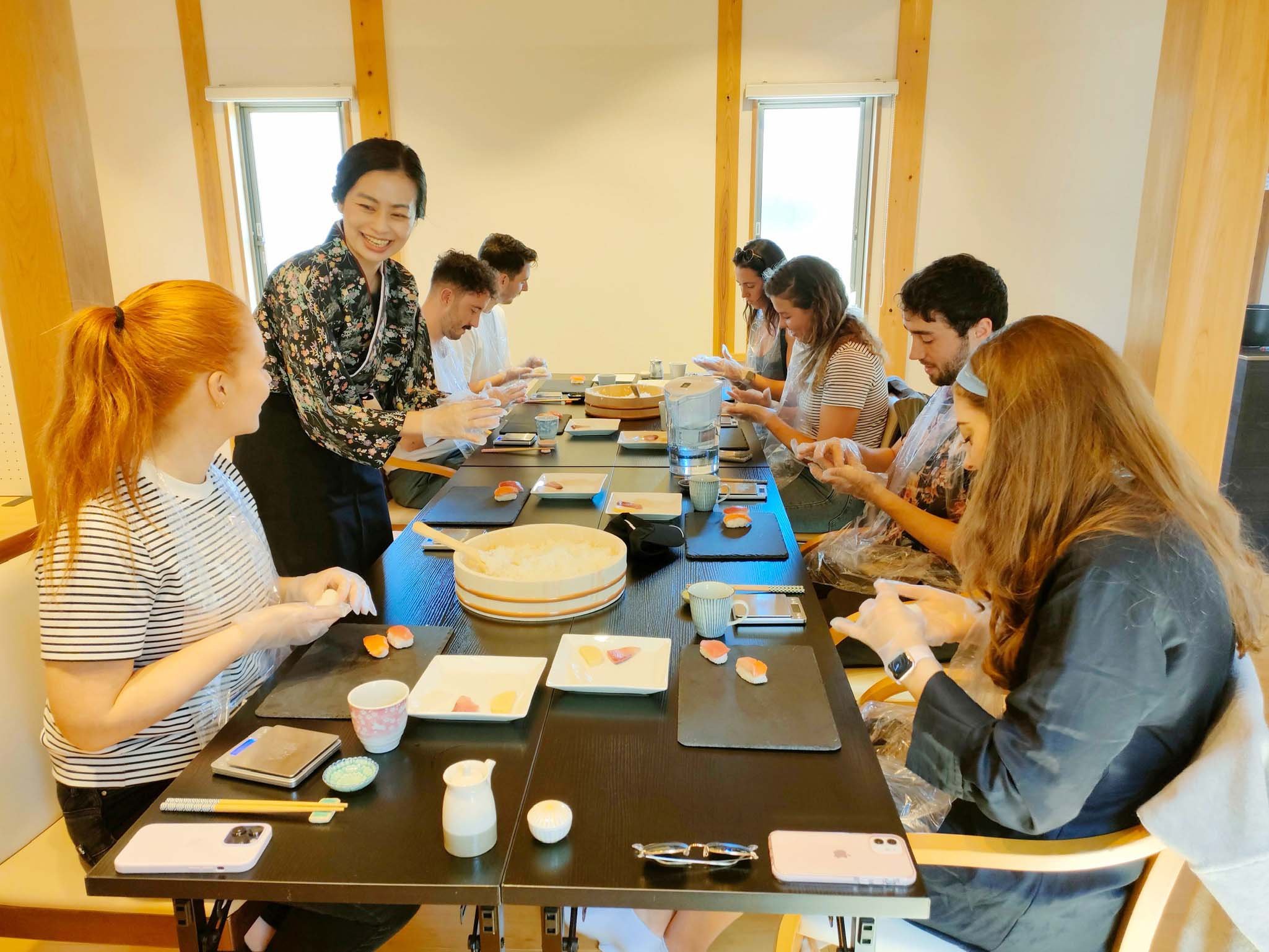
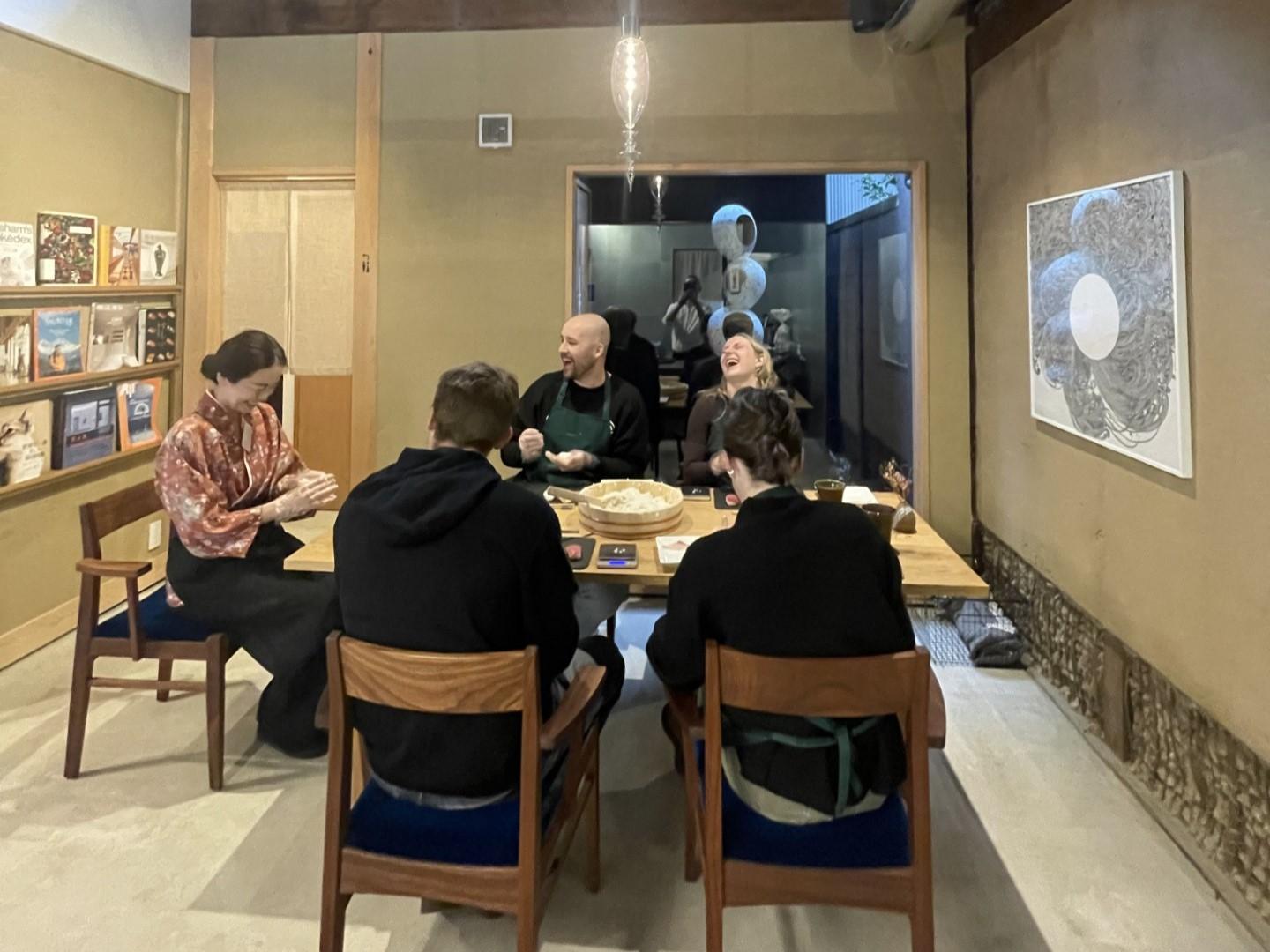
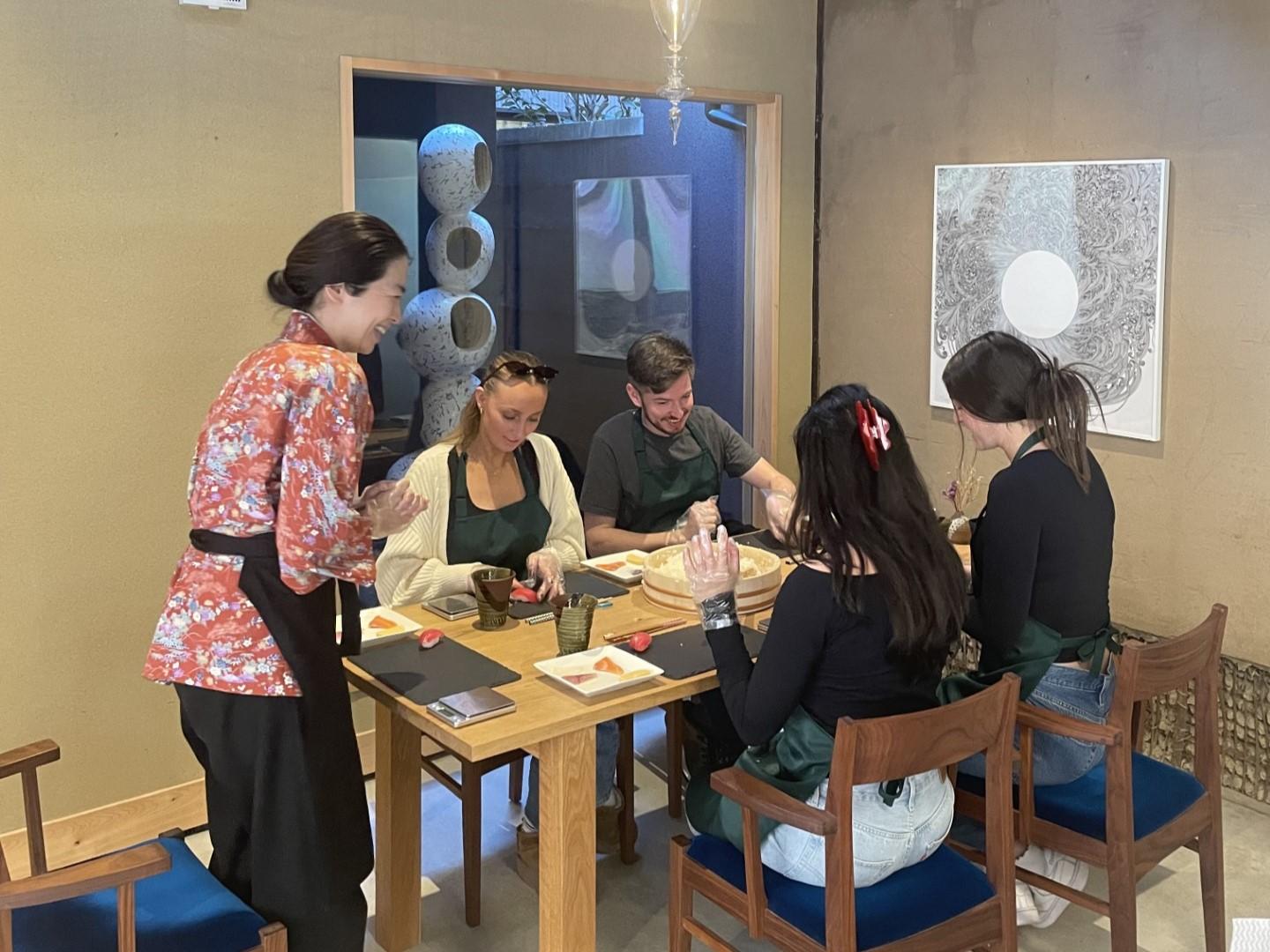
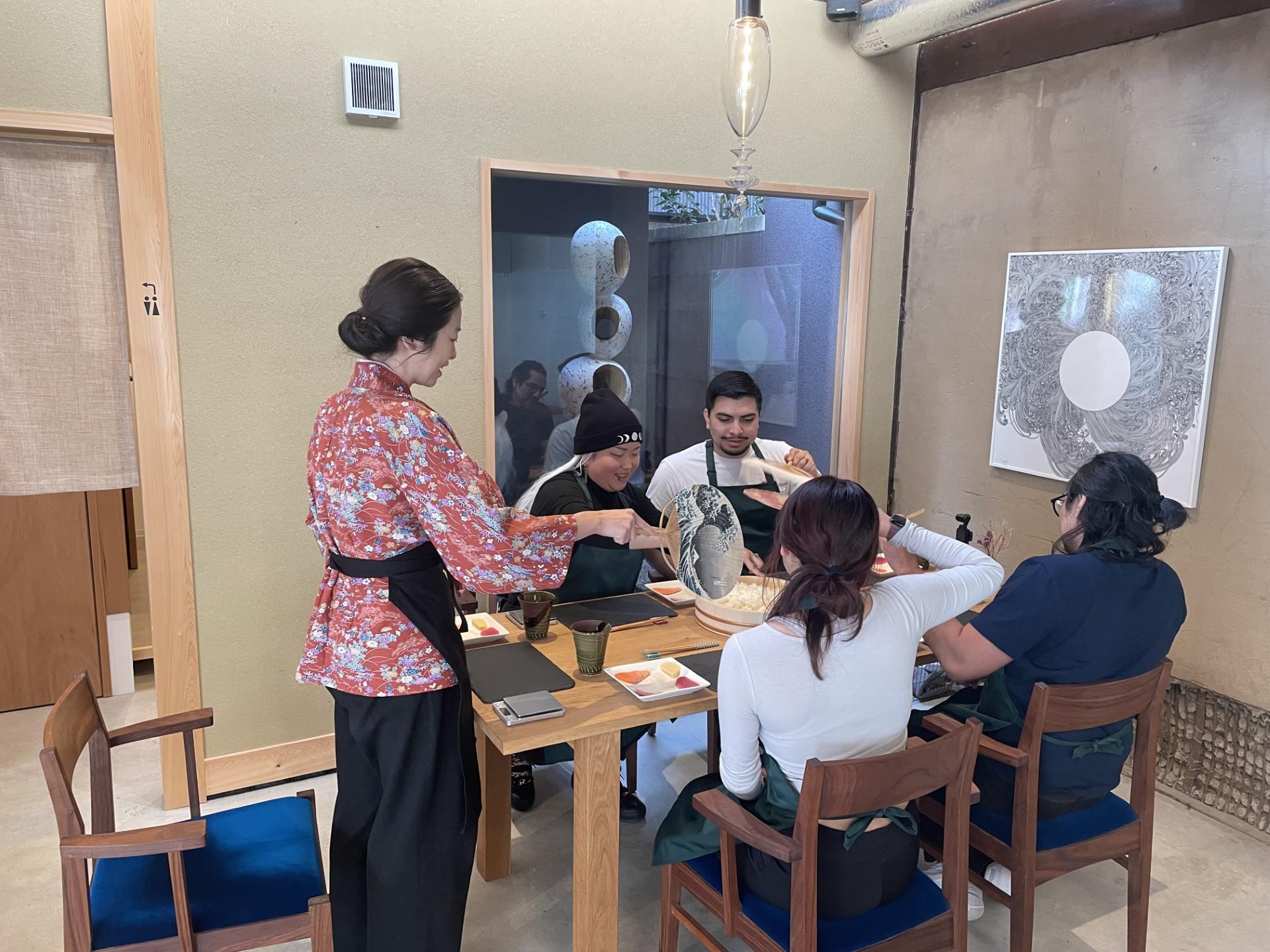
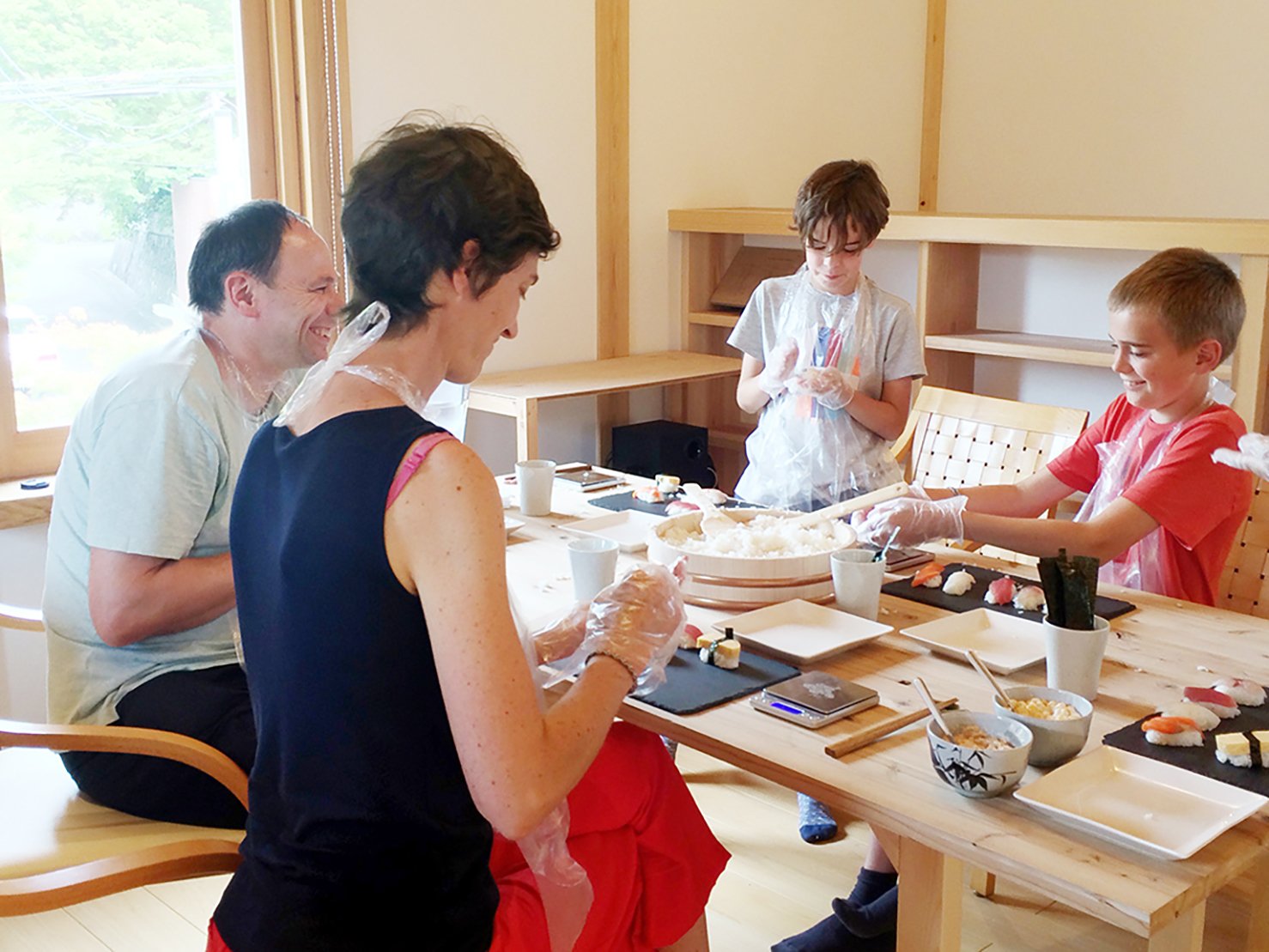
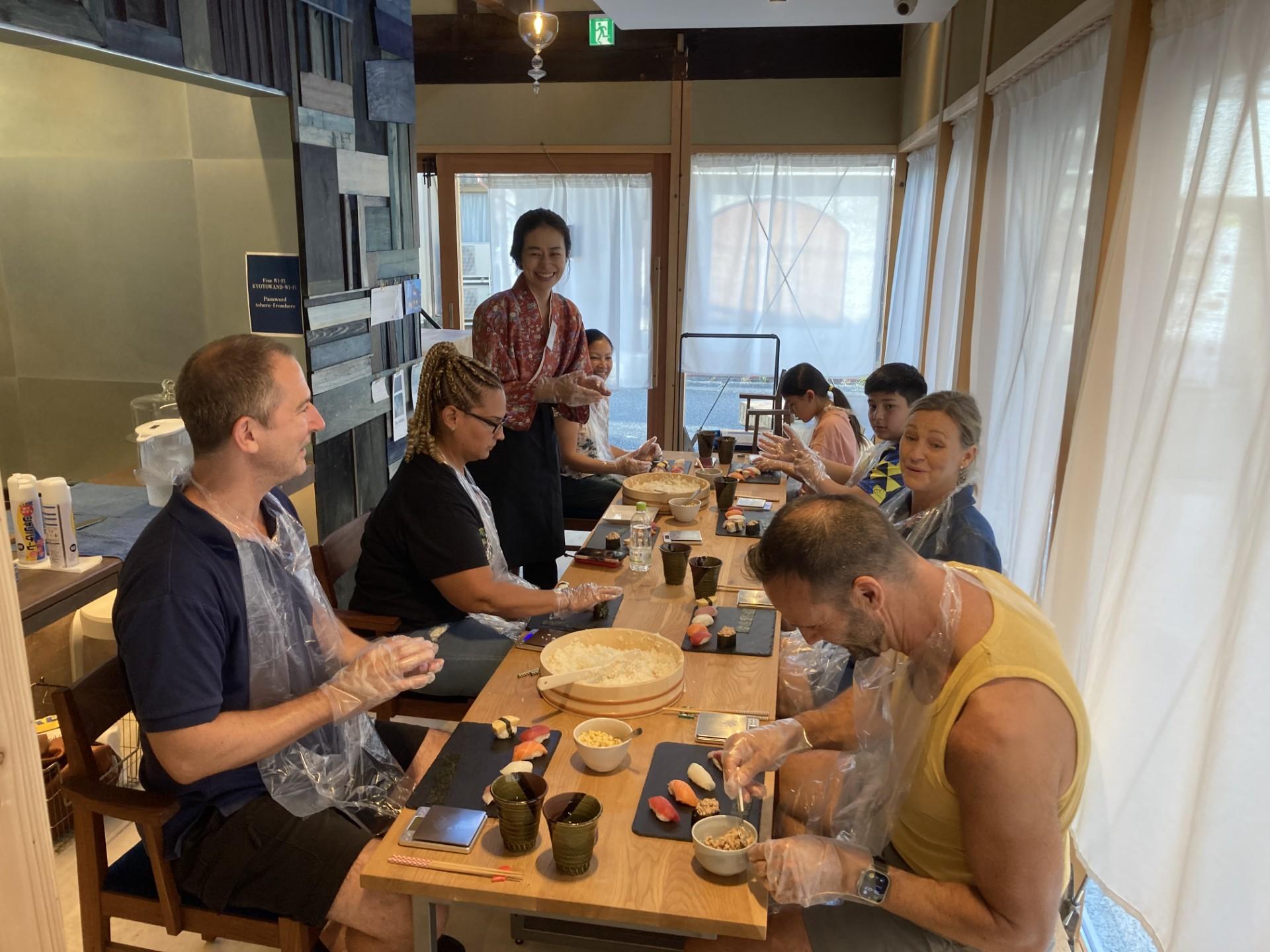
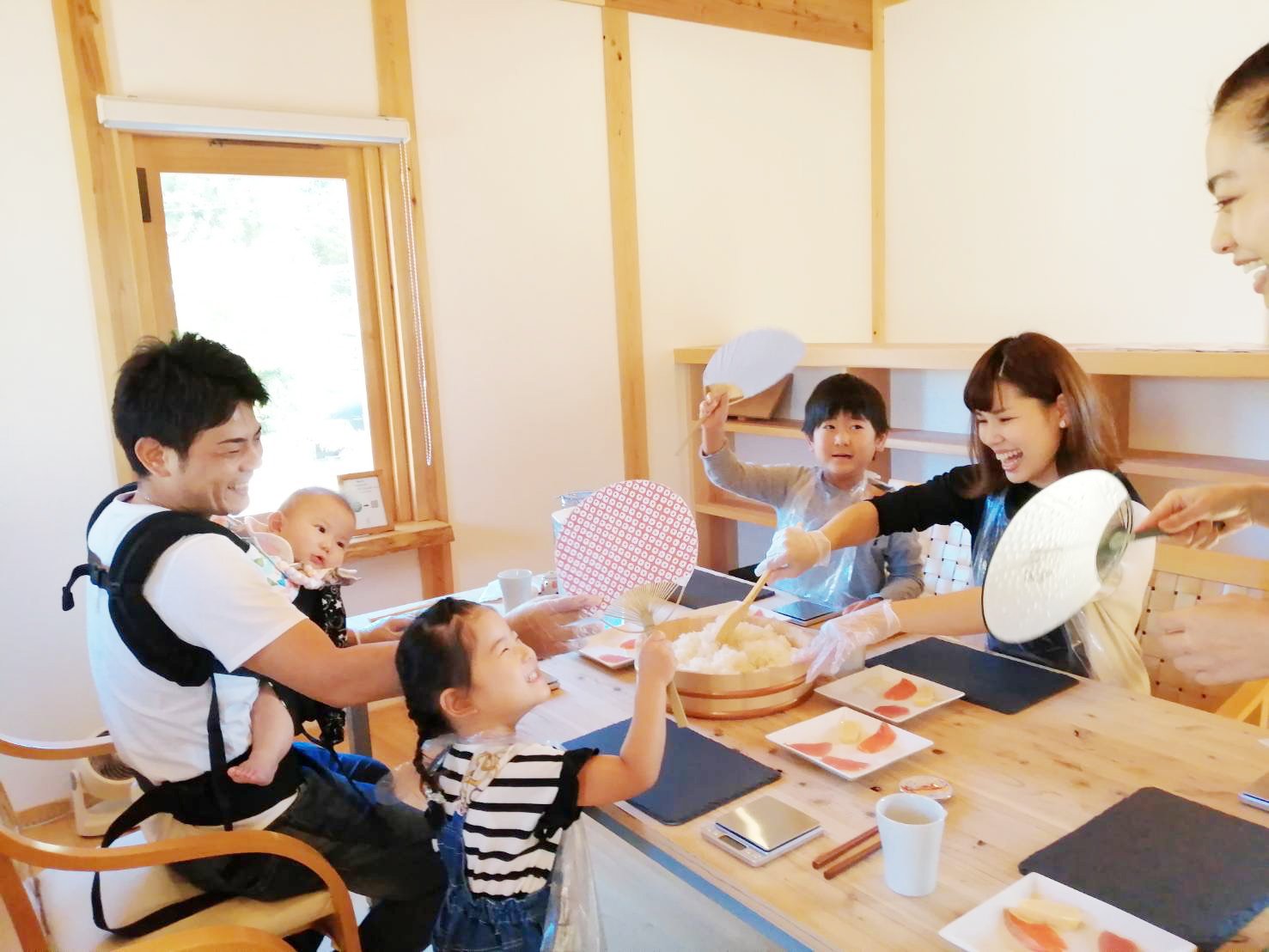
Now it's your turn. You'll hand-shape nigiri and roll your own maki under the chef's eye, with corrections and tips as you go. Beginners and kids manage fine, and vegetarian options are available on request — this is a hands-on workshop, not a demonstration.
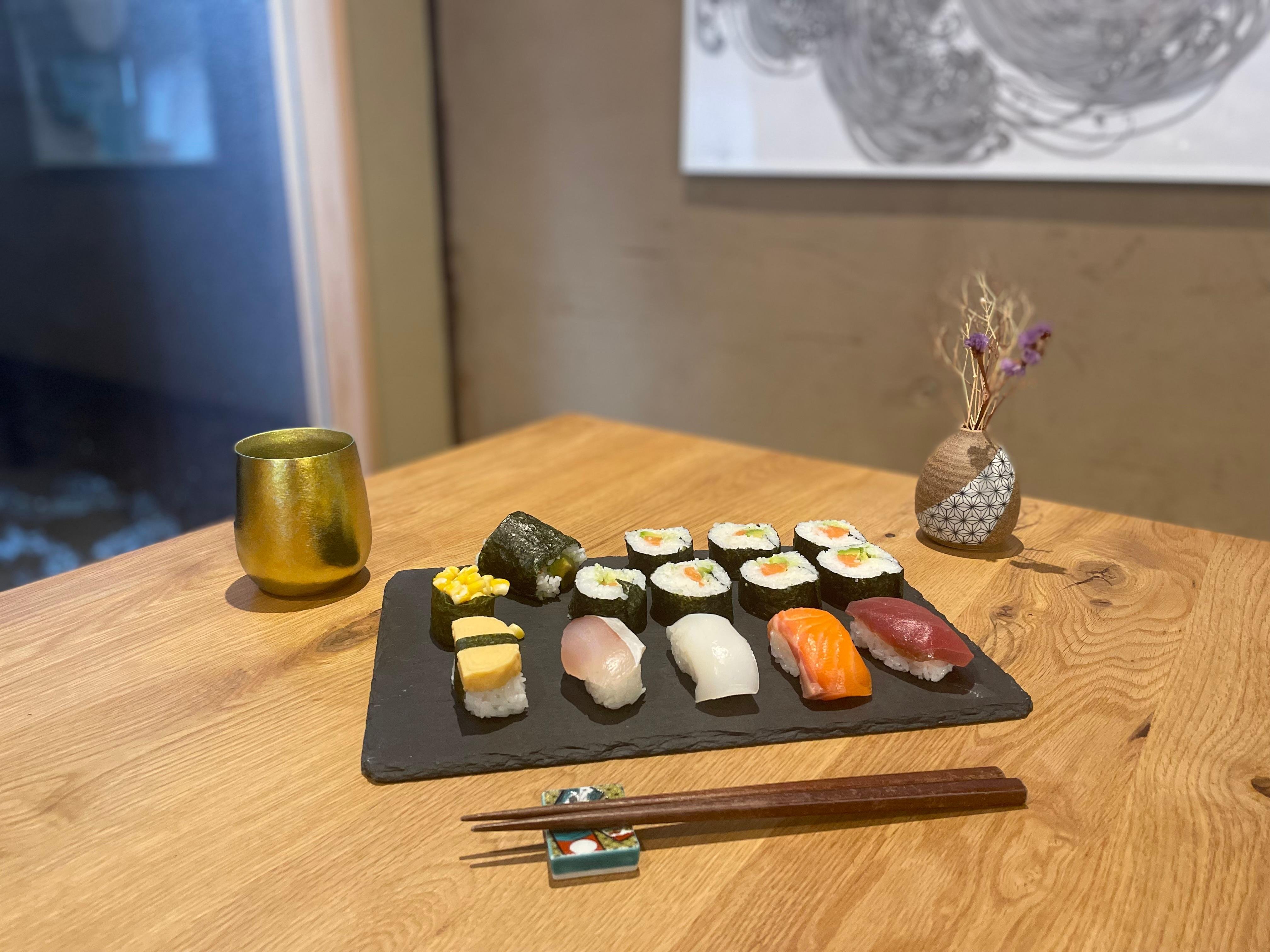
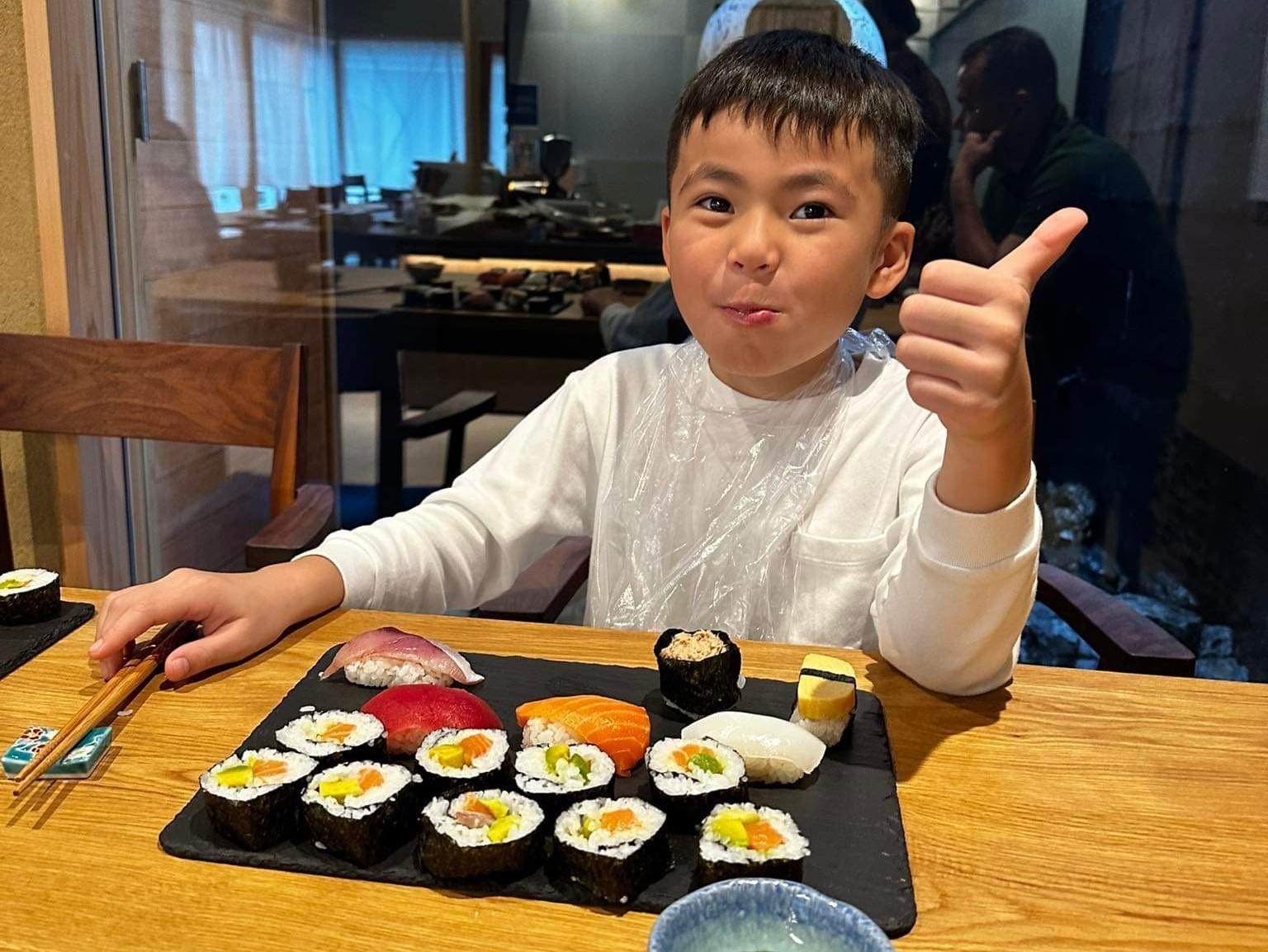
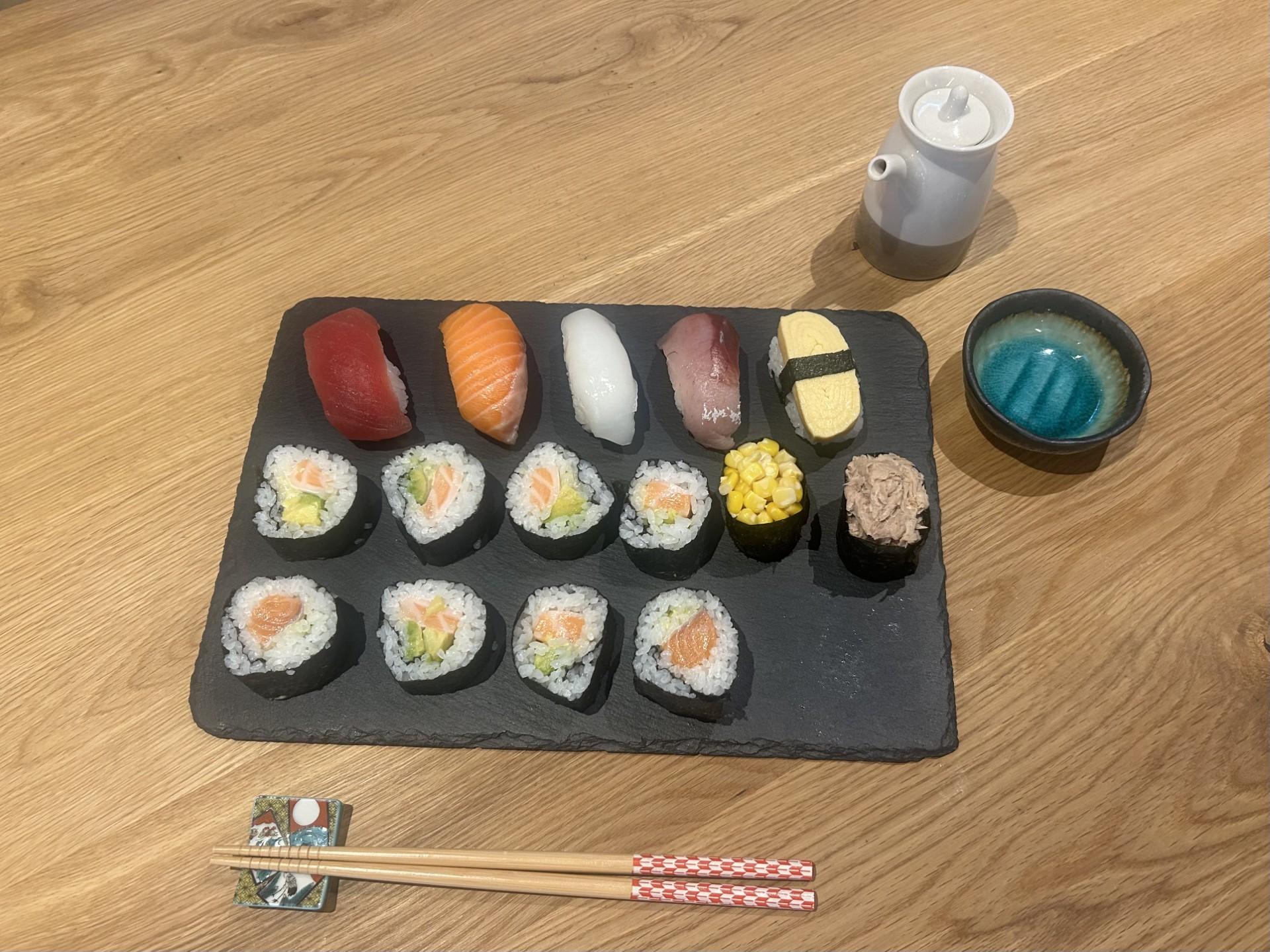
The best part: you eat your own sushi. Everything you've shaped becomes your meal, often with miso soup or a side and time to chat with the chef about ingredients, knives, and where to eat sushi elsewhere in Kyoto. You leave knowing how to do it again at home.
Photo Gallery
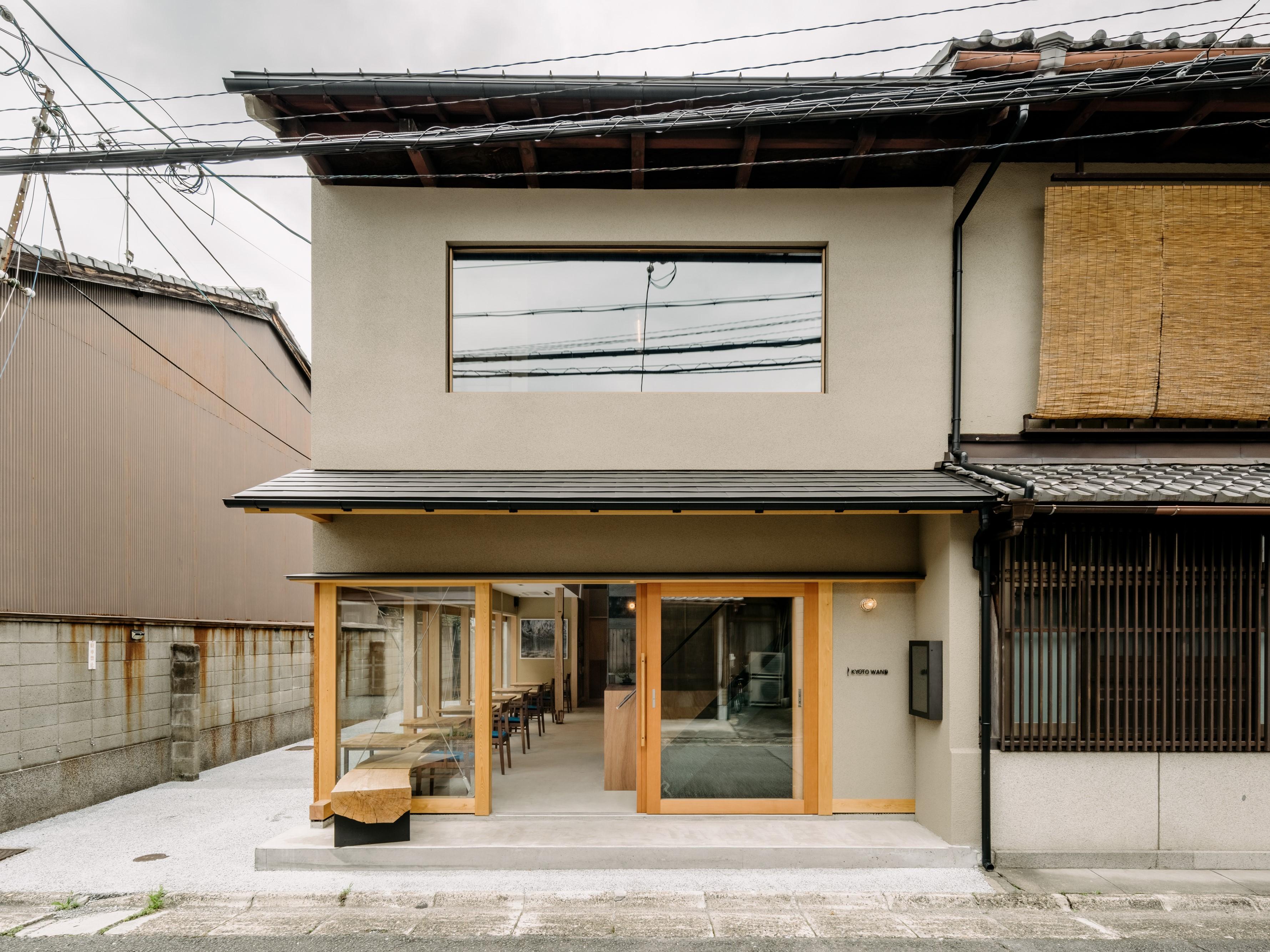
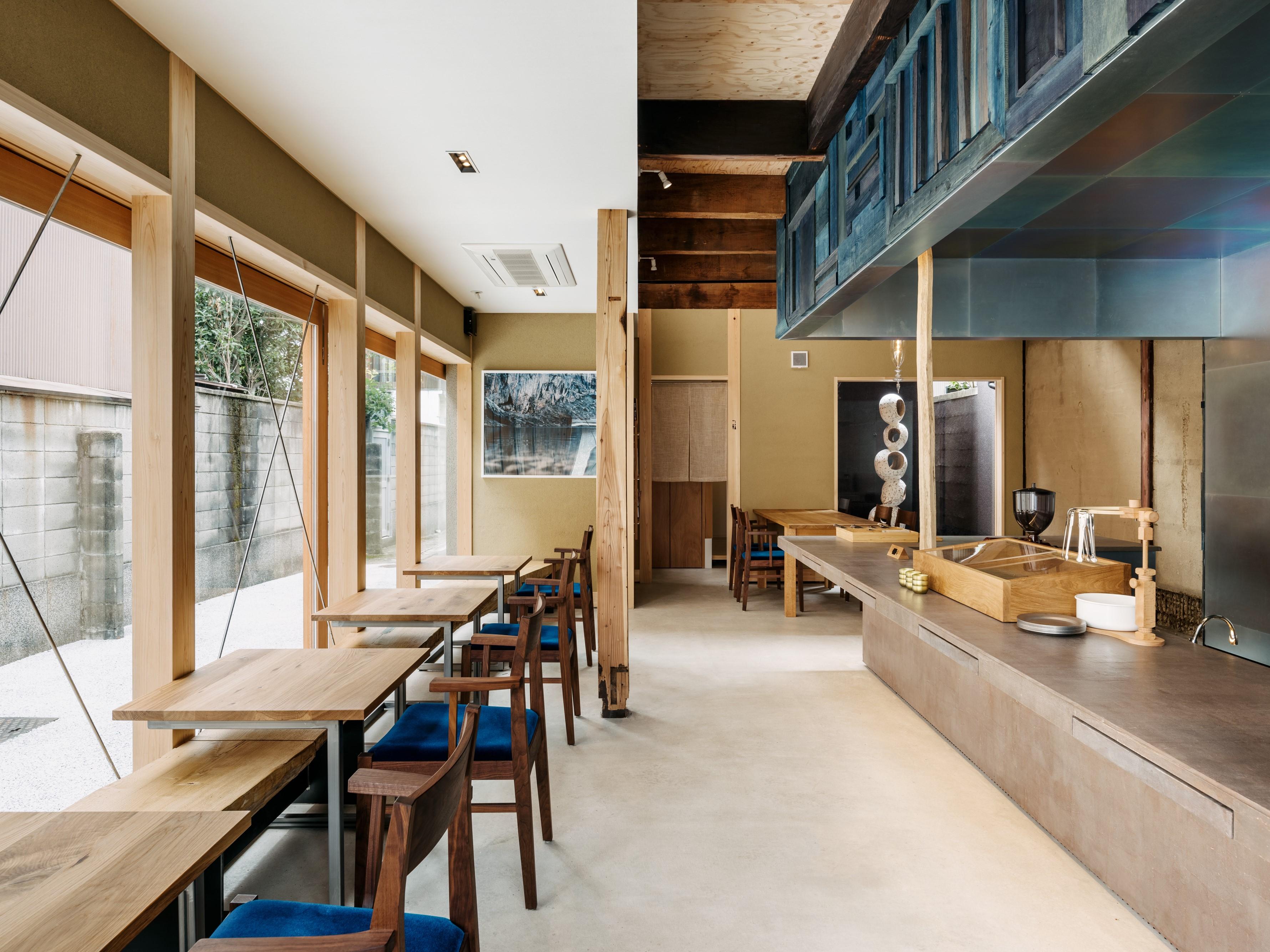
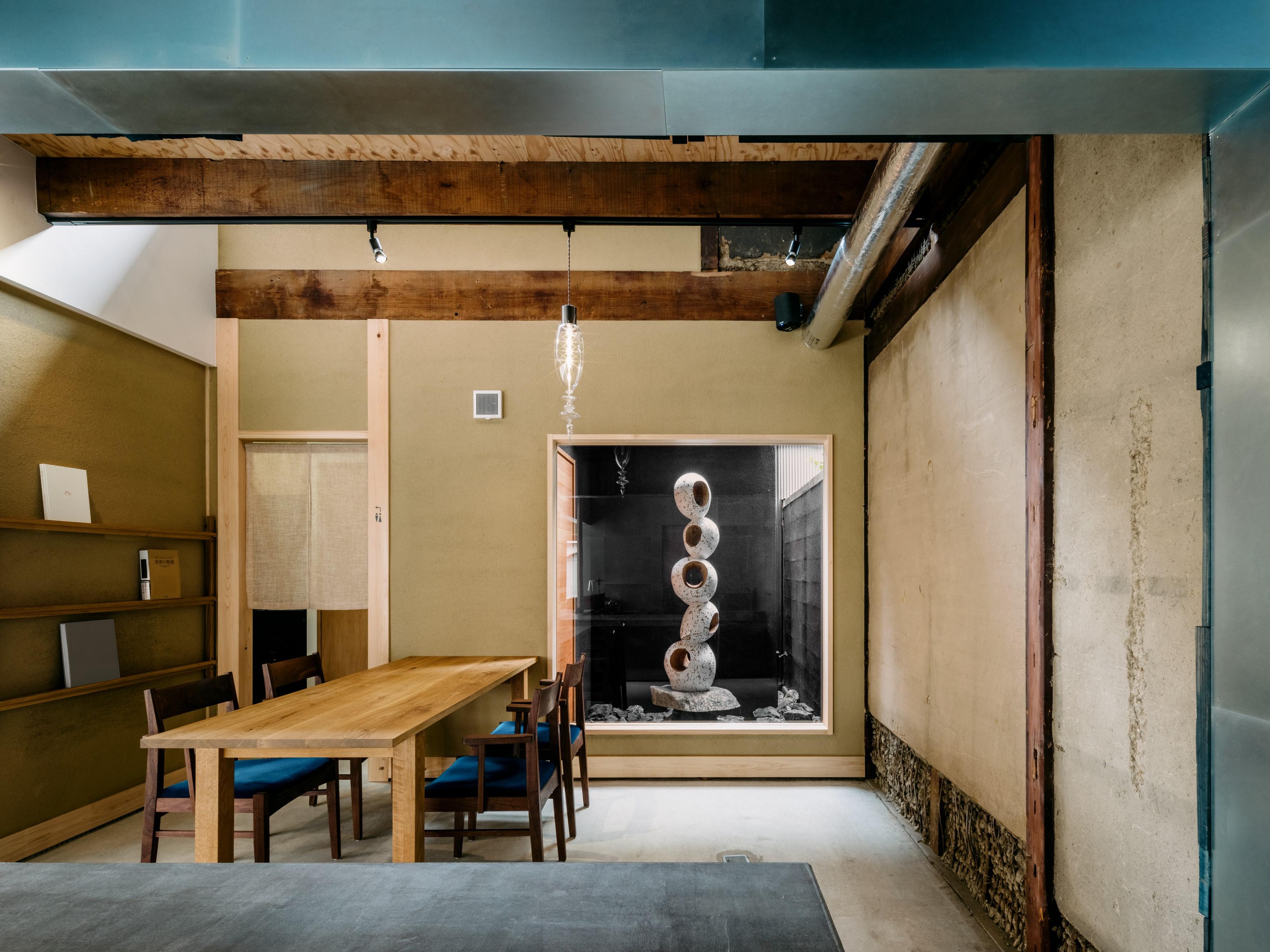
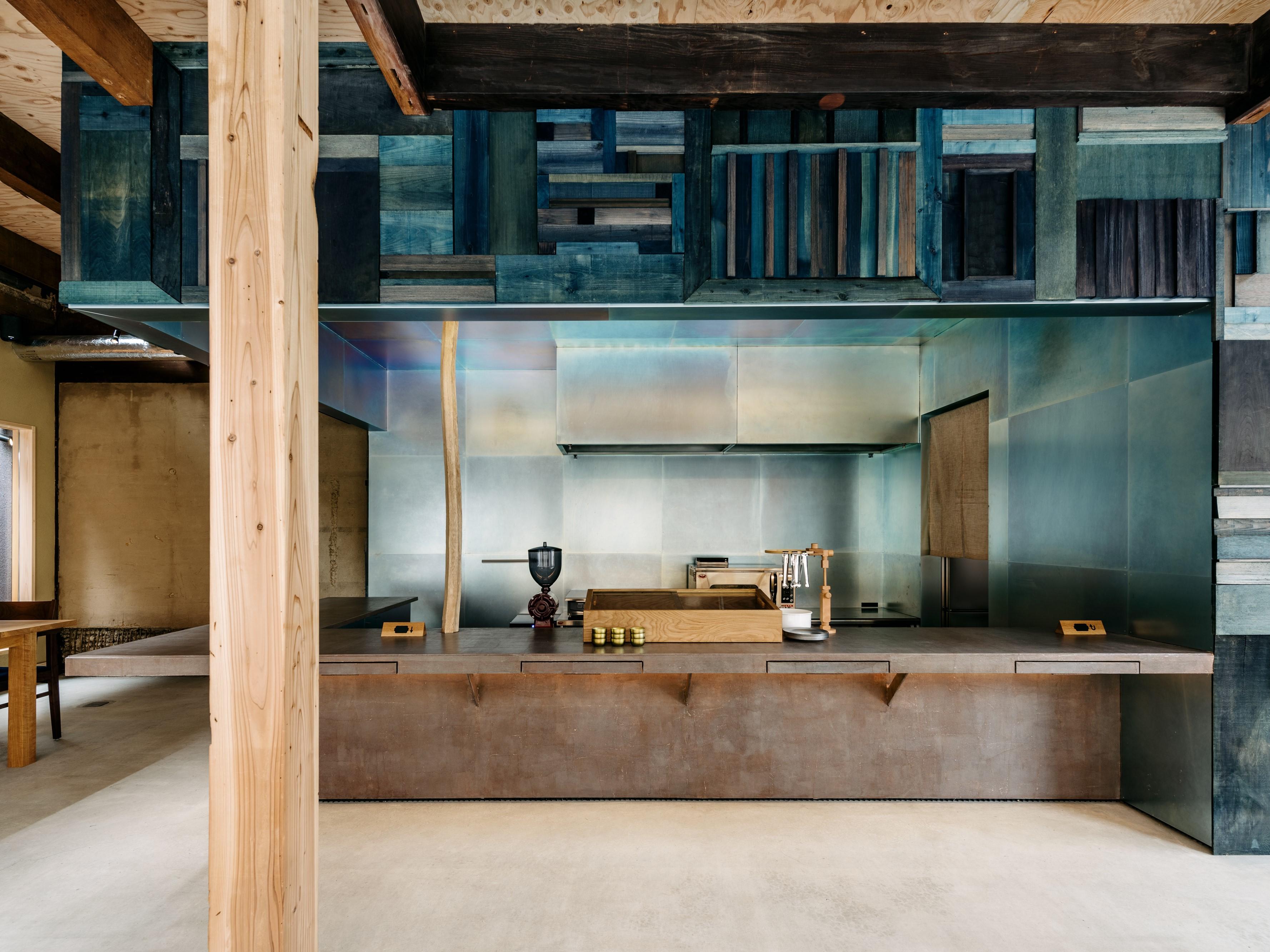
The prep counter, the fish, and the plates of nigiri and maki that students shape and then sit down to eat.
Book Your Experience
Select your preferred date and time. Instant confirmation — free cancellation up to 24 hours before departure.
Three hands-on options at three price points. Here's which sushi making class fits you.
| Feature | MOST POPULAR Small-Group Sushi Workshop | Class in a Real Sushi Restaurant | Washoku Bento Cooking Class |
|---|---|---|---|
| Starting Price | From $82/per person | From $25 | From $56 |
| Duration | 1.5 hours | 1 hour | 2.5 hours |
| Rating | 4.97/5 (165 reviews) | 4.96/5 (89 reviews) | 4.95/5 (439 reviews) |
| What You Make | Hand-shaped nigiri + rolled maki, then eat it | Nigiri inside a working sushi restaurant before it opens | A full washoku bento — sushi plus sides, soup & more |
| Format | Small-group workshop led by a sushi chef | Budget class in a real restaurant (Kizaemon, Pontocho) | Small-group home-style Japanese cooking class |
| Vegetarian Option? | Yes, on request | Limited — ask ahead | Yes, well suited |
| English-Friendly? | Yes | Yes | Yes |
| Meets At | Central Kyoto studio | Pontocho (Sushi Kizaemon) | Central Kyoto |
| Best For | Proper nigiri + maki technique with a chef | Travellers on a budget who want the real-restaurant feel | Foodies who want a whole Japanese meal, not just sushi |
| Check Availability | View Restaurant Class | View Washoku Class |
Two more ways to get hands-on with Japanese food in Kyoto — a budget-friendly class inside a real sushi restaurant before it opens for the day, and a small-group washoku class where you build an entire traditional bento, not just sushi.
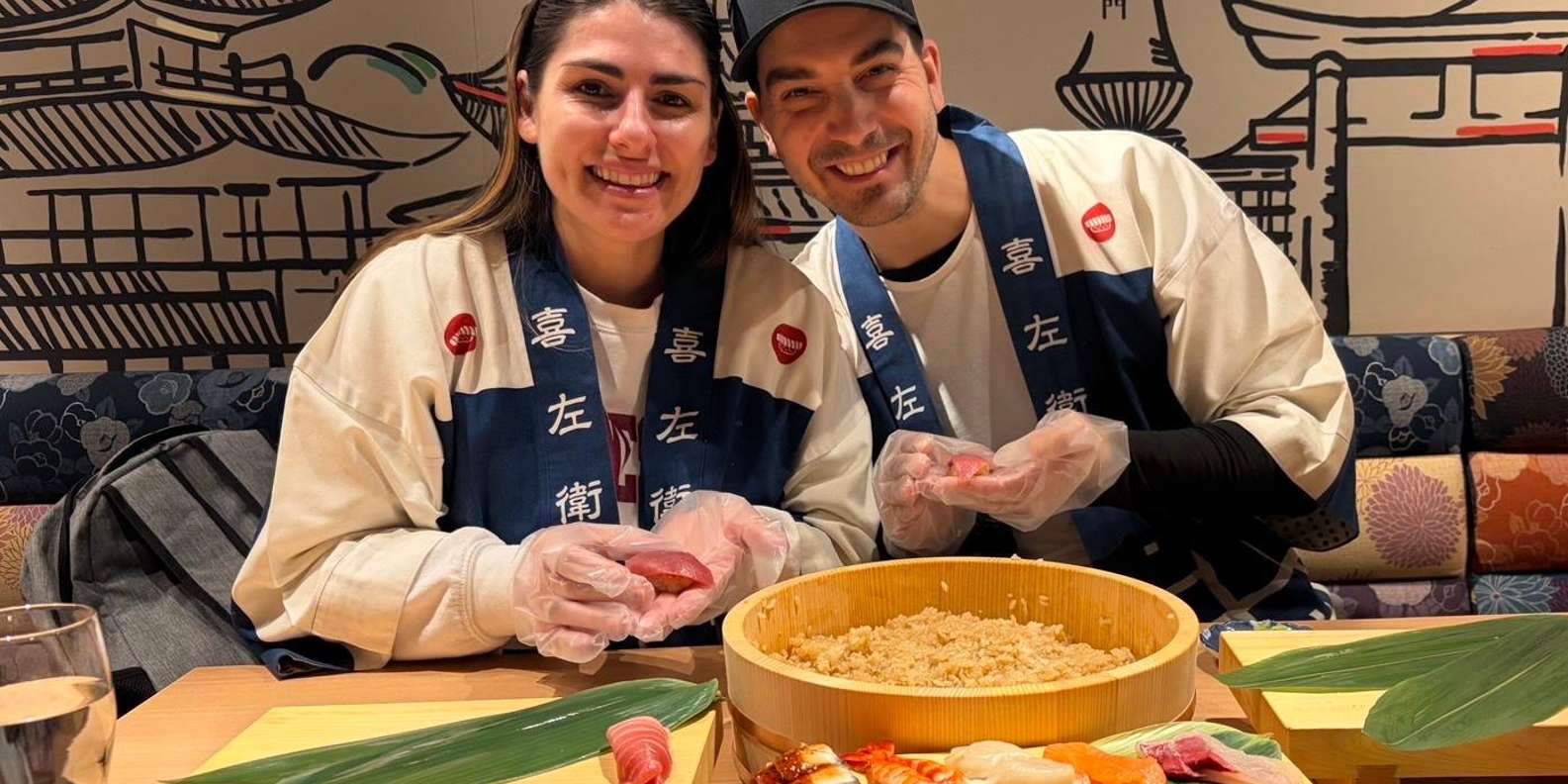 REAL SUSHI RESTAURANT
Learn the art of sushi making from professional chefs at Sushi Kizaemon. Discover the secrets of sushi rice preparation, work with fresh fish, and master the art of cutting and shaping nigiri.
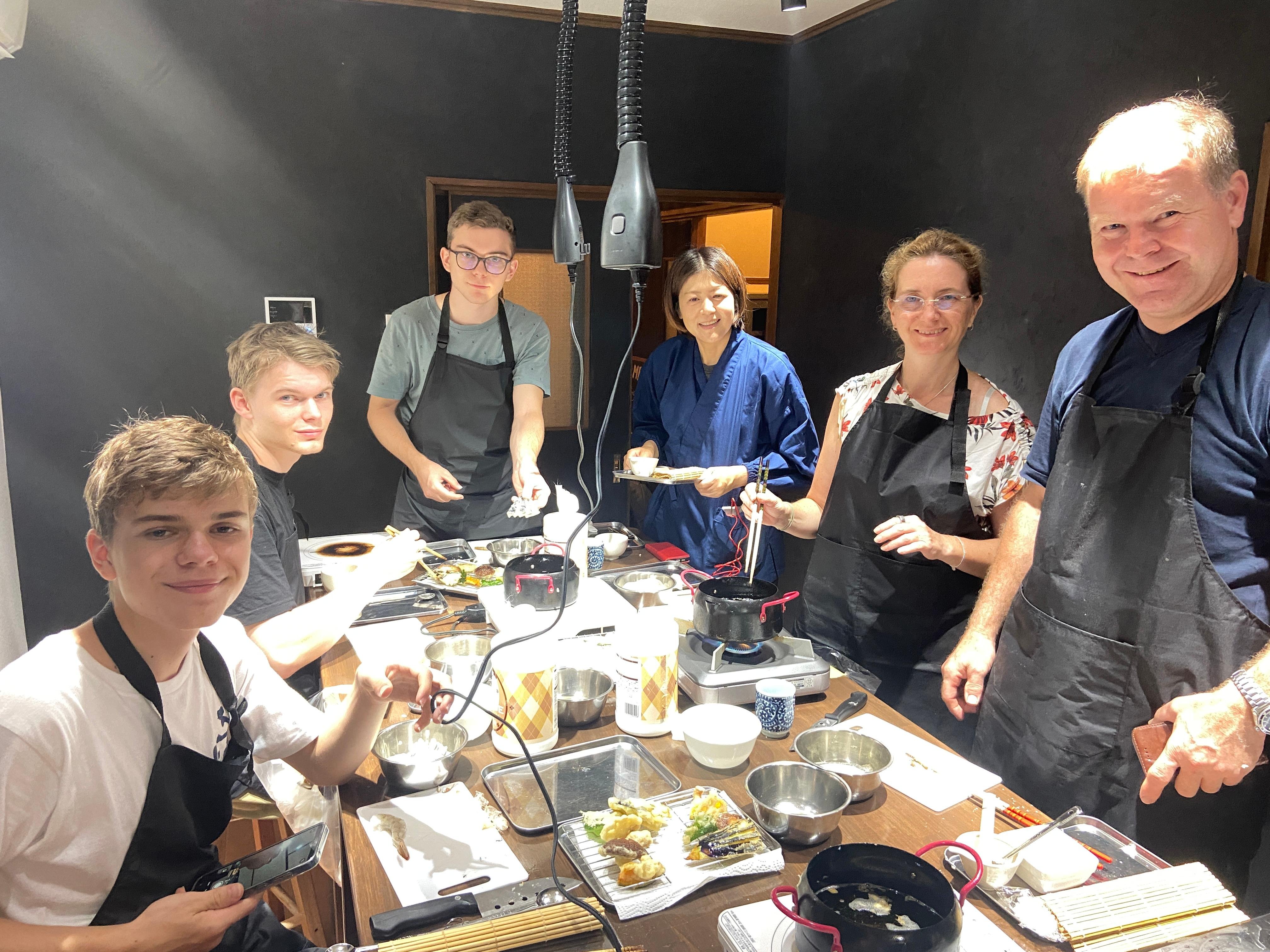 FULL WASHOKU MEAL
Learn how to assemble a Japanese-style lunch box during this cooking class in Kyoto. Make sushi rolls, tempura, tofu salad, and a Japanese rolled omelette with the help of your instructor.
The Culture Behind the Class
Kyoto is an inland city — which makes it an unlikely sushi capital, and a fascinating one. Here's the real history behind the rice, and why the sushi Kyoto invented looks nothing like the Tokyo nigiri you'll learn in class.
For most of its thousand years as Japan’s capital, Kyoto had a problem that shaped its entire food culture: no sea. The city sits in a mountain basin, hours from the coast in an age before refrigeration. Fresh raw fish — the foundation of the Tokyo-style nigiri you’ll learn to shape in almost any Kyoto sushi making class today — simply couldn’t survive the journey inland. So Kyoto did what every great cuisine does with a constraint: it invented its way around it.
Salted mackerel could make the trip. For centuries it travelled down the Saba Kaidō, the “Mackerel Road,” carried on foot from the fishing ports of Wakasa Bay on the Sea of Japan all the way to the Kyoto markets — arriving, by happy accident, perfectly cured after a day or two on the road. Out of that fish came saba-zushi: a fat fillet of cured mackerel pressed onto a bed of vinegared rice, sliced into thick coins. It’s still a Kyoto festival staple, and it’s the city’s own original contribution to the sushi family — closer to a terrine than to anything you’d see spinning on a conveyor belt.
That pressing is the key. Where Tokyo’s Edomae tradition is built on nigiri — a slice of fresh fish hand-pressed onto rice, fast and fresh — Kyoto and the wider Kansai region built their sushi around the box. Hako-zushi and oshi-zushi are layered into a wooden mould, pressed, and cut into neat geometric blocks. It’s sushi as architecture rather than sleight of hand: made ahead, designed to keep, beautiful in a lacquer box. The two cities essentially invented two different crafts under the same name.
Go back even further and the trail leads just over the hills to Lake Biwa, in neighbouring Shiga, home to funa-zushi — crucian carp packed in rice and left to ferment for months, sometimes years. It tastes nothing like modern sushi and smells considerably stronger, but it is sushi’s actual ancestor: narezushi, where the fermenting rice was originally a preservation trick and got thrown away, long before anyone thought to eat it. Every California roll on earth descends from this lake.
So why learn sushi here? Partly because Kyoto takes the craft seriously, and partly for the contrast: you’ll spend your sushi making class learning the bright, fresh, hand-shaped nigiri and rolled maki that most people picture — the genuinely fun, hands-on part — in a city whose own deep tradition is the slow, pressed, preserved kind. Knowing both is the difference between making sushi and understanding it. The classes below each take a different angle: a small-group workshop with a chef for technique, a budget class inside a working sushi restaurant, and a full washoku cooking class if you’d rather build an entire Japanese meal. Check availability and pick the one that fits your trip.
Travelling beyond the knife? See our Kyoto cooking class guide for ramen and gyoza workshops, the Kyoto food tour through Nishiki Market, and sake tasting in Kyoto to round out the meal.
Guest Reviews
"Awesome! A 90mn workshop that feels like home with amazing hosts, highly recommend!"
"Aya and Kana were perfect hosts! Went through the sushi making process in great detail and helped us the whole way whilst making our own. Ingredients were fresh and absolutely delicious! We left feeling very full and happy. Would come back again!"
"This class was awesome! We liked being with a diverse group of people learning how to make sushi. Aya and Kana were great hosts and super teachers. I would highly recommend this class. Oishi katta!!!"
"This sushi-making class at Atelier Kyoto was an absolute highlight of our trip! Our host, Kana, was so friendly and engaging—she shared wonderful stories about growing up in Osaka and moving to Kyoto, and made everyone feel connected right from the start. The class was the perfect mix of laughter, learning, and hands-on fun. We not only learned how to make delicious sushi but also gained great local recommendations and insight into Japanese culture. The take-home bag with tools and ingredients was such a thoughtful bonus! Truly one of our favorite experiences in Japan—highly recommend it to anyone visiting Kyoto!"
"We had a wonderful sushi class with Kana and her husband. All the steps were explained in detail and they took the time to answer our individual questions. We highly recommend this class."
Read all 165 verified reviews
See All ReviewsPick the right category for your trip — tea ceremony, geisha experience, sumo show, Fushimi Inari, day trip, or private tour. 119 tours compared with free cancellation. Starting from $82 per person.
Browse All Kyoto ToursWhat the classes involve, whether they're beginner- and kid-friendly, English language, vegetarian options, and how the three options differ.
No. All three classes are designed for complete beginners — the chef walks you through every step, from seasoning the rice to shaping nigiri and rolling maki, and corrects you as you go. You don't need any cooking background or knife skills, and you don't need to speak Japanese. If you've never made sushi in your life, you're exactly who these workshops are built for.
Yes — the featured small-group workshop and the other two classes are all guided in clear, beginner-friendly English for international travellers. The chef explains each technique and instruction in English throughout, so there's no language barrier and nothing is lost in translation. These are genuine English-language experiences, not Japanese classes with a translator attached.
You'll hand-shape your own nigiri (the slice-of-fish-on-rice pieces) and roll your own maki rolls, and yes — you eat everything you make at the end. That sit-down meal is the whole point: most classes include your finished sushi as the meal, sometimes with miso soup or a side. The washoku class goes further and has you build a complete traditional bento, not only sushi.
The featured small-group workshop offers vegetarian options on request, and the washoku bento class is well suited to vegetarians — let the operator know your dietary needs when you book so they can prepare. Vegan and allergy requirements (including no raw fish at all) can usually be accommodated with advance notice; it's always best to flag them at the time of booking rather than on the day.
Yes — sushi making is one of the more family-friendly cooking activities in Kyoto. The hands-on shaping and rolling works well for kids with a parent helping, and the small-group format keeps it relaxed. If you're booking for young children, mention their ages when you reserve so the chef can set expectations and portion the ingredients accordingly.
They range from about 1 hour (the budget class inside a real sushi restaurant) to 1.5 hours (the featured small-group workshop) to 2.5 hours (the full washoku bento class). All are in central Kyoto and easy to reach by train or on foot. The exact address and meeting instructions are confirmed by email after you book — Kyoto's studios are often tucked into machiya townhouses or upper floors, so the confirmation details matter.
They're the same thing — 'class,' 'workshop,' and 'course' are used interchangeably by operators in Kyoto. What actually varies is the format: a small-group workshop (like the featured option) focuses purely on sushi technique with a chef; a 'cooking class' may bundle sushi with other dishes like ramen or gyoza; and a washoku class teaches an entire Japanese meal. Pick by what you want to walk away able to make, not by the label.
Private and small-group options both exist. The featured workshop runs as an intimate small group, which most travellers prefer for the social atmosphere and lower price; dedicated private classes are also available in Kyoto for couples, families, or anyone who wants one-on-one time with the chef. If a private setting matters to you, check the specific tour's options before booking, or contact the operator through GetYourGuide.
It's an excellent place — and the inland setting is part of the story. Kyoto developed its own pressed and cured sushi traditions (like saba-zushi, mackerel pressed onto rice) precisely because fresh sea fish couldn't reach the old capital easily. Modern classes teach the fresh, hand-shaped Tokyo-style nigiri and maki most people picture, but you're learning it in a city with one of Japan's deepest, most distinctive sushi histories. See the section above for the full story.
Most of these classes are bookable with free cancellation up to 24 hours before the start time, so you can lock in a spot now and adjust if your Kyoto itinerary shifts. The exact cancellation window is shown on each tour's booking page before you pay — check it at the point of booking, as a few operators with small daily capacity have stricter terms.
Still have questions? Email us at info@thingstobookinkyoto.com