Kyoto · Hidden Temple · Guided by a Monk · English
Zen Meditation in Kyoto — Sit Zazen with a Monk in a Quiet Temple
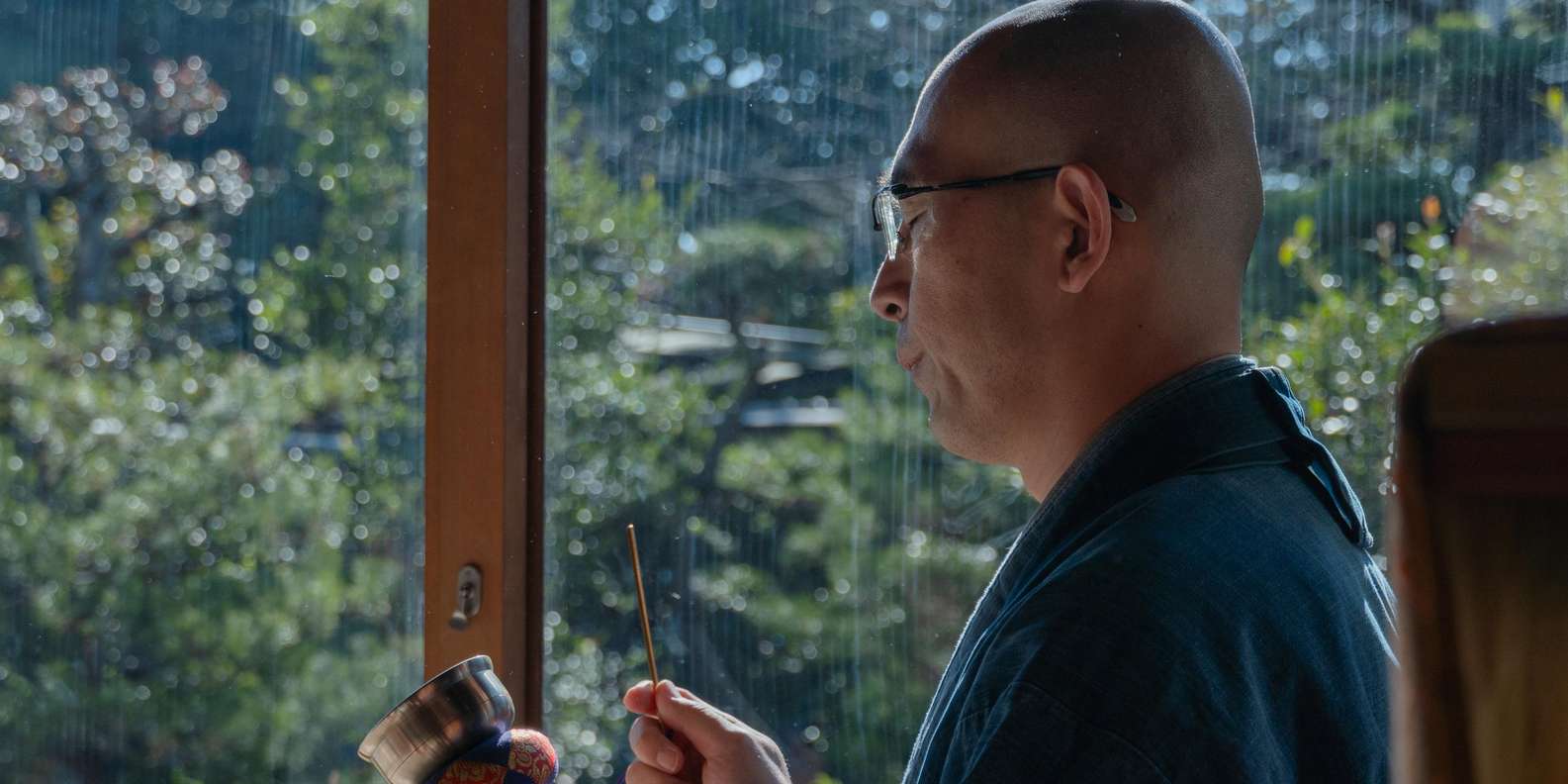
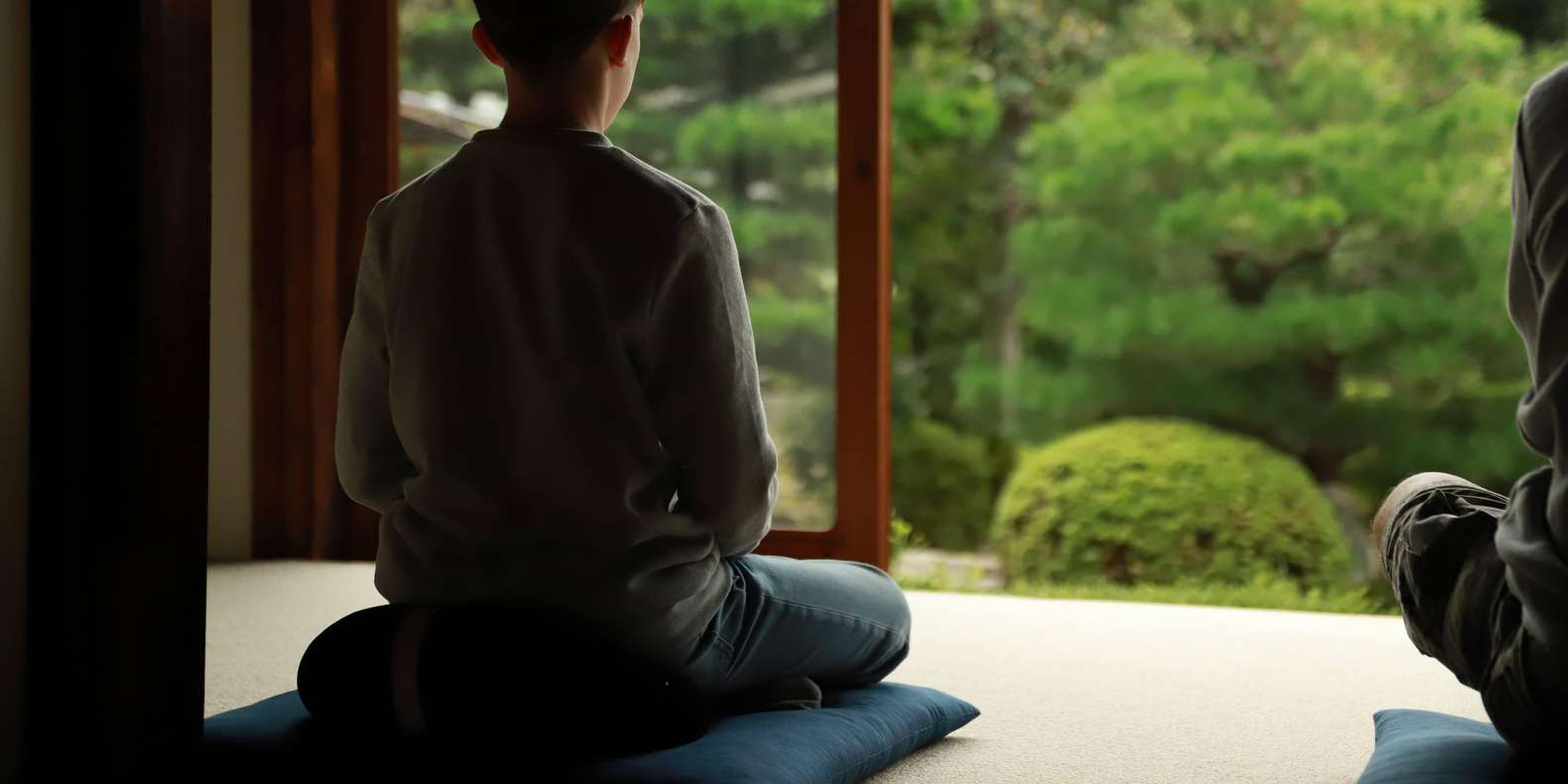
Kyoto is the heartland of Japanese Zen — and the rare place where you can actually sit zazen with a monk rather than just photograph the gardens. This experience takes you into a quiet temple to learn the posture and breathing, sit in silence, and talk with the monk afterwards. No experience needed, and the whole session is guided in English.
A real monk-led session in a quiet temple, the posture and breathing taught from scratch, time to sit in genuine silence, and an English-speaking guide throughout.
Highlights
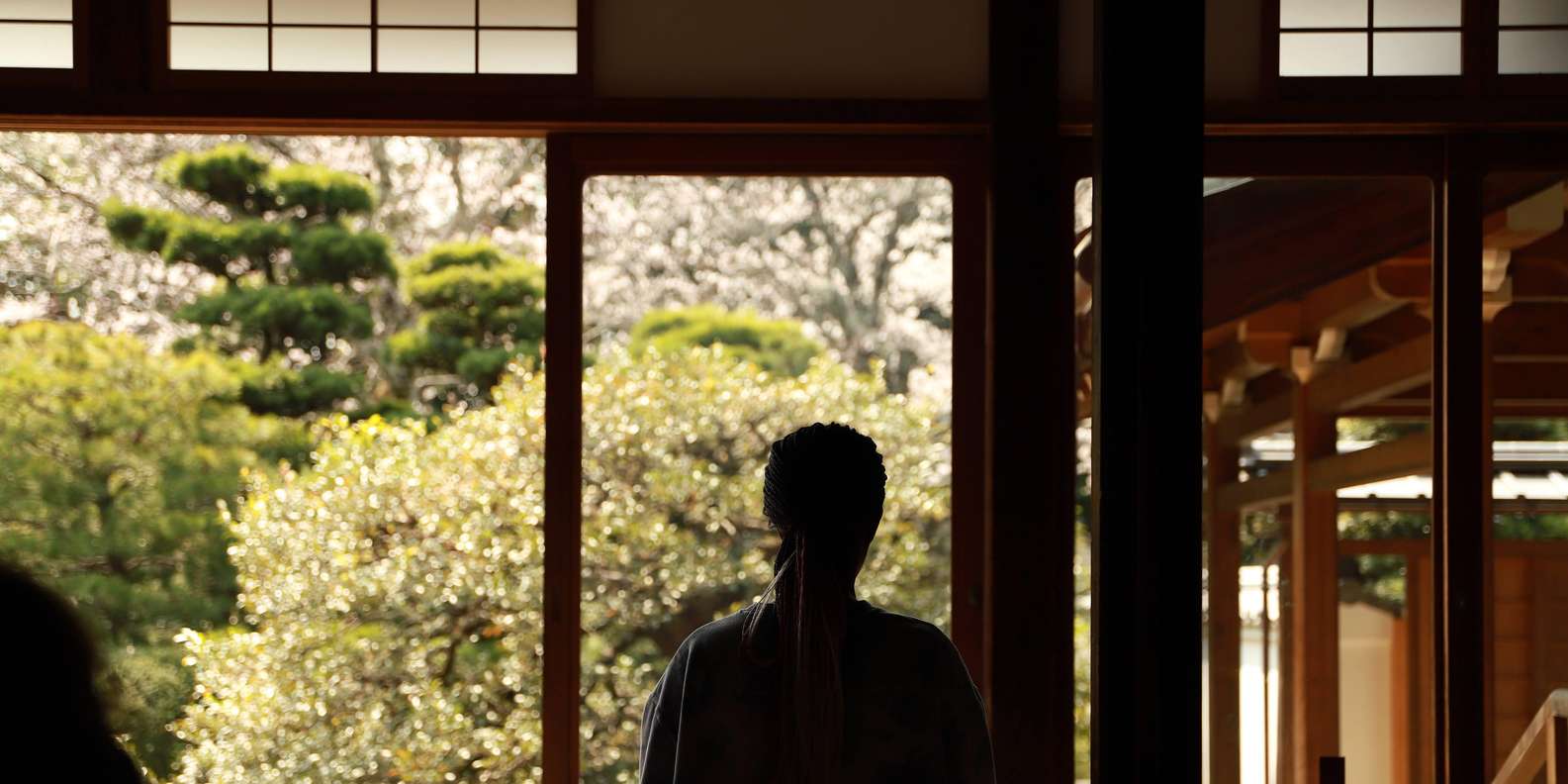
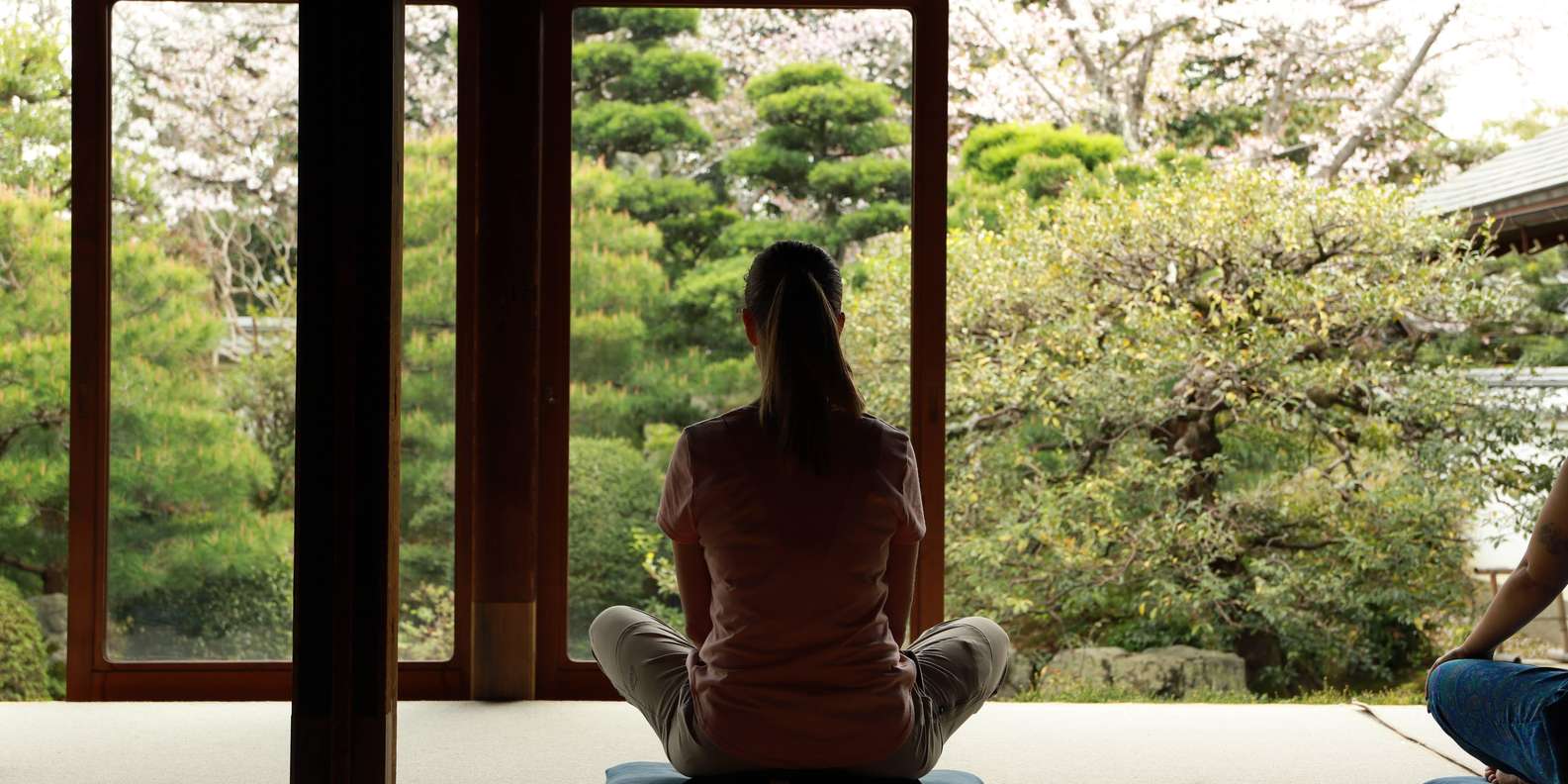
Experience a tranquil temple atmosphere ideal for focused zazen meditation
Uncover the secrets of Zen philosophy guided by the chief priest at Jushoin
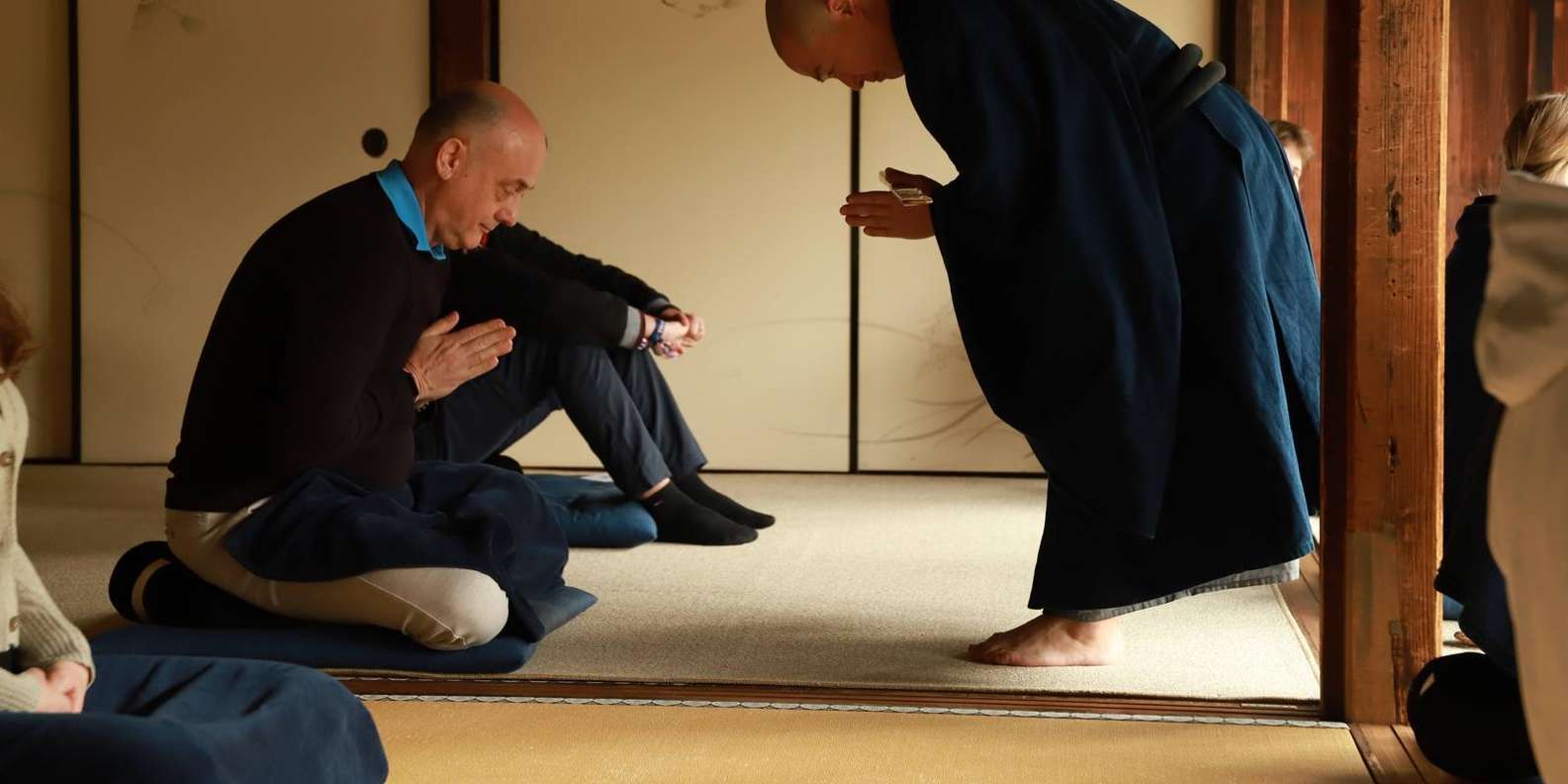
Immerse yourself in the spiritual practices of Zen in the company of monks
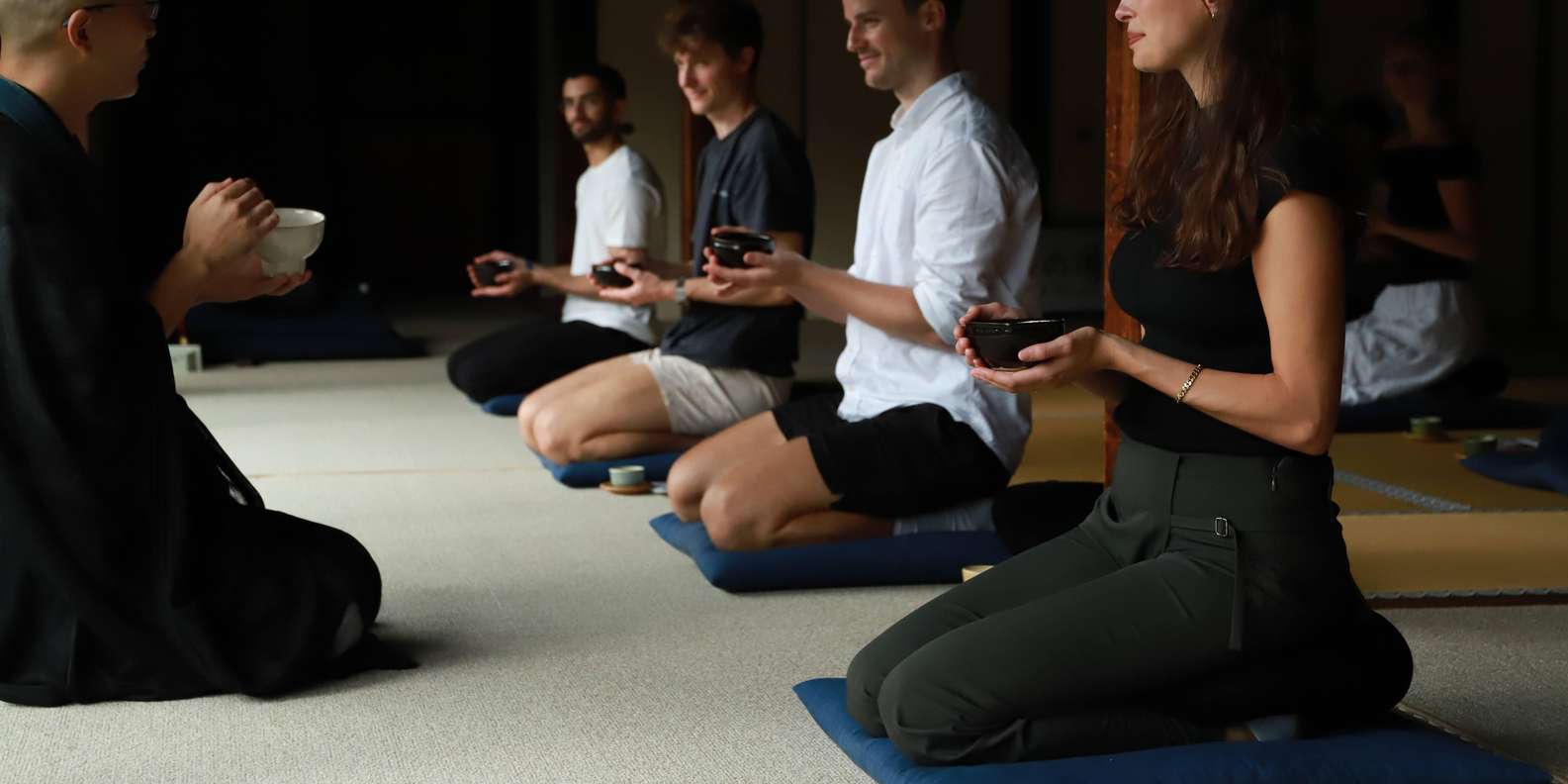
Engage in a tea experience to find the deep connection between Zen and tea
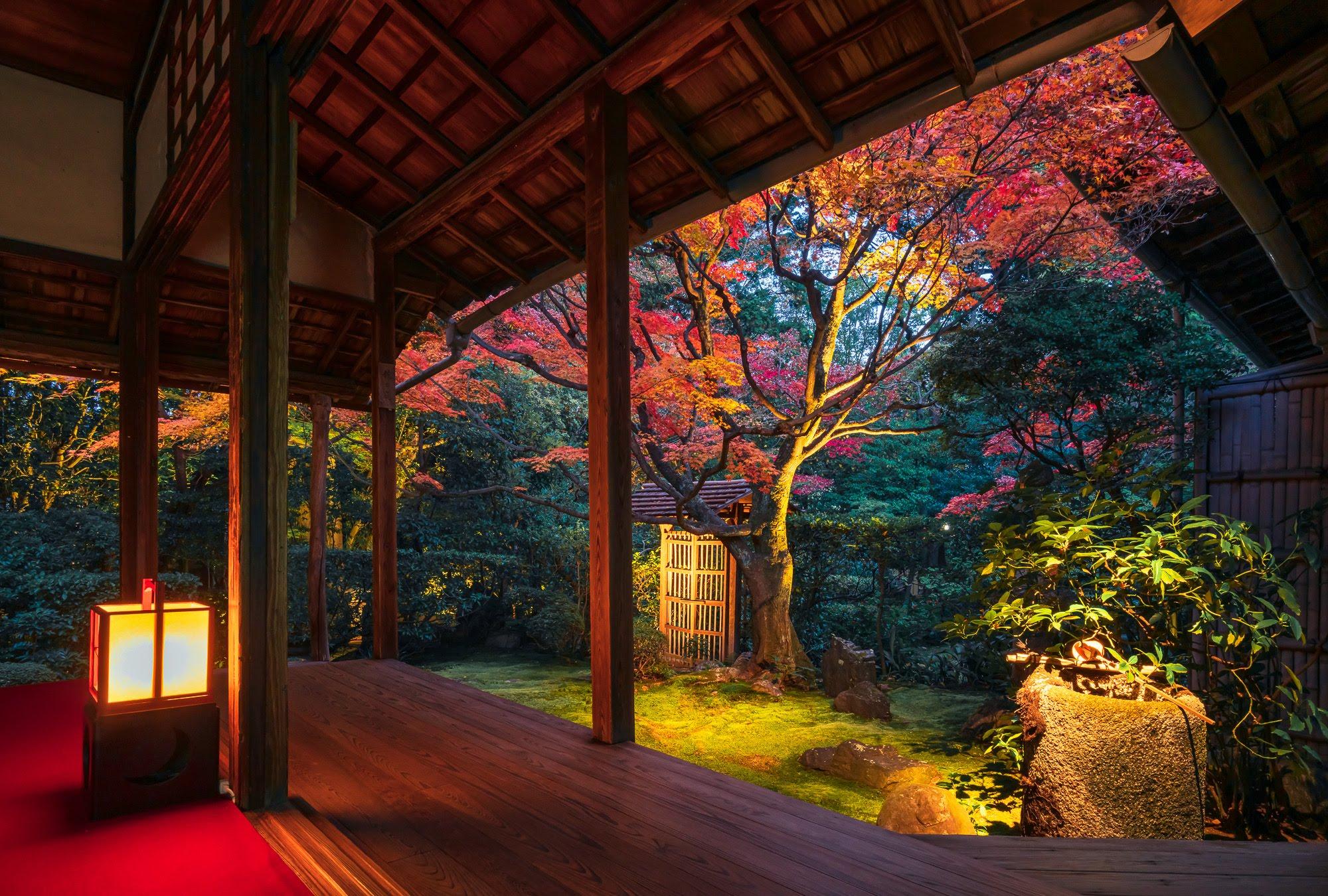
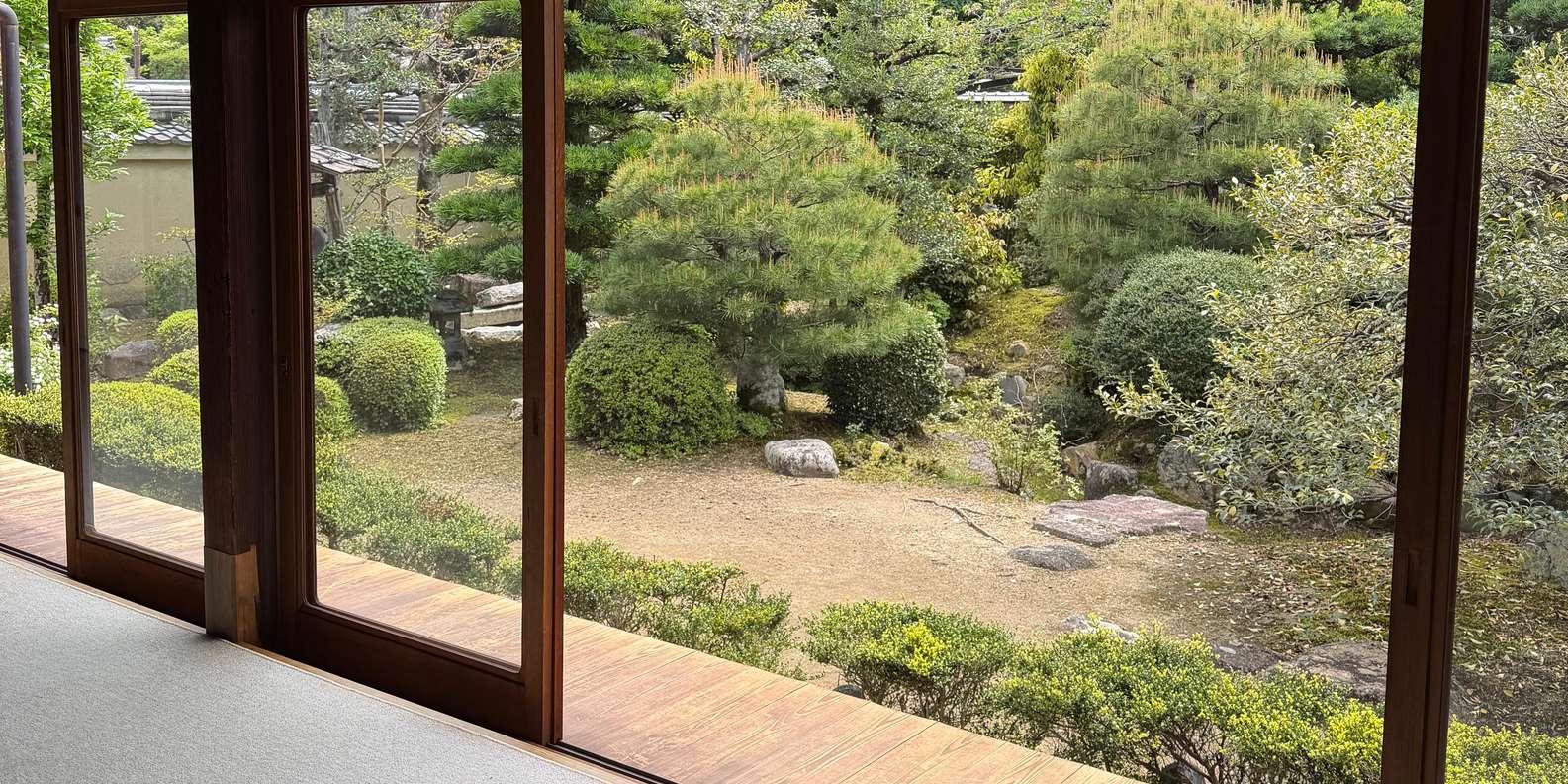
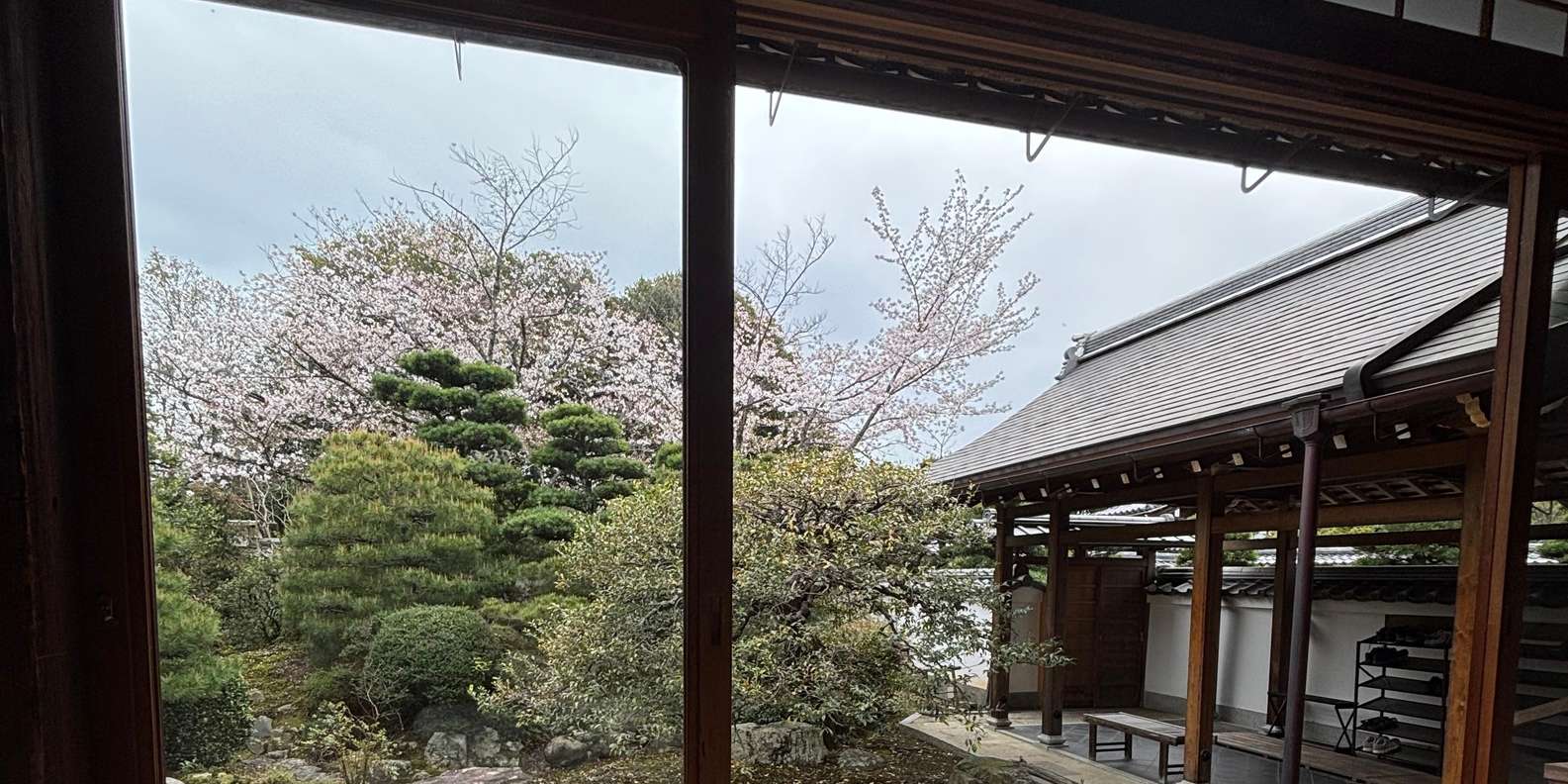
Drink matcha and eat sweets in a beautiful garden with 400 years of history
What's Included
Guide
Temple entry ticket
Chief priest's sermon
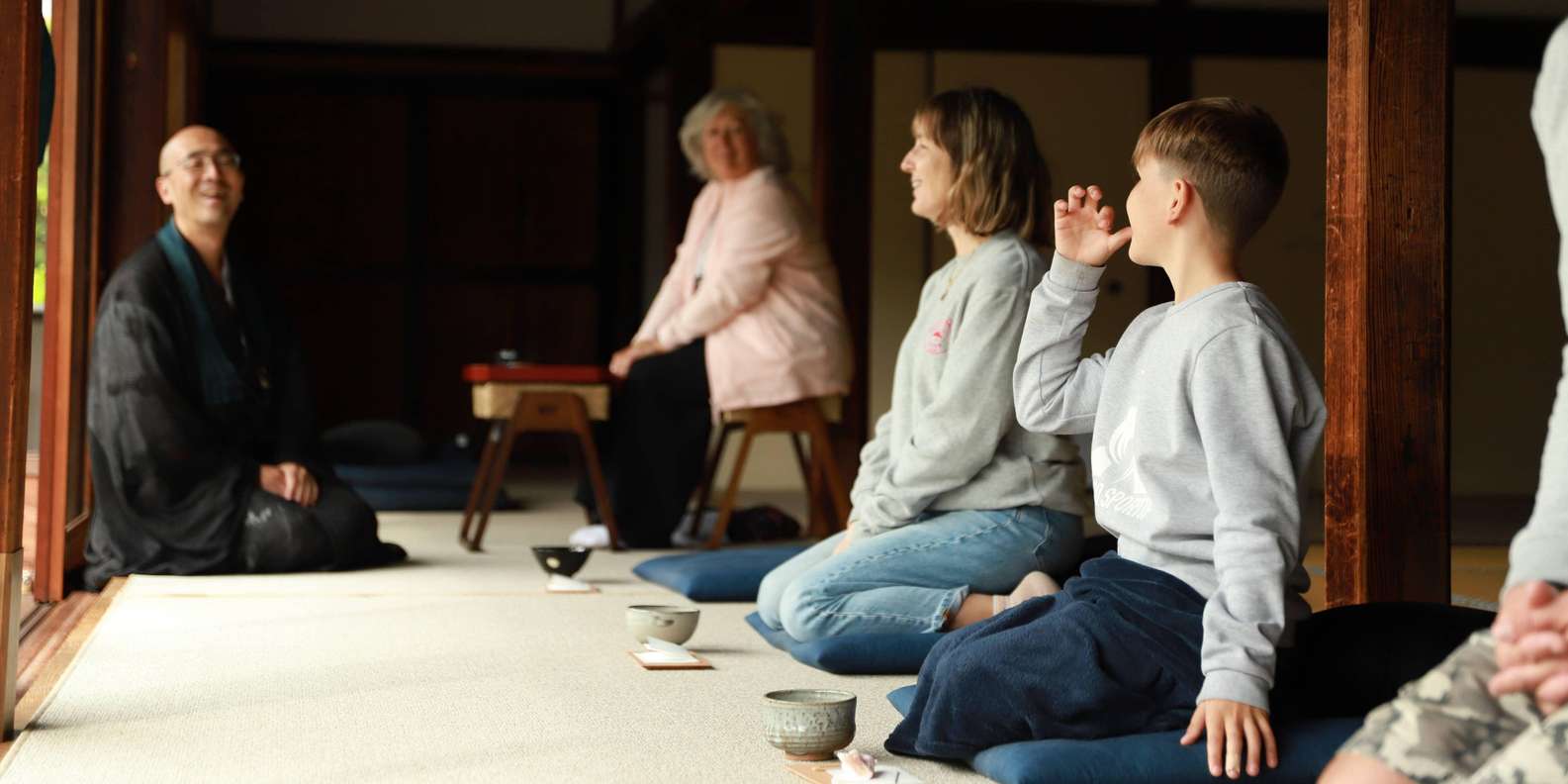
Japanese tea and sweets
Photoshoot by single-lens reflex camera within a few days after the tour ends
Four steps from the temple gate to your conversation with the monk.
1
Arrive at the Temple
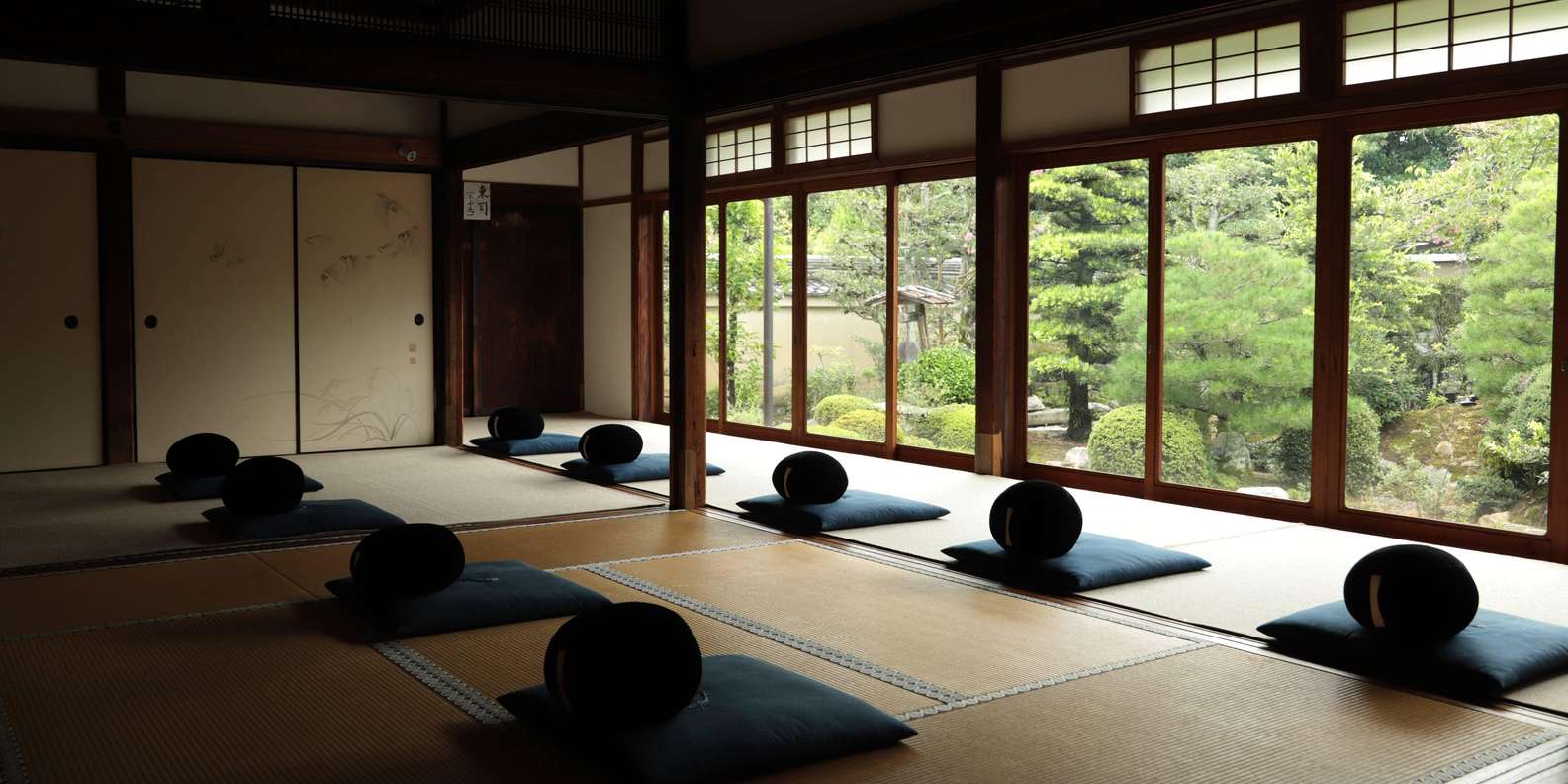
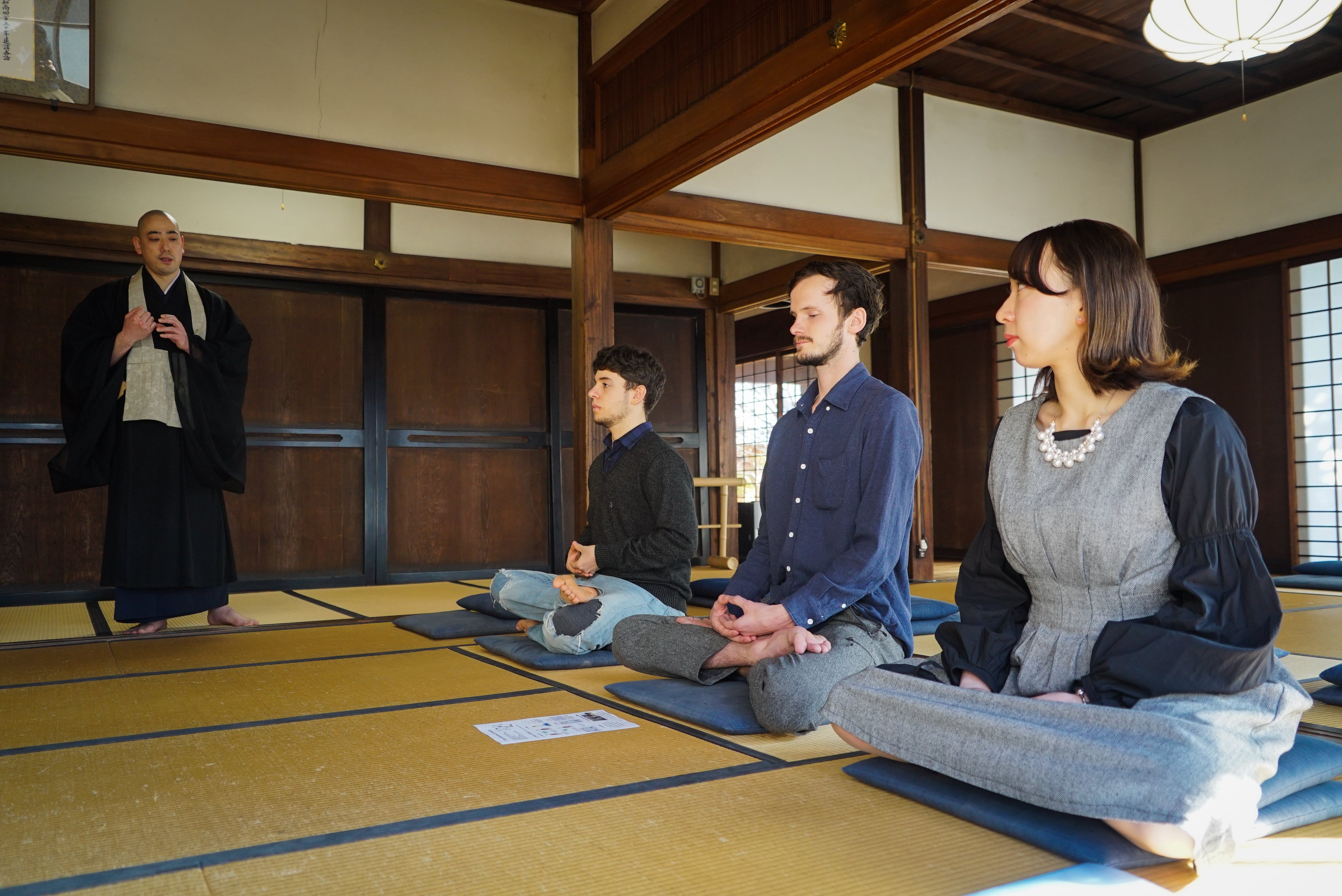
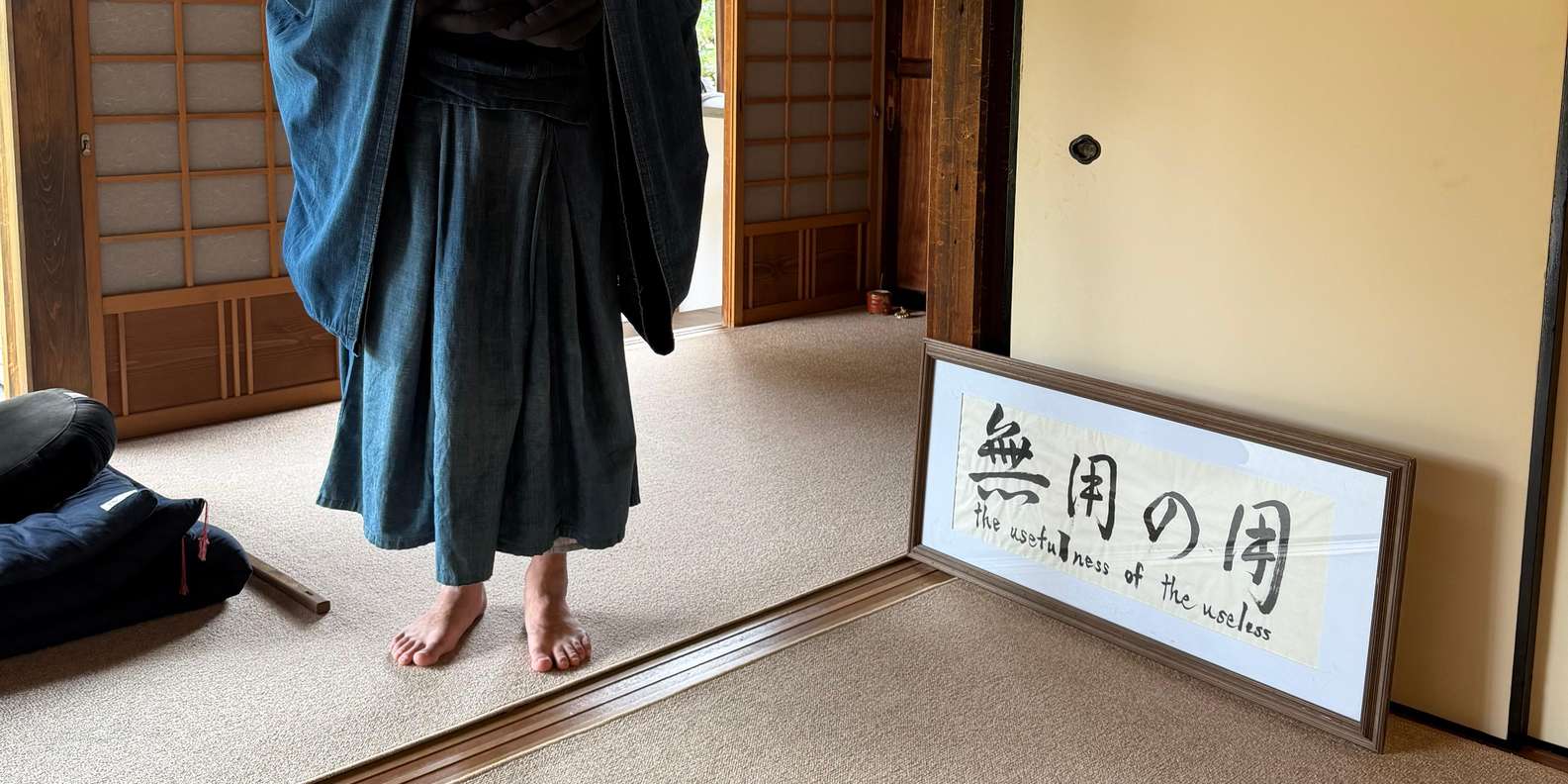
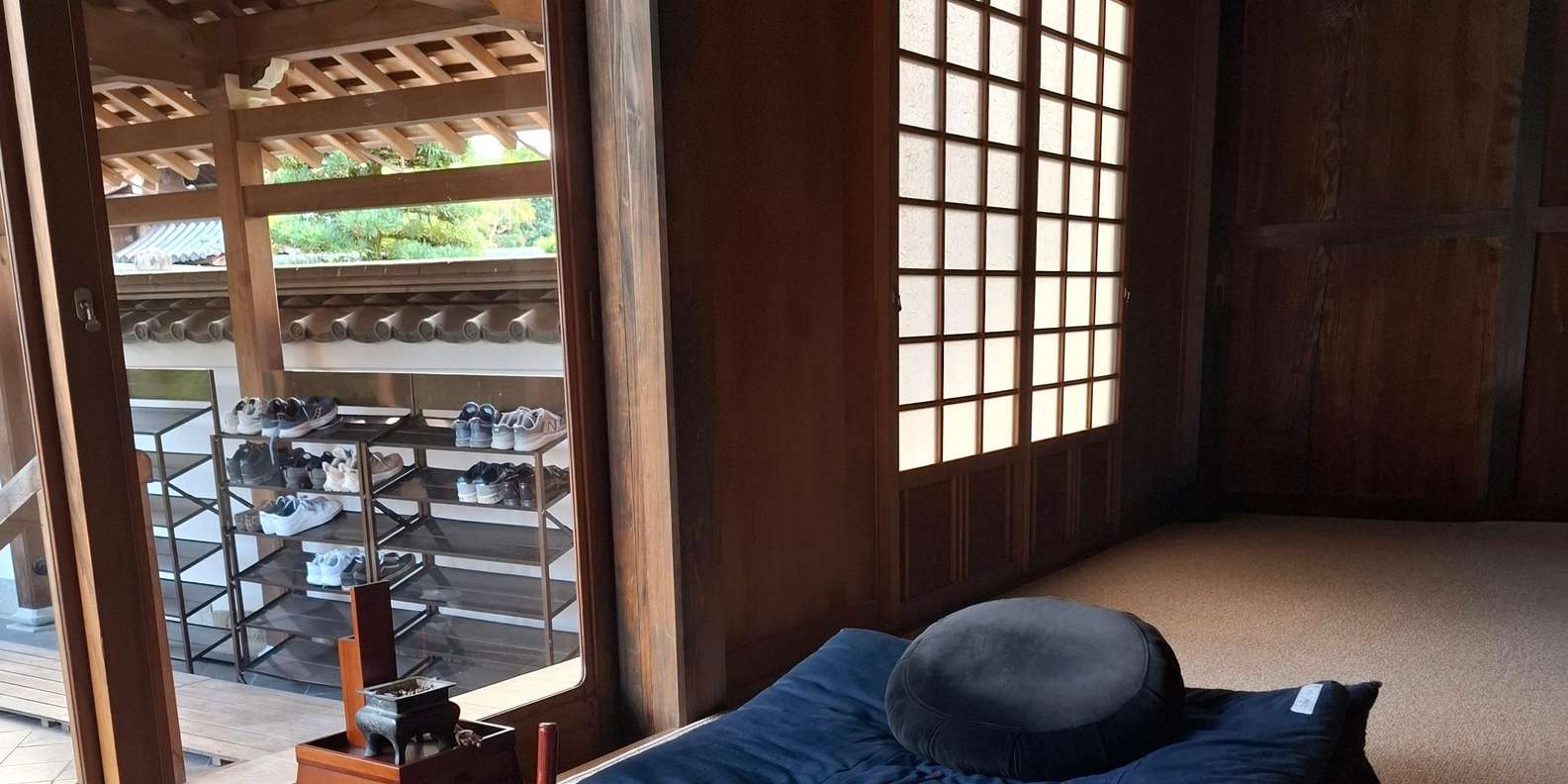
Meet at a quiet Kyoto temple, away from the tour crowds. Remove your shoes and enter the zendō (meditation hall) — a tatami room kept deliberately bare, so there's nothing to distract you from the practice.
2
Learn the Posture & Breathing
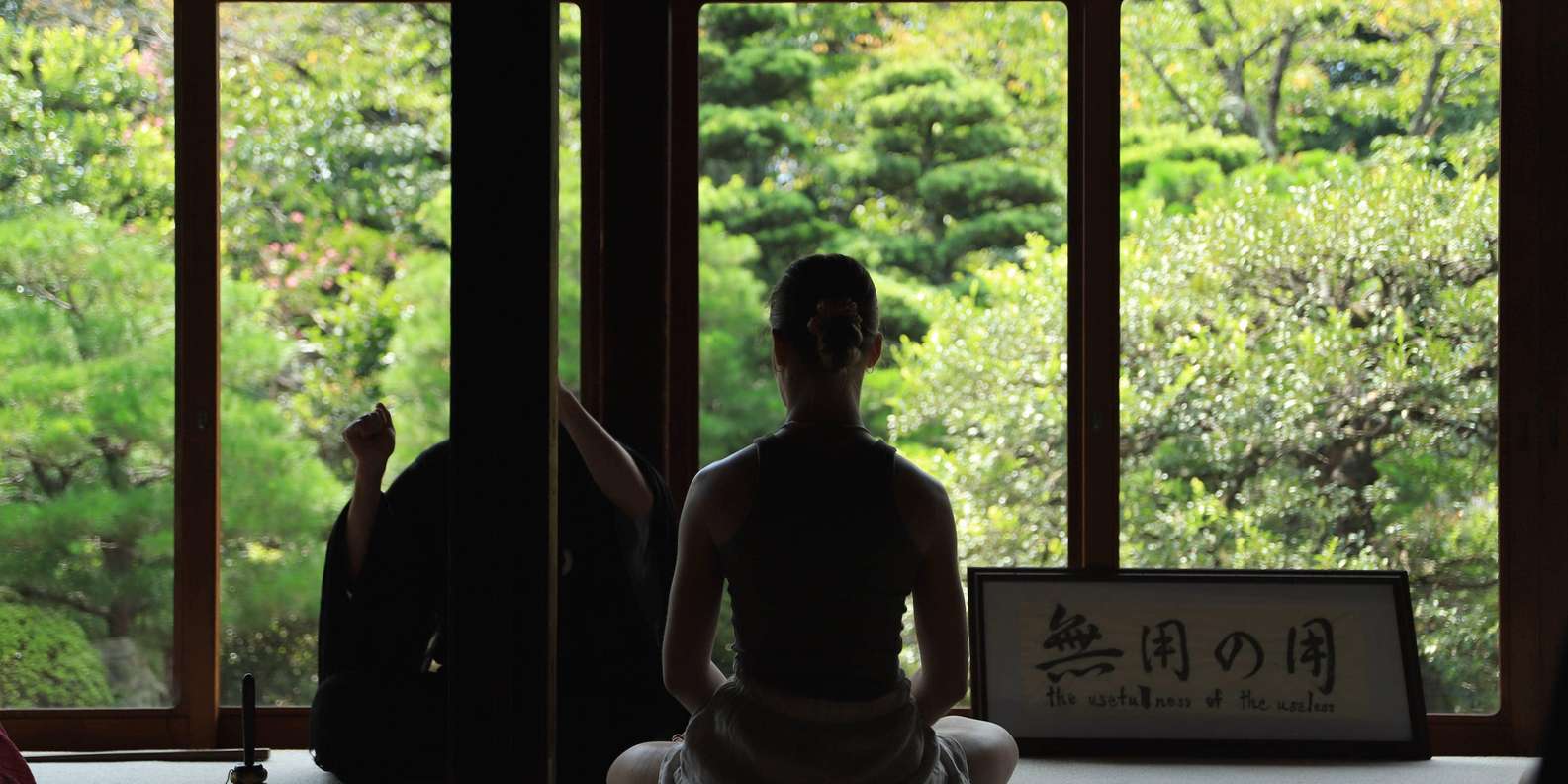
The monk or guide teaches zazen from scratch: how to sit (cross-legged, in seiza, or on a chair — whatever your body allows), where to rest your hands, how to lower your gaze, and how to count the breath. Everything is explained in English. No prior experience is assumed.
3
Sit Zazen in Silence
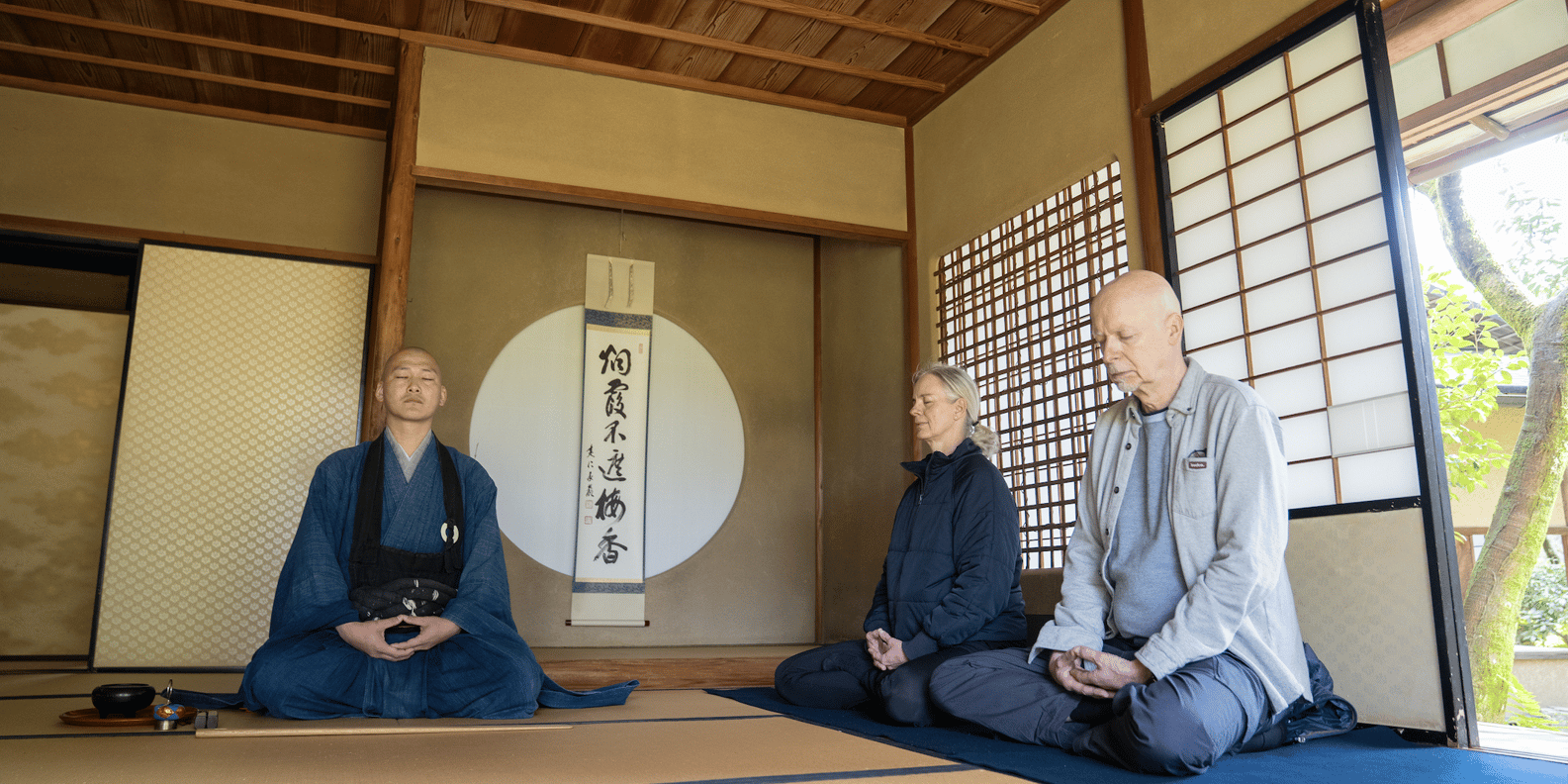
Then you simply sit. Periods of silent seated meditation, with the monk guiding the start and end. If you'd like, you can ask to be struck lightly on the shoulders with the kyōsaku — the wooden 'encouragement stick' — which is an aid to focus and a relief for stiffness, not a punishment. It's offered, never forced.
4
Tea & a Talk with the Monk
Most sessions close with a bowl of tea and time to ask the monk anything — about the practice, the temple, or daily life as a monk. It's the part guests remember as much as the silence. Sessions run roughly 1.5 to 2 hours.
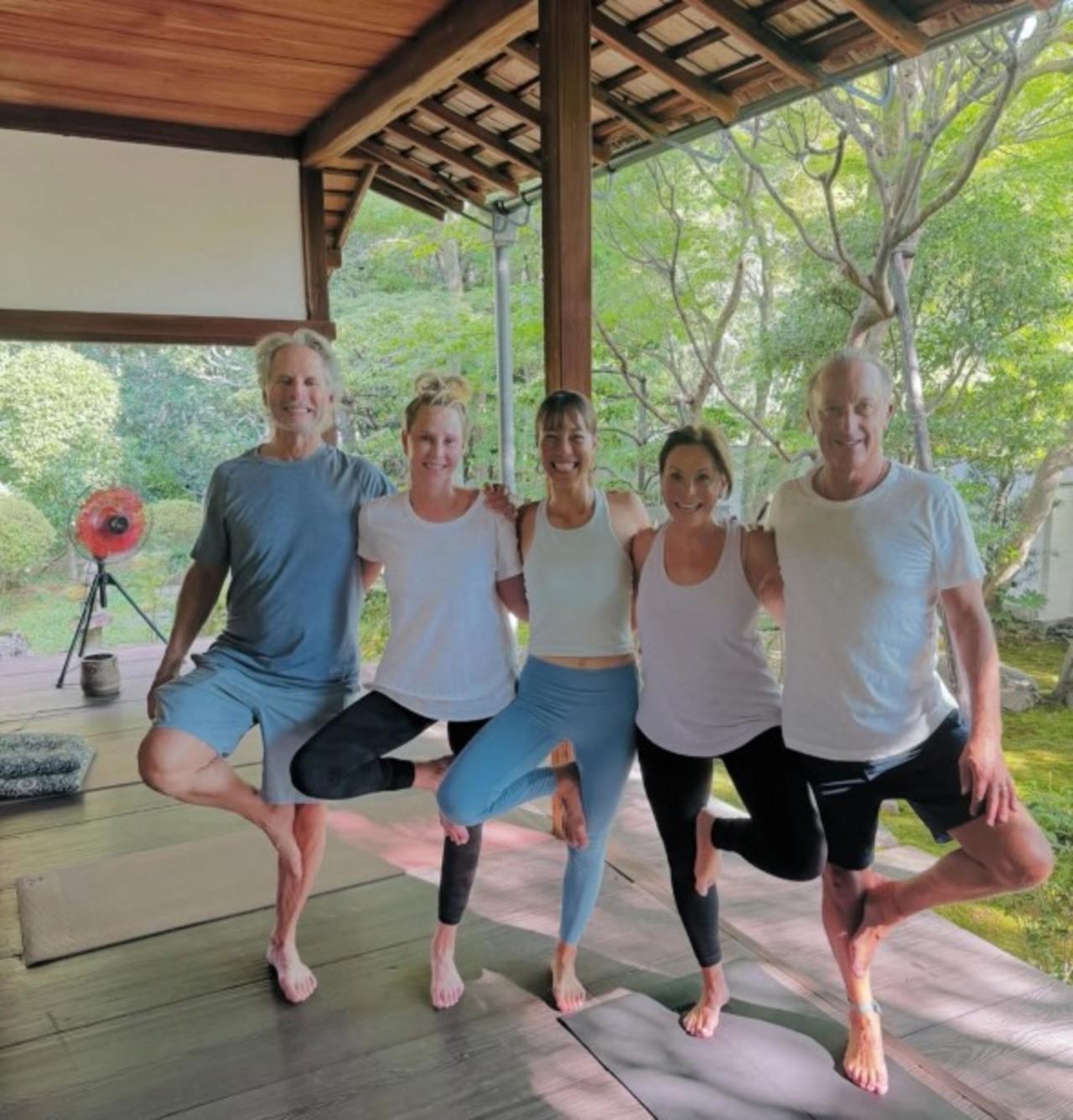
Four more ways to sit in Kyoto — an intimate private-temple session with a monk, a half-day zazen-and-zen-garden tour with lunch, a zen-and-yoga morning at Myōshin-ji, and an atmospheric nighttime meditation with matcha.
Zen Meditation in Kyoto: What Zazen Is, and Why Here
Kyoto is where Zen took root in Japan. Here's what actually happens when you sit, and why doing it in a working temple beats looking at one through a rope barrier.
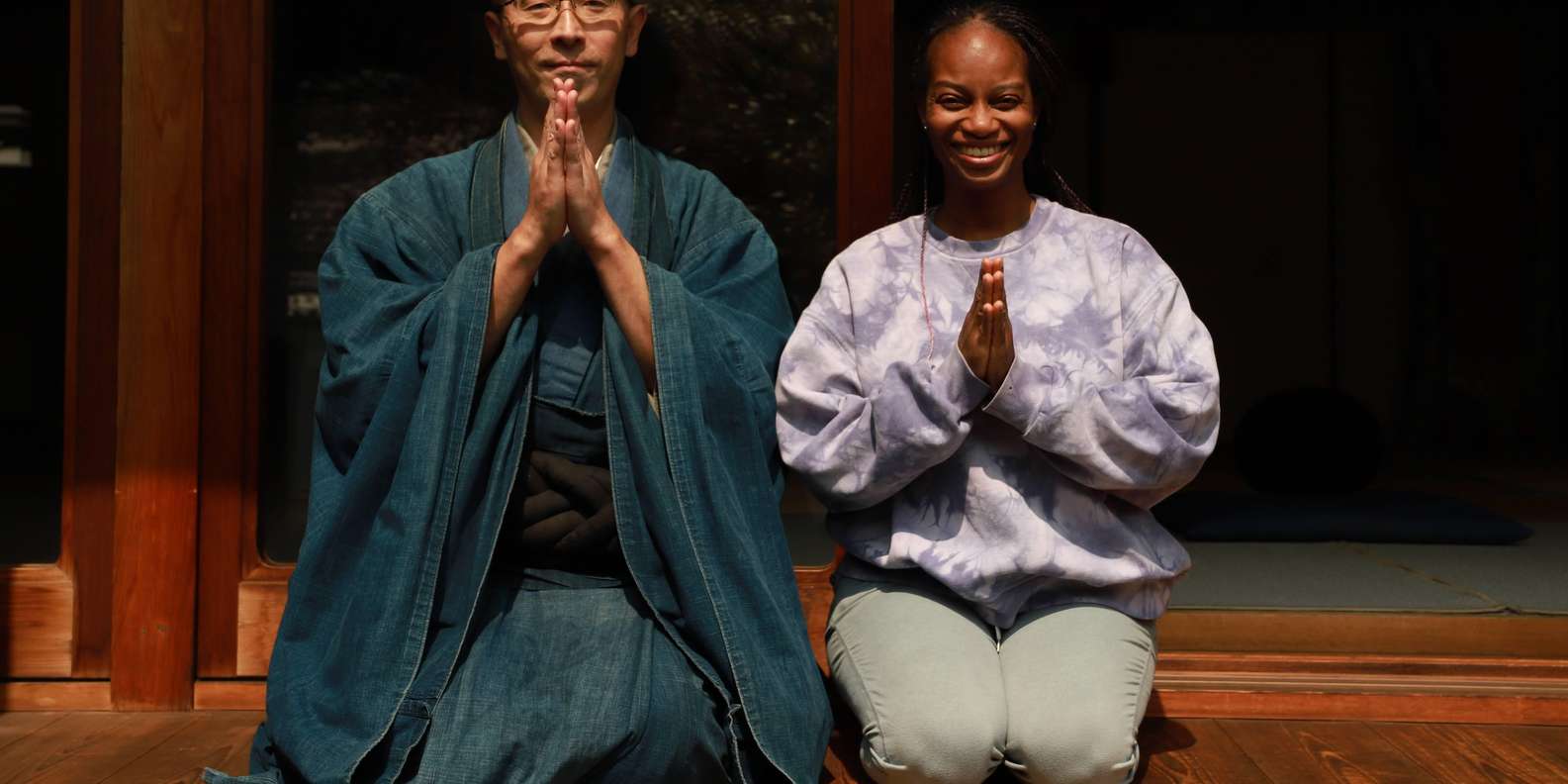
Sitting zazen with the chief priest at a hidden Kyoto temple — matcha and a 400-year-old garden included, just as the featured experience describes.
Thousands of visitors photograph Kyoto’s Zen gardens every day. Far fewer sit down and do the thing the
gardens were built to support. A guided zen meditation is the difference between seeing Zen and briefly
practising it — and Kyoto is the right place to try.
What zazen actually is
Zazen — literally “seated Zen” — is the core practice of Zen Buddhism, and it is disarmingly simple: you
sit upright and still, settle the breath, and let the mind quieten. There’s no chanting to memorise and no
belief required. In the Rinzai tradition you may see, or request, the kyōsaku — a flat wooden stick the
monk uses to tap a sitter’s shoulders. Despite how it looks, it isn’t punishment: it’s an aid to focus and a
way to relieve the stiffness of long sitting, given as a kindness and almost always at the sitter’s own
request. A good guided session teaches all of this in plain English before you sit.
Why Kyoto, of all places
Kyoto is the cradle of Japanese Zen. The monk Eisai brought the Rinzai school back from China in the
late 12th century and founded Kennin-ji here in 1202 — usually called Kyoto’s oldest Zen temple. Rinzai
and Sōtō remain the two great schools of Japanese Zen (with the smaller Ōbaku a later third), and Kyoto’s
Myōshin-ji is the head temple of the largest Rinzai branch — the hub of a network of some 3,400 affiliated
temples across Japan. Few cities anywhere are this saturated with living Zen institutions.
The temples and their gardens
The names you’ll recognise are mostly Zen: Ryōan-ji, whose raked-gravel karesansui is the most famous
dry rock garden in Japan; Tenryū-ji in Arashiyama; and Daitoku-ji, Nanzen-ji, and Tōfuku-ji —
four of which sit among Kyoto’s Gozan, the medieval “Five Mountains” ranking of Zen temples. The catch:
most of these are sightseeing temples where you admire the garden from a veranda, not sit. That’s exactly why
a guided experience at a temple that does open its zendō to visitors is worth booking — it’s the only
straightforward way for a traveller to actually practise rather than spectate.
What to expect, and what to bring
No experience is needed and you don’t have to be Buddhist. Wear something comfortable you can sit on the
floor in (you can usually use a chair if knees are an issue), bring socks, and expect roughly 1.5 to 2 hours.
The sessions above range from an intimate private-temple sitting to a half-day that pairs zazen with a
zen-garden tour and lunch, to an atmospheric nighttime meditation with matcha.
If you’re building a slower, more contemplative day in Kyoto, a zen sitting pairs naturally with a
tea ceremony — tea and Zen share the same roots — and with the temple gardens of
Arashiyama, home to Tenryū-ji. Travelling on to Tokyo as well? zenmeditationtokyo.com covers where to sit zazen in the capital.
Check availability on any of the sessions above to reserve your spot.
Guest Reviews
What Visitors Say
4.9/5from 537 verified visitors
"Noa was our guide and translator, she was incredibly warm and helpful. The setting and experience was beautiful and felt authentic, we were a group of only 5 and it felt very personal. Joondae was taking photographs for us, and he was also incredibly professional and kind. We loved the experience of meeting the high priest who lead our session, and feel very grateful for the experience of sharing his time and asking questions. The guided meditation was beautiful, as was the tea and sweets offered to us by the two other staff members (unclear of their official title, don’t want to get it wrong!). There was an option at the end to purchase some unique tea cups and the matcha served there - highly recommended!"
"A truly beautiful and memorable experience. The Zen session in this hidden temple was incredibly peaceful and well guided by the monk, creating an authentic and calming atmosphere. The tea ceremony was especially lovely and added a meaningful cultural touch to the visit. It’s the perfect way to escape from everyday stress and find a moment of inner balance. I would highly recommend this experience to anyone visiting Kyoto."
"If you really want to go deep into Japanese culture and experience peace, this is the place to be…!!! I have visited 2nd time to this Temple and it was divine, calming and pleasant.. Must do in Japan"
"This was an amazing experience. Our guide was wonderful, fun and very knowledgeable. We were welcomed by kind and enthusiastic members of the temple, and the guided meditation from the abbot was very informative, enlightening and relaxing. The sweet and tea provide were delicious and beautifully prepared."
"I had always wanted to learn more about Zen meditation, and this experience allowed me to better understand both the practice and its philosophy. The guides were incredibly kind, and the monk patiently answered all our questions. I highly recommend this tour."
"Our time in Kyoto was made truly special by the Zen experience we shared at the temple. It was an absolutely amazing morning that offered a rare sense of peace and reflection amidst our travels. The session, led by the monk and his dedicated team, was both welcoming and profound. They guided us through the traditions with such grace and clarity, making the ancient practices feel accessible and deeply personal. From the serene atmosphere of the temple grounds to the thoughtful instruction, every detail was handled with care. If you are looking for a moment of calm and a genuine connection to Kyoto’s spiritual heritage, I cannot recommend this experience enough. It was a beautiful, meditative highlight of our trip."
"What truly touched me were the conversations with the Monk. There was such depth, wisdom, and warmth in every word shared. Nothing felt forced or overly complex—just gentle truths about life, awareness, and the importance of returning to yourself. It shifted something in me, quietly but profoundly. Truly a great experience, would highly recommend"
"I thoroughly enjoyed the thoughtful commentary and history provided by our lovely tour guide. All staff’s involved were very kind and thoughtful. Zazen was a new meditation experience and I thoroughly enjoyed the guided support from Eitetsu Nishida."
"This was truly such a beautifully done, immersive experience. The class was around 9 people so it was intimate and we were given time to ask the Monk questions regarding monastic living and Zen Buddhism. I loved that it felt authentic and not commercialized. Everyone was respectful and photos were able to be taken, but not in a way that was disruptive. truly so well done and my favorite experience I’ve done in Kyoto!"
"Beautifully explained in a beautiful space. Very grateful for this opportunity. Thank you so much 🙏🏽"
"An amazing experience that could not have been more authentic. This is an extremely special experience and it is something we will cherish forever."
"This was a very unique and enlightening experience. We thoroughly enjoyed the opportunity to meditate and interact with the Monk is such a serene setting. The tea ceremony was an added bonus!"
"Amazing experience, would recommend to anyone trying to experience zazen for the first time"
"Loved this experience from start to finish! Everyone there was kind, patient, and informative and happy to answer all our questions. Learned lots and had a nice relaxing day too!"
"A great experience and immersion in an important part of traditional japanese culture! We felt at peace and at ease in the temple. We were surprised at how hard meditating is when trying to think about nothing! Everybody in the staff was so kind and were open to answer all of our questions. We suggest that the chief monk always speaks in Japanese alongside a translator instead of only sometimes using the translator, since he has a very strong accent when speaking English, which makes him difficult to understand."
"It was a very nice experience and we all felt very welcomed. It was an exclusive experience to have the opportunity to talk to a monk and ask him questions. Very authentic to have a translator as well. I particularly appreciated that he answered my difficult question in a way that helped me a lot and it was nice to take souvenir pics together. As I was looking for a meditation bell I could even buy one. I do find it a bit pricy, though. That’s my only feedback."
"Het was een mooie waardevolle ervaring."
"Es war eine einzigartige Erfahrung, die man nicht besser machen kann."
Pick the right category for your trip — tea ceremony, geisha experience, sumo show, Fushimi Inari, day trip, or private tour. 119 tours compared with free cancellation. Starting from $112 per person.
What a guided zazen session involves, whether you need experience, English, the kyōsaku stick, and how the options differ.
No to both. These sessions are built for complete beginners and for people of any background or none — the monk or guide teaches the posture, breathing, and etiquette from scratch before you sit. You don't need to know anything about Zen or Buddhism going in; curiosity is enough.
Yes — the experiences featured here are guided in English, including the instruction, the meditation cues, and the conversation with the monk afterwards. Zen terms (zazen, kyōsaku, zendō) are explained as you go, so there's no language barrier and no Japanese needed.
The kyōsaku (or keisaku) is a flat wooden stick a monk uses to tap a sitter lightly on the shoulders during zazen. It is not punishment — it's an aid to concentration and a way to relieve the stiffness and drowsiness of long sitting. It's almost always given at your own request (you bow to ask for it), and you can simply not request it. Many first-timers try it once out of curiosity.
Most guided zen meditations run about 1.5 to 2 hours, which includes the instruction, one or more periods of seated meditation, and tea and conversation with the monk. The half-day option that pairs zazen with a zen-garden tour and lunch runs longer (around 4.5 hours).
It depends on the experience — these take place in quiet working temples that open their meditation hall to visitors, rather than the big sightseeing temples (where you can only view the gardens). The exact temple and meeting point are confirmed by email after you book. The point is that you're sitting in a genuine zendō with a monk, not a tourist replica.
Wear something comfortable and loose enough to sit on the floor in — you'll sit cross-legged, in seiza (kneeling), or in whatever stable posture works for you. Bring socks, as you'll remove your shoes. If sitting on the floor is hard on your knees or back, most hosts can provide a chair or cushion arrangement; just mention it when you book.
Yes. Alongside the small-group sessions, there are intimate private-temple options where it's just you (or your party) and the monk, which several guests prefer for the quiet and the chance to ask questions freely. Check the individual experiences above — the private-temple sitting is the most intimate of the set.
A zen garden visit is sightseeing — you admire a raked-gravel karesansui garden like Ryōan-ji's from a veranda. A zen meditation is participating: you sit zazen inside the temple with a monk guiding you. Most famous Kyoto temples only offer the former, which is why a guided meditation experience is the practical way for a visitor to actually practise. One option here combines both — zazen plus a guided garden tour.
Older children and teenagers who can sit quietly usually do fine and often find it memorable, but zazen asks for stretches of stillness and silence that younger children can struggle with. If you're booking for a family, mention your children's ages when you reserve so the host can advise whether their session is a good fit.
Authentic monk-led zen sessions in Kyoto generally start around $95 and rise with privacy, length, and extras (a half-day with lunch, or an evening session with matcha, costs more). Most are bookable with free cancellation up to 24 hours before — the exact terms are shown on each tour's page before you pay.